
Blogpost keywords:baroque brass and glass wall light, brass glass wall light, baroque wall light
Baroque brass and glass wall light for layered interior lighting. Designed to add classical detail with soft glass diffusion.
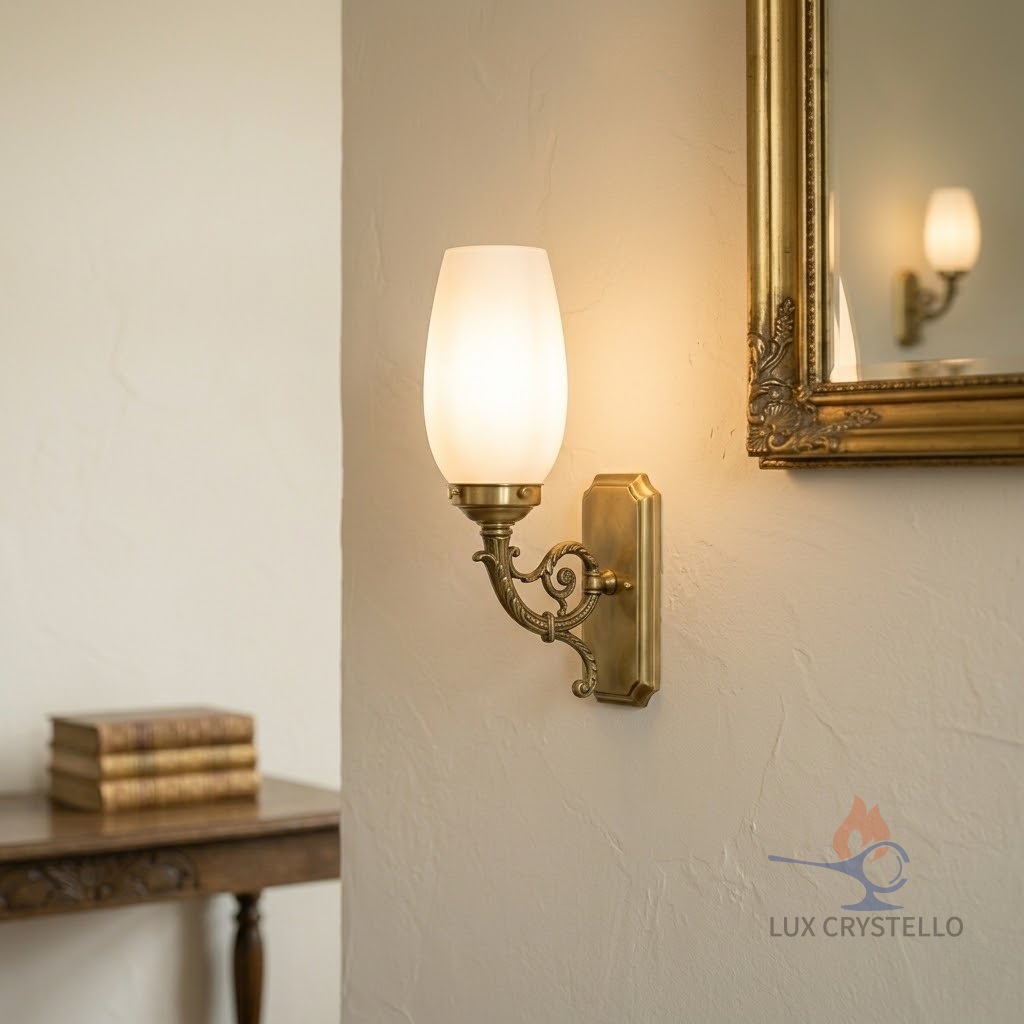
Baroque Brass and Glass Wall Light: A Decorative Solution for Vertical Spaces
A baroque brass and glass wall light is often selected when vertical surfaces need visual rhythm rather than dominance. Unlike ceiling fixtures that define an entire room, wall-mounted lighting works in fragments—guiding movement, shaping atmosphere, and supporting architectural details. In baroque styling, this role becomes even more refined, combining sculptural brass with light-softening glass.
For buyers and specifiers, brass-and-glass wall lights offer a practical way to introduce classical character without overloading the space. This article explores how these fixtures are designed, where they are most effective, and what to evaluate when sourcing them for decorative lighting projects.
Why Baroque Wall Lights Focus on Proportion, Not Size
Baroque design is expressive, but wall-mounted fixtures demand control. A successful baroque brass and glass wall light is rarely oversized. Instead, it relies on proportion—curved arms, layered profiles, and subtle ornament—to achieve presence without bulk. Glass plays a critical role here by visually lightening the fixture and smoothing the light output.
This balance makes brass-and-glass wall lights suitable for repeated installation. In corridors, staircases, or multi-room projects, they can be used rhythmically without overwhelming the architecture. Compared with solid-metal wall lights, designs with glass feel more adaptable and less visually rigid across different interior styles.
Material Interaction: Brass Structure with Glass Diffusion
In wall lighting, materials must work together. Brass provides rigidity and long-term stability, especially for curved arms or decorative brackets. Glass, on the other hand, controls light behavior. In a baroque brass and glass wall light, glass shades or panels reduce glare and spread light more evenly across walls.
From a sourcing perspective, buyers often evaluate how securely glass is fixed and how it interacts with heat from the light source. Brass’s heat tolerance and strength make it a reliable structural choice. When properly engineered, this combination results in wall lights that maintain both appearance and performance over time.
Real-World Applications in Interior Projects
A baroque brass and glass wall light is commonly used in spaces where mood and continuity are more important than brightness. Typical applications include hotel hallways, stairwells, bedside lighting, mirror lighting, and feature walls in living areas. The fixture helps define zones without interrupting the flow of the space.
Designers often use these wall lights to visually connect different lighting layers—linking chandeliers, ceiling lamps, and table lamps into a cohesive scheme. Because the glass softens the light and the brass adds structure, these fixtures integrate well into both classic and modern-classic interiors.
Production Quality, Safety, and Transport Considerations
Although compact, wall lights require careful production control. Buyers sourcing a baroque brass and glass wall light typically examine wiring layout, socket positioning, and heat clearance, particularly when glass partially encloses the light source. Professional manufacturers follow general electrical safety concepts aligned with CE or UL-related requirements, depending on destination markets.
Packaging is equally critical. Glass components are vulnerable to vibration, while brass finishes can be damaged by abrasion. Effective packaging uses internal supports, surface protection, and reinforced cartons to ensure each fixture arrives in installation-ready condition.
FAQ About Baroque Brass and Glass Wall Light
Why are baroque wall lights often smaller than chandeliers?
Wall lights are designed to complement architecture, not dominate it, so proportion is prioritized over size.
Does glass reduce the decorative impact of baroque designs?
No. Glass softens light while allowing brass detailing to remain visually clear.
Are these wall lights suitable for long installation runs?
Yes. Their controlled scale and diffused light make them suitable for repeated placement.
What installation details matter most for wall lights?
Backplate fit, wall clearance, and arm balance are critical for a clean final appearance.
What are common risks in bulk purchasing wall lights?
Inconsistent finishes, weak glass fixing, and inadequate packaging are the most frequent issues.
Support for Regular Supply and Custom Development
Our baroque brass and glass wall light collection is developed to support both ongoing sourcing needs and customized interior projects. Selected designs are available to support regular supply schedules, while OEM cooperation is also available for buyers developing private-label or project-specific lighting solutions. Custom options may include adjustments to brass finish, glass form, structural details, packaging formats, and branding elements.
This flexible approach allows buyers to balance speed, consistency, and design differentiation across a wide range of interior applications.