
Blogpost Keywords: light french brass candle-style lamp, french candelabra light, antique brass candle lamp
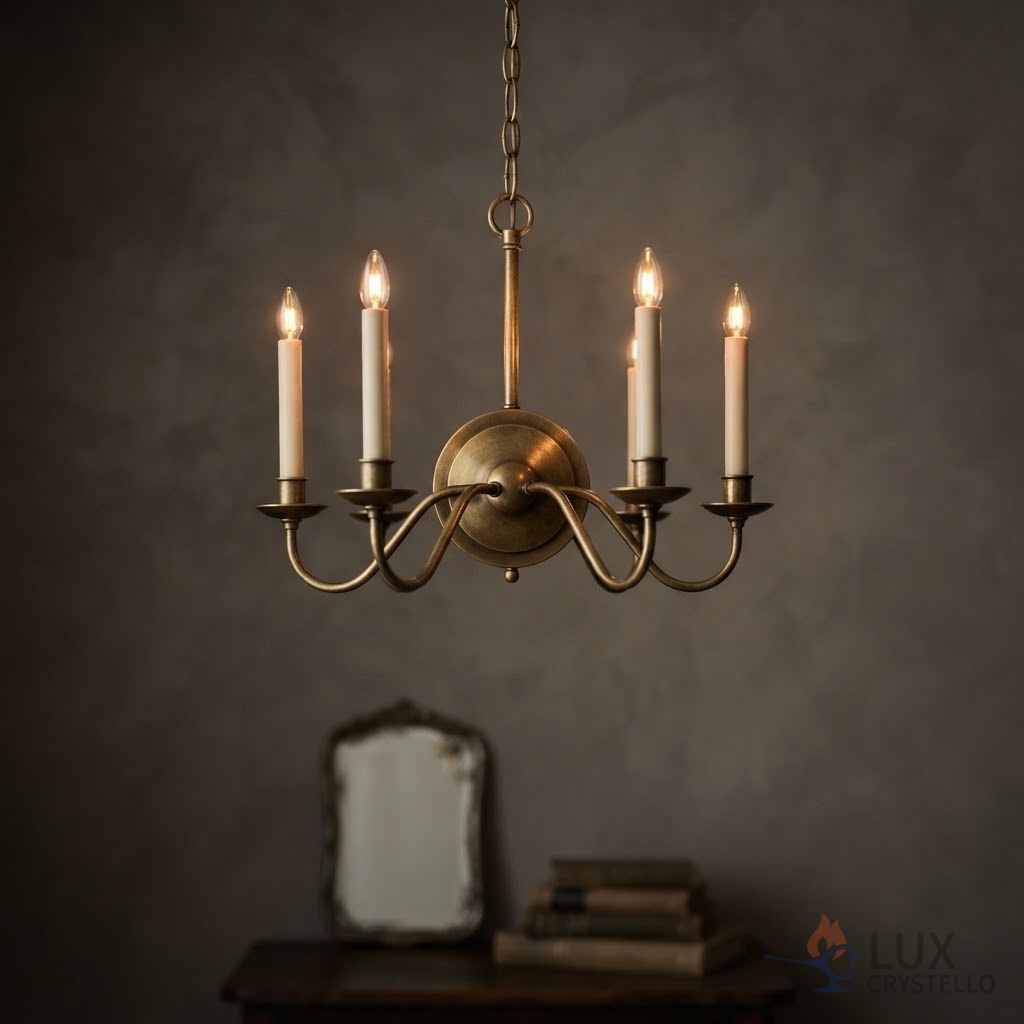
A light french brass candle-style lamp borrows its shape from an era before wiring, which is exactly why it still works. The arms, the sleeves, and the small flame-shaped bulbs recall candlelight, while the switch means nobody has to trim a wick.
What a Light French Brass Candle-Style Lamp Actually Is
The category covers several formats that share one detail: a socket dressed as a candle. A french candelabra light might be a wall pair, a table piece, or a small ceiling fitting, but in each case the bulb sits in a sleeve on an exposed arm rather than inside a shade.
That exposure is the whole design, and it sets the rules. Because the bulb is visible, its shape and colour matter more than in any shaded fitting. A cool white bulb in a warm brass arm looks wrong immediately, in a way a shaded lamp would forgive. A light french brass candle-style lamp lives or dies by its bulb.
Brass suits the format because it reads as the same family as flame. In practice the metal picks up the bulb colour and returns it, so the arms glow faintly even when the room is dim. An antique brass candle lamp does this more visibly than a bright new one.
Sleeves, Bulbs, and the Illusion
Three things break the illusion, and all three are fixable. Short sleeves expose the socket collar; cool-toned bulbs kill the warmth; and a perfectly uniform set of sleeves looks manufactured. An uneven or hand-dipped top edge, warm 2200K to 2700K bulbs, and sleeves long enough to cover the hardware solve it for very little money. Those fixes separate a convincing light french brass candle-style lamp from a mail-order one.
Bulb choice deserves specifics. Flame-tip LEDs at 2200K in the 150 to 250 lumen range per arm read closest to real candlelight, and a four-arm fitting on a dimmer covers both dinner and background. Filament-style LEDs look best where the bulb is genuinely visible; frosted ones suit sleeves that are shorter than ideal.
Horizontal comparison: real candles give unbeatable colour and demand attention; flickering LED bulbs approximate the movement but often flicker too regularly; steady warm LEDs on a dimmer look calm and honest, which is what most rooms actually want. An antique brass candle lamp with steady bulbs ages better than a novelty flicker.
| Bulb type | Colour | Best for |
|---|---|---|
| Flame-tip LED 2200K | Very warm | Dining, evening |
| Filament LED 2700K | Warm, visible | Exposed sockets |
| Frosted LED 2700K | Soft, diffused | Short sleeves |
Where the Format Belongs
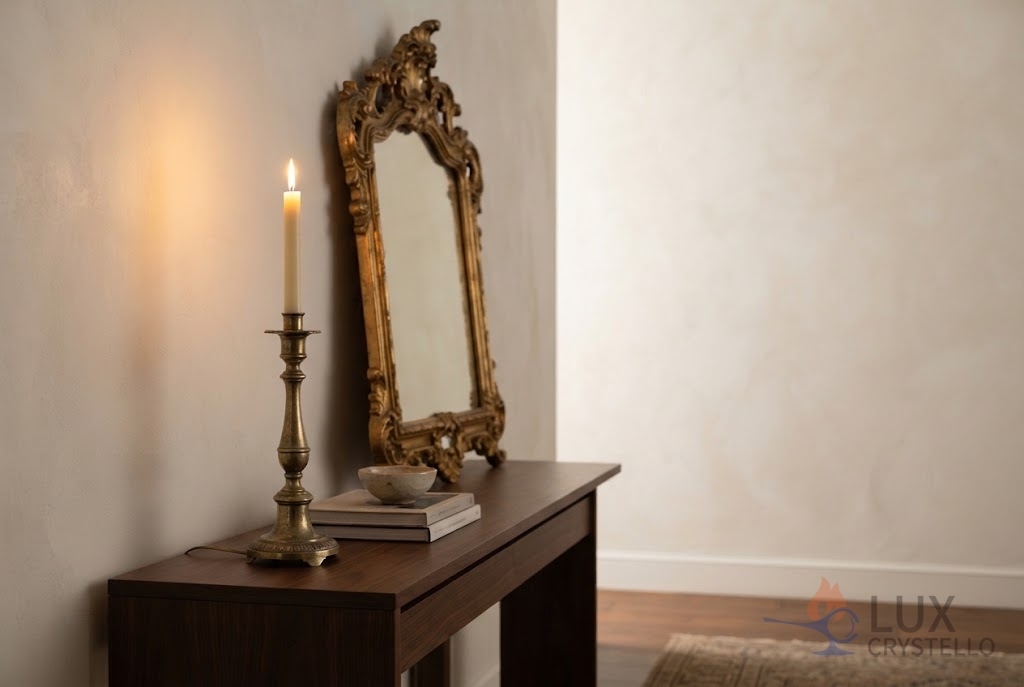
A pair on a wall flanking a mirror is the most reliable placement, because the format was designed to be seen from the front. Over a dining table the same arms read as a small chandelier. On a console, a single french candelabra light acts as sculpture that happens to light. In practice the format flatters walls and tables and struggles wherever it has to compete with daylight, which is why it belongs in rooms used mostly after dark.
What the format does badly is task light. Exposed bulbs at eye level create glare, so a french candelabra light should never be the only source in a room where somebody reads or works. Pair it with a shaded lamp and let the candle arms handle atmosphere.
Arm count follows the room, not the budget. Two or three arms suit a wall or a bedside; four to six suit a table; anything higher belongs in a room with the ceiling height to carry it. A light french brass candle-style lamp with too many arms in a small space reads busy rather than grand.
Wiring, Heat, and Care
Heat used to be the objection to this format, and LEDs removed it. Incandescent candle bulbs ran hot enough to discolour a sleeve and shorten socket life; a three watt LED barely warms it. A light french brass candle-style lamp on modern bulbs is a different object from its 1970s equivalent.
On vintage or vintage-styled pieces, ask whether the internal wiring has been replaced. Cloth-covered flex looks period-correct and degrades, and a seller who has rewired an antique brass candle lamp will normally say so plainly. If nobody mentions it, budget for an electrician.
Cleaning is simple if the finish is sealed: a dry cloth on the arms, and sleeves lifted off and washed once or twice a year. Sleeves in paper or resin both wash, though paper will soften if it is soaked. Unsealed brass will darken around the switch and along the arms where fingers land, which suits some rooms and irritates other owners.
FAQ
What bulb looks most like a real candle?
A flame-tip LED at 2200K, around 150 to 250 lumens per arm, on a dimmer. Cooler bulbs break the effect immediately.
Are flickering bulbs worth it?
Rarely. Most flicker on too regular a cycle, which reads as novelty. Steady warm bulbs on a dimmer look calmer.
How many arms should I choose?
Two or three for a wall or bedside, four to six for a table. More arms need ceiling height to avoid looking crowded.
Can it be the only light in a room?
Not comfortably. Exposed bulbs at eye level glare, so pair it with a shaded lamp for anything that counts as a task.
Conclusion
A light french brass candle-style lamp works because it commits to the illusion. Get the sleeves long, the bulbs warm, and the arm count honest to the room, and it will look considered rather than costume.
Bring the Look Home
Before ordering, count the arms against the size of the wall or table and decide what the fitting is really for, atmosphere or light. A well-specified light french brass candle-style lamp turns an evening into something staged in the best sense, so the bulbs are worth choosing as carefully as the fitting.