
Blogpost Keywords: light french brass wall light, french wall sconce, antique brass sconce
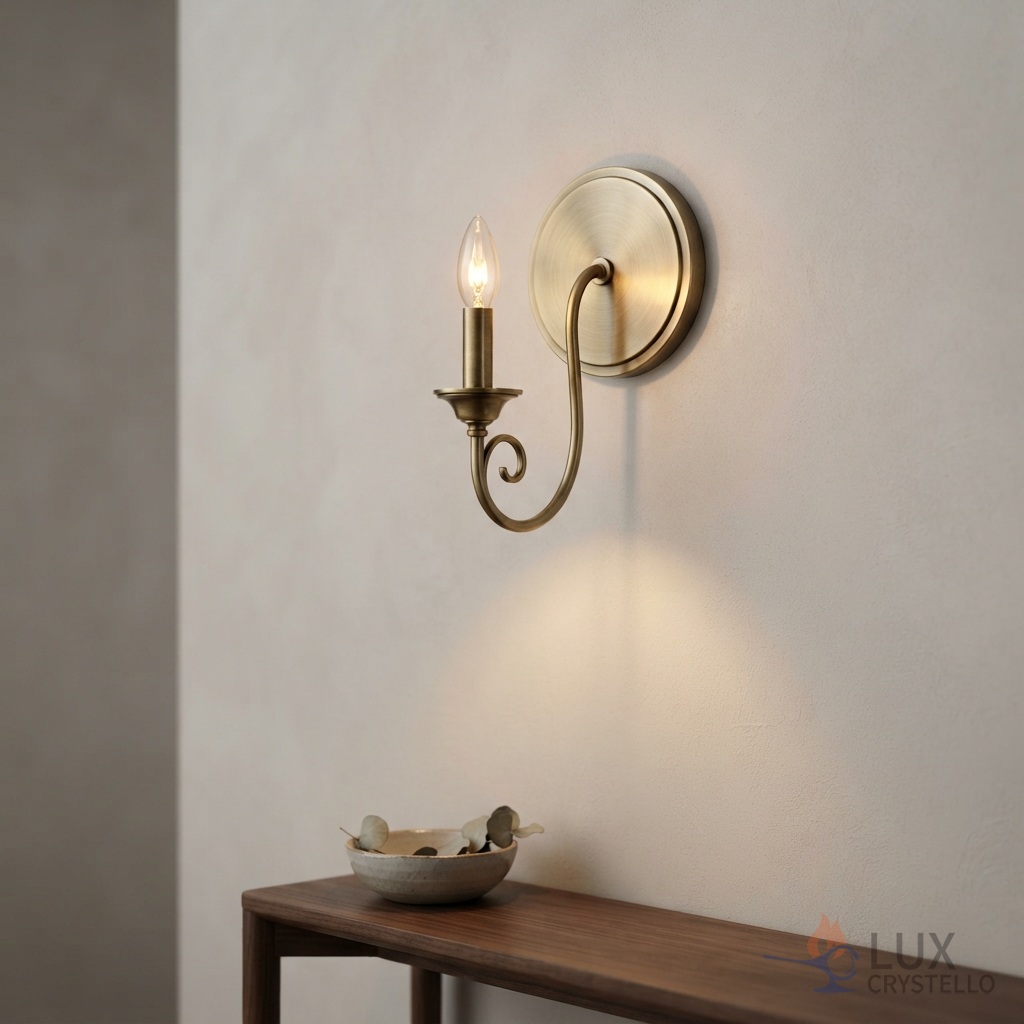
A light french brass wall light does something a ceiling fixture cannot: it lifts the glow off the floor and puts it at the height people actually live at. The French version keeps the scrollwork slim and the glass small, so the wall gains detail without gaining bulk.
What Sets a Light French Brass Wall Light Apart
The tell is proportion. A french wall sconce in this tradition uses a narrow backplate, a single curved arm, and a shade barely wider than a teacup. Heavier traditions do the opposite, widening the plate and stacking arms until the fitting competes with the art beside it.
Brass is the right metal because fine casting holds detail at small scale. A tiny scroll in cast iron turns into a blob; in brass it keeps its edge. That is why the style survived in apartments where nothing large would fit. A light french brass wall light stays small on purpose, not by compromise.
A practical consideration is projection, the distance the fitting stands off the wall. Anything past six inches will catch a shoulder in a narrow hall, and an antique brass sconce with a deep arm belongs in a room where people are not squeezing past it.
Where to Put One, and at What Height
Most rooms have three candidates: flanking a mirror, flanking a bed, or marching down a corridor. Mirror pairs want the light source near face height, roughly 62 to 66 inches from the floor, so the glow lands on a face rather than the top of a head.
Bedside placement is different. Drop it to 48 to 54 inches and shift it slightly toward the outer edge of the mattress so the pool falls on the page instead of the pillow. A light french brass wall light mounted this way replaces a nightstand lamp and frees the surface entirely.
Corridors reward repetition. A single fitting halfway down a hall reads as an accident; three at even intervals reads as a plan. In practice, space them by dividing the wall into equal parts rather than measuring a fixed gap, because the ends are what the eye judges. An antique brass sconce repeated three times looks deliberate in a way one bright fitting never does.
| Location | Mount height | Projection |
|---|---|---|
| Beside a mirror | 62 to 66 in | 4 to 5 in |
| Beside a bed | 48 to 54 in | 5 to 7 in |
| Along a hallway | 60 to 66 in | Under 5 in |
Shade, Glass, and Bulb Together
Three shade families cover almost everything. A fabric half-shade throws light up and down and hides the bulb completely; a small glass globe spreads evenly and shows the filament; an open metal cup aims a tight pool at the wall. Horizontal comparison: fabric flatters a bedroom, glass suits a mirror, metal belongs where you want drama on plaster.
Candle sleeves deserve a mention because so many French fittings use them. A short sleeve exposes the socket collar and instantly looks cheap; a longer sleeve with an uneven top edge reads like real wax. It costs almost nothing and changes the whole impression.
A french wall sconce with clear glass wants a warm 2700K bulb under 300 lumens, or the bare filament becomes a hot spot in peripheral vision. Frosted glass tolerates more output because the diffusion does the work, and a light french brass wall light rarely needs more than that.
Switching decides how often the fitting actually gets used. A control at the door suits a hall; an integrated switch on the body suits a bedside pair, because nobody gets out of bed to turn off a reading light. A dimmer is the cheapest upgrade here, since the same fitting can be a welcome at full output and a night light at a fifth of it.
Finish, Care, and What Ages Well
Bright polished brass looks newly minted and shows every fingerprint; a softer satin reads calmer and hides handling. An antique brass sconce sits at the other end, already darkened, which is why it settles into an older room without looking installed last week. A light french brass wall light in bright brass, by contrast, announces itself, and some rooms want exactly that.
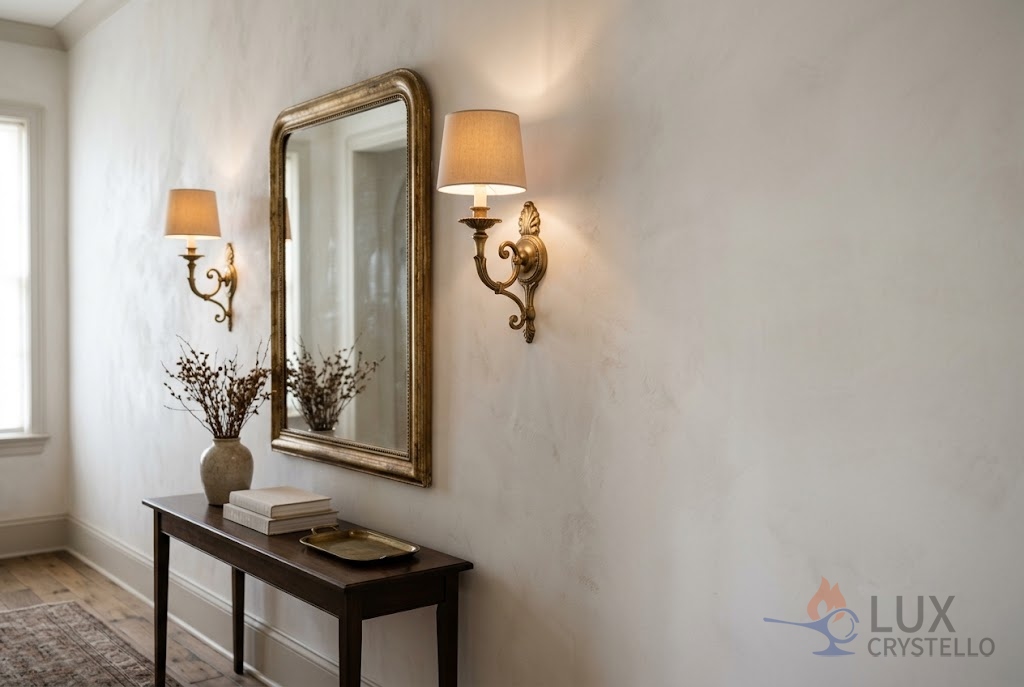
Whether the finish is sealed matters more than which finish you chose. Lacquered brass needs a dry cloth and nothing else. Unsealed brass will keep moving, darkening around the switch and staying bright where nobody touches it, which is charming on a corridor fitting and irritating beside a mirror.
One detail buyers miss: the backplate has to cover the junction box, not merely sit near it. A slim french wall sconce plate on an old octagonal box can leave a crescent of drywall showing, and a paintable extension ring is much easier to order in advance than to hunt for mid-install.
FAQ
How high should a wall light go beside a mirror?
Around 62 to 66 inches to the light source, so the glow reaches a face instead of skimming the top of the head.
Can one wall light work alone?
Beside a bed or a door, yes. On a long blank wall a single fitting tends to look stranded, so a pair or a run of three reads better.
Do I need an electrician?
For hardwired fittings, yes. Plug-in and rechargeable versions avoid wiring but show either a cord or a charging routine.
Is brass a problem in a bathroom?
Only unsealed brass in a splash zone. Use a damp-rated fitting with a lacquered finish and keep it clear of the shower.
Conclusion
A light french brass wall light earns its place by adding light and ornament in the same small gesture. Get the height right for the job, keep the projection tight in tight spaces, and a plain wall starts to feel considered.
Bring the Look Home
Before ordering, decide what the fitting has to do, read at a bedside, flatter a face at a mirror, or simply mark a hallway, then let that choose the shade. A well-placed light french brass wall light is one of the cheapest ways to make a room feel finished, so the placement is worth thinking through first.