
Blogpost keywords: baroque brass chandelier, brass baroque chandelier, classic baroque chandelier
A baroque brass chandelier is made to assert presence. It is not subtle, and it is not meant to disappear into the background. Rooted in European Baroque tradition, this chandelier style emphasizes dramatic curves, layered arms, and sculptural weight. Brass is the core material that makes this possible, allowing complex forms to remain structurally sound while delivering visual richness.
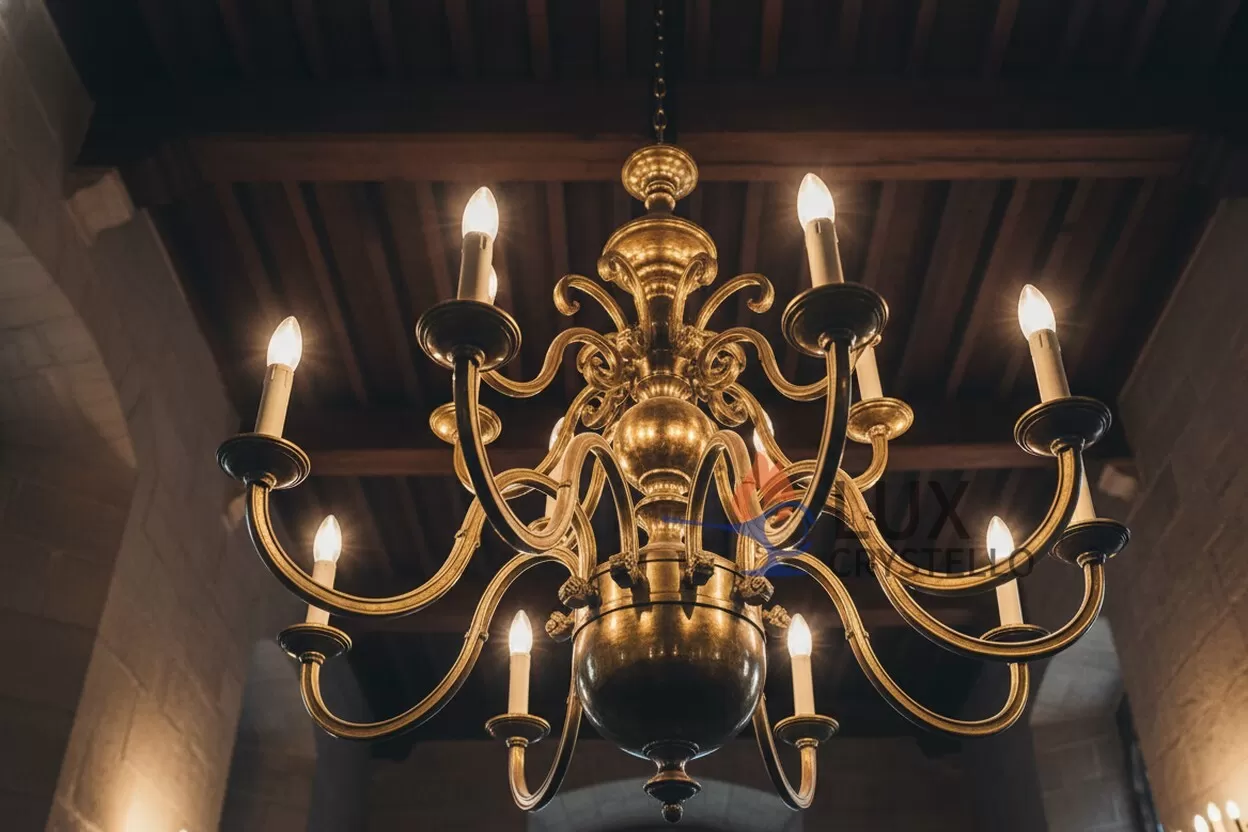
In interiors that value authority, elegance, and historical depth, a baroque brass chandelier becomes a defining architectural element. For buyers building premium ranges or specifying statement lighting for hospitality, it offers an immediately recognizable centerpiece that can anchor an entire lighting story.
The Sculptural Language of Baroque Brass Chandelier Design
Unlike minimalist chandeliers that rely on clean lines, a baroque brass chandelier is built around motion and ornament. Arms twist, expand, and intersect in deliberate patterns that echo classical architecture and sculpture. Brass reinforces these forms with warmth and depth, preventing the structure from feeling cold or mechanical.
Even without crystal or glass, the chandelier maintains complexity through metalwork alone. This material-first approach is one reason a brass baroque chandelier appeals to projects that want luxury defined by craftsmanship rather than sparkle. In photography and in person, the visual interest comes from shadows, curves, and layered volume instead of reflective add-ons.
Visual Weight and Spatial Hierarchy
A baroque brass chandelier carries strong visual weight, which directly shapes how a room is read. It naturally establishes hierarchy, drawing attention upward and defining the center of the space. That makes it especially effective in dining halls, formal living rooms, stair atriums, and reception areas where the ceiling plane needs purpose.
Placed correctly, the chandelier anchors the composition so surrounding furniture and decor can stay more restrained. The key is balancing dominance with proportion: ceiling height, diameter, drop length, and arm spread should be set to complement the room rather than overpower it. In large volumes, a baroque brass chandelier can provide architectural structure that the rest of the interior builds around.
Positioning Baroque Brass Chandeliers in Collections
Within a lighting collection, a baroque brass chandelier is typically positioned as a flagship piece. It is rarely repeated across many rooms; instead, it is used selectively to mark important moments such as entry halls, private dining, or stair landings. This controlled placement strategy helps avoid visual overload while preserving the chandelier’s status as the collection’s highlight.
For cohesion, buyers often pair the centerpiece with simpler companions: wall lights with softer profiles, ceiling fixtures with reduced ornament, and portable lamps that echo the same brass tone. Done well, the result is contrast without conflict. A brass baroque chandelier can sit at the top of a range while the supporting SKUs carry the same finish language in quieter forms.
Structural Integrity and Production Considerations
From a production standpoint, a baroque brass chandelier demands precision. Arm symmetry, joint strength, and surface consistency influence both appearance and safety. Because these fixtures can be large and heavy, hanging hardware and ceiling compatibility should be addressed early, not treated as a last-minute installation detail.
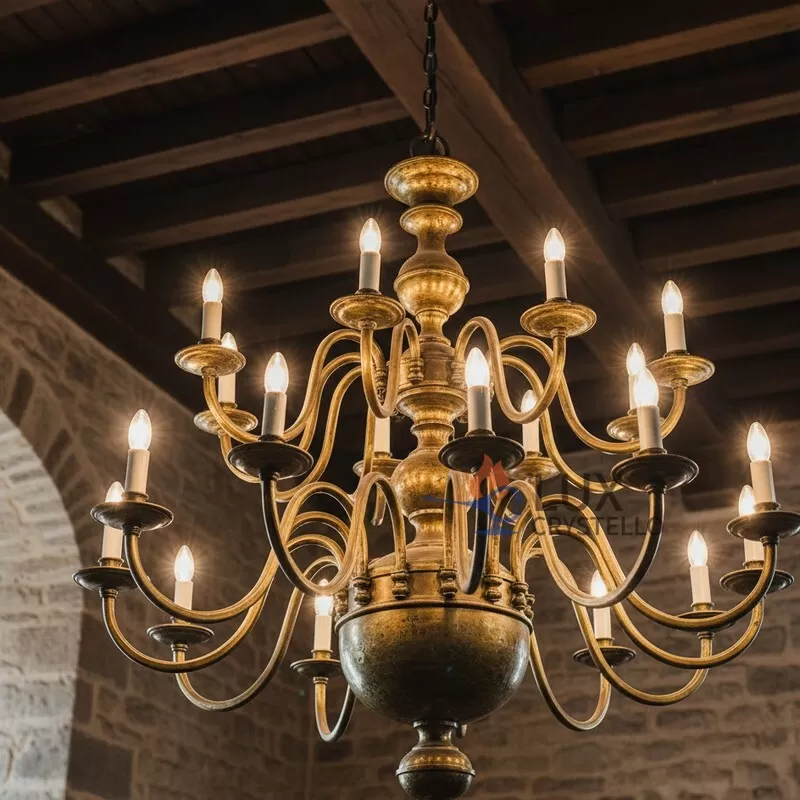
Buyers specifying a classic baroque chandelier for commercial or high-traffic environments often focus on three manufacturing checkpoints. The same priorities apply when a classic baroque chandelier is scaled up for stair atriums or reception volumes:
1. Metal forming accuracy: consistent curvature and repeatable arm geometry 2. Connection integrity: reinforced joints, stable arm-to-body interfaces, and vibration resistance 3. Surface discipline: uniform brushing direction, controlled patina tone, and consistent topcoat behavior
Many larger designs are engineered for partial disassembly, which reduces transport risk and simplifies installation. For international projects, this is also where packaging method and carton planning become part of product quality, not just logistics.
Specification Guidelines for High-Impact Rooms
A statement chandelier works best when it behaves like architecture, not decoration. A practical specification approach is to prioritize proportion, light comfort, and surrounding restraint.
1. Proportion before ornament A larger diameter with fewer layers can read more refined than a smaller body packed with detailing. This is especially true when the goal is authority rather than theatricality.
2. Comfort before brightness Baroque forms can look harsher when the light source is too exposed. Shade choices, diffusers, and lamping strategy should soften glare so the metalwork reads sculptural rather than aggressive.
3. Cohesion before contrast If the chandelier brass is warm and aged, adjacent metals should be limited or pushed into darker matte accents. The room feels more expensive when the finish story is controlled.
This is why many buyers choose a classic baroque chandelier for one or two key rooms, then use calmer brass fixtures elsewhere to maintain continuity without repetition.
Collection Planning for Hospitality and Multi-Room Programs
Hospitality lighting often requires a consistent identity that still creates moments of emphasis. A baroque brass chandelier can define arrival zones such as lobbies and stair volumes, while corridors and guest rooms use quieter pieces that echo the same brass tone. The goal is a repeatable system: one signature language, multiple intensity levels.
Finish control matters more than most teams expect. If the flagship is a brass baroque chandelier with a warm patina, supporting wall lights should not drift toward a brighter yellow brass or a cooler, green-leaning tone. The same rule applies when a classic baroque chandelier is specified for suites: a small shift in sheen can make fixtures look unrelated under warm interior lighting.
To reduce program risk, align early on:
A physical finish reference sample tied to production batches
Acceptable tolerance for tone variation across SKUs
A consistent brushing direction and topcoat specification
Mixed-SKU packaging and labeling rules for multi-room deliveries
Production and Logistics Details That Protect Perceived Quality
Building a Commanding Centerpiece for Classic Luxury Ranges
A baroque brass chandelier offers a bold way to introduce structure, history, and visual authority into interior spaces. Its sculptural brass form and timeless character make it ideal for statement applications and premium lighting collections.
We offer selected baroque brass chandelier models in stock for fast shipment and provide OEM customization, including size adjustments, decorative detailing, finish options, and customized packaging. For buyers developing a classic luxury lighting range, a brass baroque chandelier can serve as the defining centerpiece while the rest of the collection stays cohesive through controlled brass tone and proportion.
FAQ
What makes baroque brass chandelier unique?
Excellent baroque brass chandelier combines superior craftsmanship, attention to detail, and functional design to create an exceptional experience.
How can I enhance my classic baroque chandelier?
To enhance your classic baroque chandelier, focus on quality materials, proper maintenance, and complementary accessories that match your style.
What are the key considerations for brass baroque chandelier?
Key considerations include material quality, design aesthetics, functional performance, and overall durability when evaluating brass baroque chandelier.
If you are interested in French lamps or bronze art or have related needs,
please feel free to contact us. click here