
Blogpost keywords: brass lighting casting craftsmanship, lost-wax casting method, lighting fixture aesthetics
Brass lighting casting craftsmanship defines how a lighting fixture performs visually and structurally over time. Beyond illumination, brass fixtures rely on casting quality to express balance, proportion, and surface depth. In high-end interiors, the casting process is not simply a manufacturing step but a foundation that determines how light interacts with metal and how the object ages within a space.
Unlike fabricated or stamped components, cast brass elements retain mass and continuity. This material presence supports long-term stability while allowing refined detailing that contributes directly to lighting fixture aesthetics.
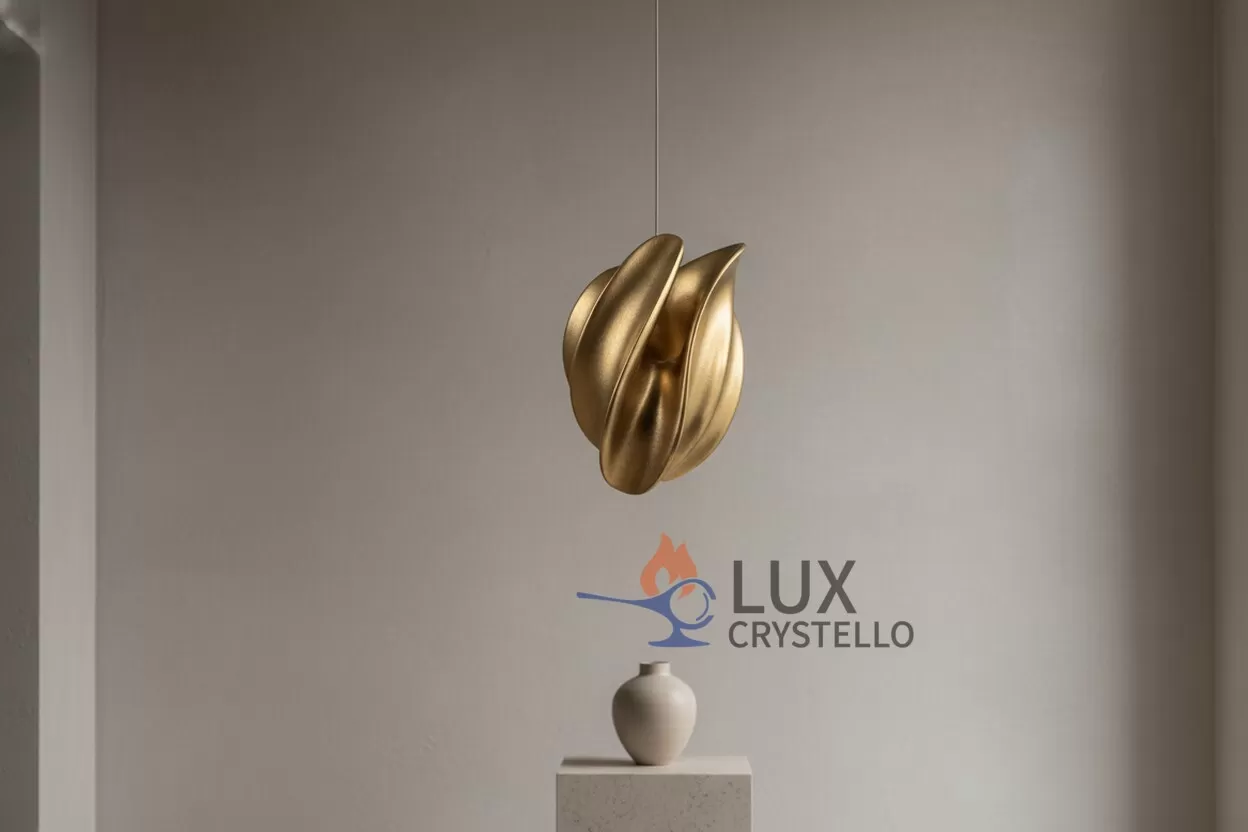
Brass Lighting Casting Craftsmanship and the Lost-Wax Casting Method
Brass lighting casting craftsmanship is closely associated with the lost-wax casting method, a process valued for its precision and design flexibility. Production begins with a wax model that defines the final geometry. This model is coated with a ceramic shell, heated to remove the wax, and filled with molten brass. Once cooled, the result is a solid brass component that preserves the original form.
The lost-wax casting method enables smooth transitions, fine relief, and controlled thickness that are difficult to achieve through mechanical forming. Arms, joints, and decorative elements emerge as unified structures rather than assembled parts. For lighting fixtures, this reduces weak points and enhances structural integrity.
From a production standpoint, this method balances artisanal expression with repeatability. While each casting may show subtle variation, molds ensure dimensional consistency across batches.
Structural Integrity and Surface Detail
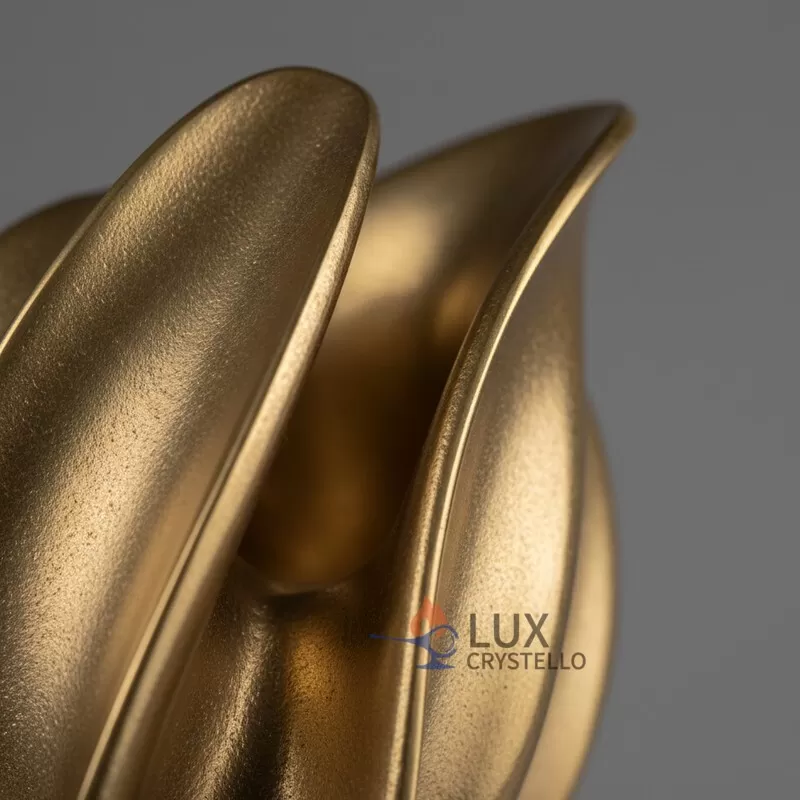
One advantage of the lost-wax casting method is its impact on surface quality. Cast brass retains subtle textures from the mold, which contribute to depth once finishing is applied. Polishing, brushing, or patination enhances these characteristics rather than masking them.
In brass lighting casting craftsmanship, surface refinement is typically restrained. Excessive machining can flatten details and remove material density. By contrast, well-controlled casting allows surfaces to be refined while maintaining the original form.
This approach supports lighting fixture aesthetics that feel intentional and grounded. Light reflects softly across curved brass surfaces, avoiding harsh glare and emphasizing material warmth.
Lighting Fixture Aesthetics and Design Intent
Lighting fixture aesthetics are shaped by how form, material, and finish interact. Brass cast through investment methods carries visual weight that anchors a space. Whether used in chandeliers, wall sconces, or pendant lights, cast components contribute to a sense of permanence.
Designers often favor cast brass when seeking visual continuity. Because the lost-wax casting method supports complex geometry, decorative elements can be integrated into the structure rather than added later. This integration results in cleaner silhouettes and cohesive visual language.
In both classic and contemporary interiors, cast brass fixtures adapt well. Their appeal comes not from trend-driven styling but from material clarity and proportion.
Application in Residential and Commercial Projects
Brass lighting casting craftsmanship plays a significant role in residential and hospitality environments. In dining rooms or lobbies, cast brass fixtures provide focal points that balance scale and detail. Their durability supports frequent use without compromising appearance.
In commercial projects, consistency is critical. Reliable casting ensures that multiple fixtures maintain uniform proportions and finish tone. This consistency strengthens lighting fixture aesthetics across large spaces such as hotels or restaurants.
Because cast brass ages gracefully, minor wear often enhances character rather than detracting from it. This quality aligns with interiors designed for longevity rather than rapid turnover.
Conclusion
Brass lighting casting craftsmanship reflects a material-driven approach to lighting design. Through the lost-wax casting method, brass fixtures achieve structural stability, refined surface detail, and cohesive lighting fixture aesthetics. This combination supports long-term performance and visual relevance across diverse interior contexts.
Extending Craft Awareness in Lighting Selection
When evaluating brass fixtures, attention to casting quality offers insight into overall production standards. Understanding how the lost-wax casting method influences lighting fixture aesthetics helps guide selections toward pieces that balance durability, proportion, and enduring material value.
FAQ
What makes brass lighting casting craftsmanship unique?
Excellent brass lighting casting craftsmanship combines superior craftsmanship, attention to detail, and functional design to create an exceptional experience.
How can I enhance my lighting fixture aesthetics?
To enhance your lighting fixture aesthetics, focus on quality materials, proper maintenance, and complementary accessories that match your style.
What are the key considerations for lost-wax casting method?
Key considerations include material quality, design aesthetics, functional performance, and overall durability when evaluating lost-wax casting method.
If you are interested in French lamps or bronze art or have related needs,
please feel free to contact us. click here