
Blogpost keywords: hand-polished lamp holder, copper polishing technology, brass surface treatment
A hand-polished lamp holder represents a finishing stage where material behavior, surface control, and human judgment intersect. Unlike automated processes, hand polishing requires continuous visual and tactile assessment, ensuring that the metal surface responds evenly to light and touch. In lighting components, this step directly influences perceived quality, as the lamp holder is often handled during installation and maintenance.
The relevance of a hand-polished lamp holder is not limited to appearance. Proper finishing reduces micro abrasions that may accelerate oxidation, supporting long term performance in both residential and hospitality environments.

Why Hand-Polished Lamp Holder Finishing Matters
The value of a hand-polished lamp holder lies in consistency rather than speed. During polishing, artisans regulate pressure and direction to maintain dimensional accuracy while refining the surface. This control is difficult to replicate mechanically, especially on curved or transitional forms.
Copper polishing technology plays a foundational role at this stage. Techniques developed for copper alloys inform how abrasives interact with softer metals, helping prevent uneven wear. When adapted carefully, copper polishing technology supports smooth transitions without flattening edges or erasing subtle contours.
As part of a broader brass surface treatment strategy, hand polishing acts as a final refinement rather than a corrective step. It enhances the natural character of brass instead of masking it.
The Relationship Between Polishing and Surface Treatment
A structured brass surface treatment process begins well before polishing. Casting or forming quality determines how much refinement is required later. When base surfaces are sound, a hand-polished lamp holder can reach its final state with minimal material removal.
Copper polishing technology informs abrasive selection and sequence. Coarser stages address minor inconsistencies, while finer passes focus on light diffusion and tactile smoothness. This progression supports predictable results across batches, even when each piece is finished individually.
Within brass surface treatment, hand polishing also prepares components for optional sealing or patination. A stable polished surface ensures coatings adhere evenly, preserving the intended finish over time.
Common Misunderstandings About Hand Polishing
One misconception is that hand polishing is purely aesthetic. In reality, a hand-polished lamp holder also improves functional reliability by reducing sharp edges and surface stress points. Another misunderstanding is that polishing eliminates material character. When guided by copper polishing technology, the process enhances natural variation without introducing visual noise.
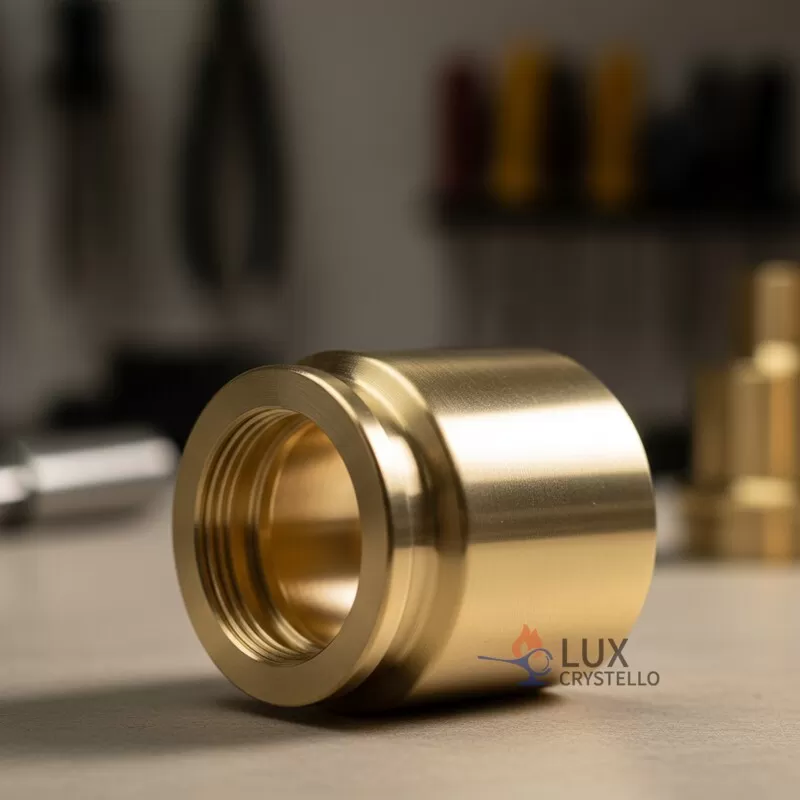
It is also assumed that hand finishing lacks consistency. In practice, standardized brass surface treatment protocols allow artisans to achieve repeatable results while retaining human oversight where precision matters most.
Evaluating Finished Components in Practice
A well-executed hand-polished surface is characterized by its consistent finish. Light should glide smoothly across the metal, avoiding harsh or fragmented reflections. The transition between polished facets and structural elements should appear deliberate, maintaining distinct planes rather than being softened away.
From a maintenance standpoint, a finely finished surface is also more practical. Its smoothness resists the accumulation of dust and simplifies cleaning, helping preserve its visual appeal over the long term.
Conclusion
A hand-polished brass component embodies the considered integration of material understanding and artisanal technique. This approach, underpinned by precise metal finishing and a disciplined treatment process, emphasizes enduring surface quality, refined tactility, and structural longevity over the efficiencies of high-volume manufacturing.
Craftsmanship as a Selection Criterion
When specifying lighting components, close inspection of a polished finish can serve as a reliable indicator of overall production standards. Recognizing how meticulous finishing and protective treatments work in concert informs decisions that prioritize durability, ease of upkeep, and the inherent quality of the material itself.
FAQ
What makes hand-polished lamp holder unique?
Excellent hand-polished lamp holder combines superior craftsmanship, attention to detail, and functional design to create an exceptional experience.
How can I enhance my brass surface treatment
To enhance your brass surface treatment, focus on quality materials, proper maintenance, and complementary accessories that match your style.
What are the key considerations for copper polishing technology?
Key considerations include material quality, design aesthetics, functional performance, and overall durability when evaluating copper polishing technology.
If you are interested in French lamps or bronze art or have related needs,
please feel free to contact us. click here