
Blogpost Keywords: light blue glass pendant light, chandelier wall lamp, living room chandelier modern
A light blue glass pendant light does something that clear or frosted glass cannot — it tints the light and the space it illuminates. The blue cast creates a cool, calming atmosphere that works particularly well in coastal, Scandinavian, and contemporary interiors.
The challenge with colored glass lighting is getting the color right. Too pale and it reads as clear. Too saturated and it overwhelms. The fixture should add color without dominating.
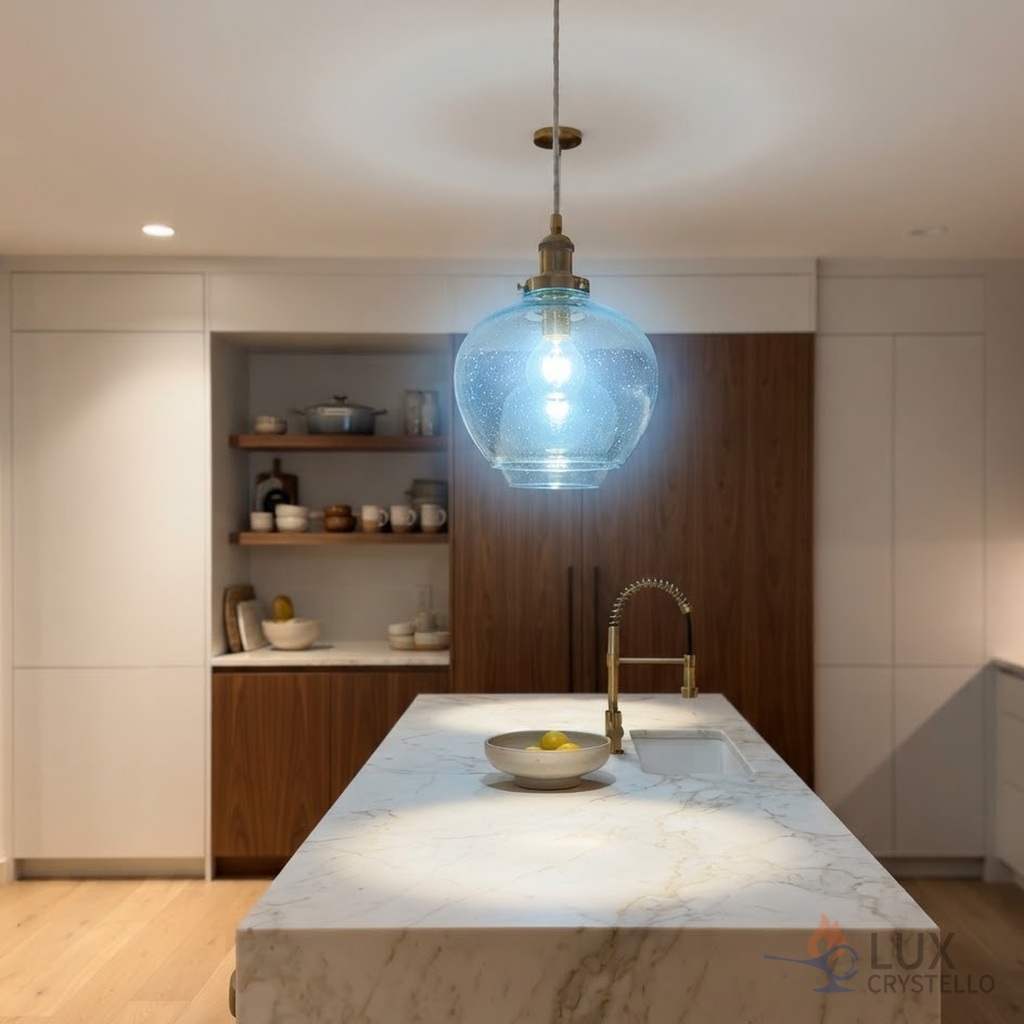
Where Blue Glass Pendants Work Best
Kitchens benefit from a light blue glass pendant light hung over an island or breakfast bar. The cool tone complements white cabinetry and natural wood. Multiple pendants in a row over a long island create rhythm and even task lighting.
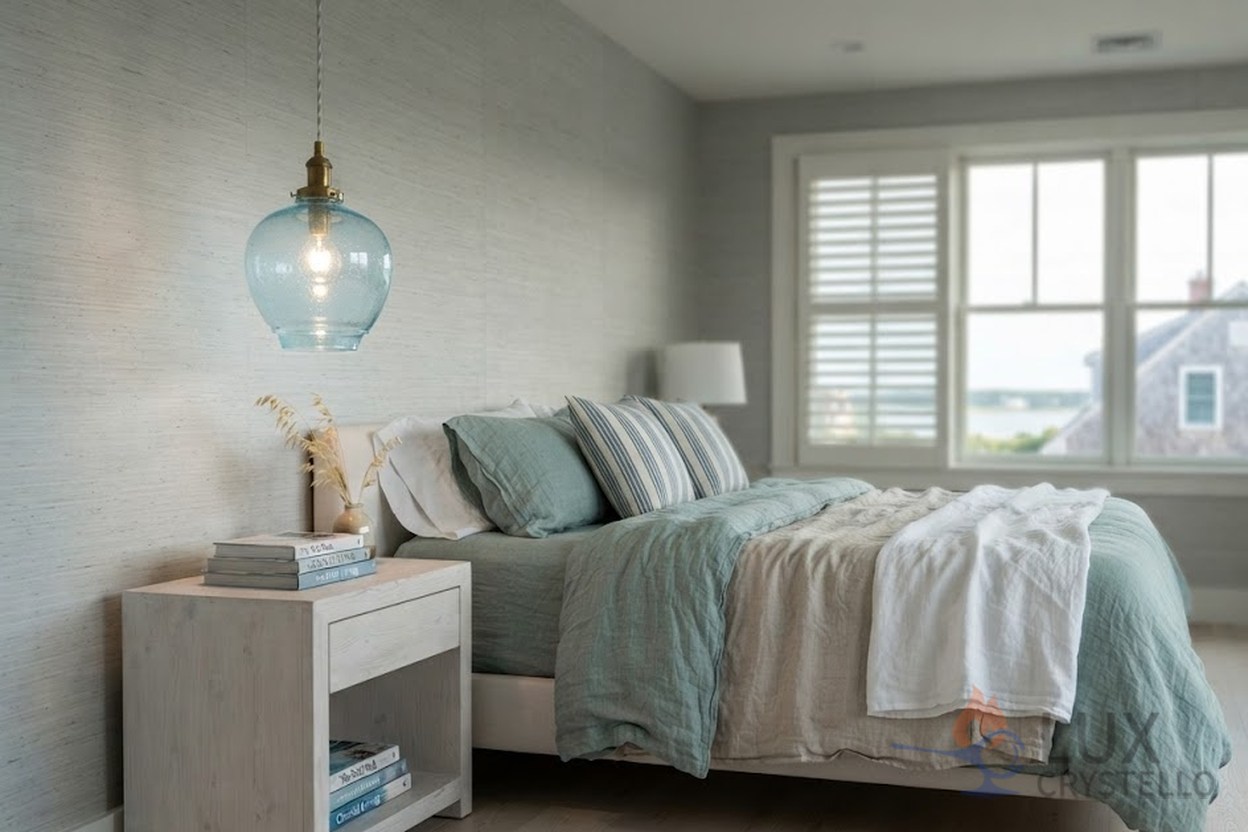
In bedrooms, a single blue glass pendant hung beside the bed as a reading light replaces a table lamp and frees up nightstand space. The blue tint creates a calming pre-sleep atmosphere.
Bathrooms with white tile and natural materials pair well with this color. It adds visual interest to a neutral palette without the warmth of amber or the intensity of saturated colors.
Pairing With Other Fixtures
A light blue glass pendant light provides task or accent lighting at a specific point. It does not provide the ambient overhead light that a living room chandelier modern fixture delivers. For a complete plan, pair it with ambient and accent fixtures.
A chandelier wall lamp in a complementary metal finish — brushed nickel, chrome, or matte brass — adds accent lighting at wall level. The wall lamp should not compete with the pendant’s color. A neutral shade lets the blue be the room’s color accent.
For rooms with a living room chandelier modern fixture already installed, adding a blue glass pendant over a specific area creates a focal point with color while the chandelier provides general illumination.
Glass Quality and Color Consistency
Hand-blown glass has subtle variations in color density that create visual depth. Machine-made glass is more uniform but can look flat. For a light blue glass pendant light, the hand-blown option offers more character.
Color consistency across multiple pendants matters when hanging several over an island. A shade variation invisible in individual fixtures becomes obvious side by side. Requesting samples from the same production run prevents this.
Glass thickness affects color intensity. Thicker glass deepens the blue. Thinner glass lets more light through but may appear washed out. Consistent wall thickness delivers even color.
Practical Considerations
Bulb choice affects the color that passes through the blue glass. A warm-toned bulb (2700K) creates a softer, more muted blue. A cool-toned bulb (4000K) produces a crisper, more vivid blue. Testing with your intended bulb before finalizing is practical.
Cleaning is straightforward — a soft cloth with mild glass cleaner. The colored glass does not show dust as readily as clear glass, which is a practical advantage.
Installation height matters. Over a kitchen island, the pendant should hang 30 to 36 inches above the countertop. Over a dining table, 28 to 34 inches above the surface.
The glass-making technique affects the quality of a light blue glass pendant light. Mouth-blown glass has organic variations in color density that create depth and character. Machine-pressed glass is more uniform but can look flat.
For kitchen islands, spacing multiple light blue glass pendant light fixtures evenly creates rhythm. The spacing should be consistent — roughly 24 to 30 inches apart — and the hanging height identical for all fixtures.
A chandelier wall lamp in crystal and brass creates the same sparkle as a ceiling chandelier but at eye level, where the crystal’s refraction is most visible and most appreciated.
For hallways, a single chandelier wall lamp at the end of the corridor creates a visual destination that draws the eye forward. The fixture should be centered on the wall at the hallway’s terminus.
A living room chandelier modern design in brushed brass or matte black provides ambient light while serving as a sculptural element. The fixture’s form matters as much as its light output — it should look good when turned off.
FAQ
Will it make the room look cold?
The blue tint creates a cool atmosphere, but the effect depends on the room’s other colors. With warm wood tones and natural textiles, a light blue glass pendant light adds contrast without making the space feel cold.
How many should I hang over an island?
For a 6-foot island, two pendants. For an 8-foot island, three. Even spacing and consistent height create visual order.
Can I mix it with a modern chandelier?
Yes, if the metal finishes coordinate and the light temperatures are compatible. The pendant provides color accent; the chandelier provides ambient light.
Conclusion
A light blue glass pendant light adds a color dimension that neutral fixtures cannot. Paired with a living room chandelier modern overhead and a chandelier wall lamp for accent, it completes a layered plan with a distinctive color accent.
Adding a Blue Glass Pendant to Your Space
When selecting a light blue glass pendant light, consider the glass quality, color consistency, and how it pairs with existing lighting. SHD Glassware offers glass pendants in a range of colors, along with chandeliers and wall sconces.
The right pendant adds color, light, and character.