
Blogpost Keywords: floor lamp, living room chandelier modern, wall sconce french
A floor lamp does more than illuminate a room — it defines the mood, anchors a seating area, and fills vertical space that table lamps and ceiling fixtures cannot reach. The right standing light transforms a corner from dead space into a focal point.
Choosing the right one means understanding how it fits into the room’s overall lighting plan. This fixture works best as part of a layered scheme that includes overhead and accent lighting.
Types and Their Best Uses
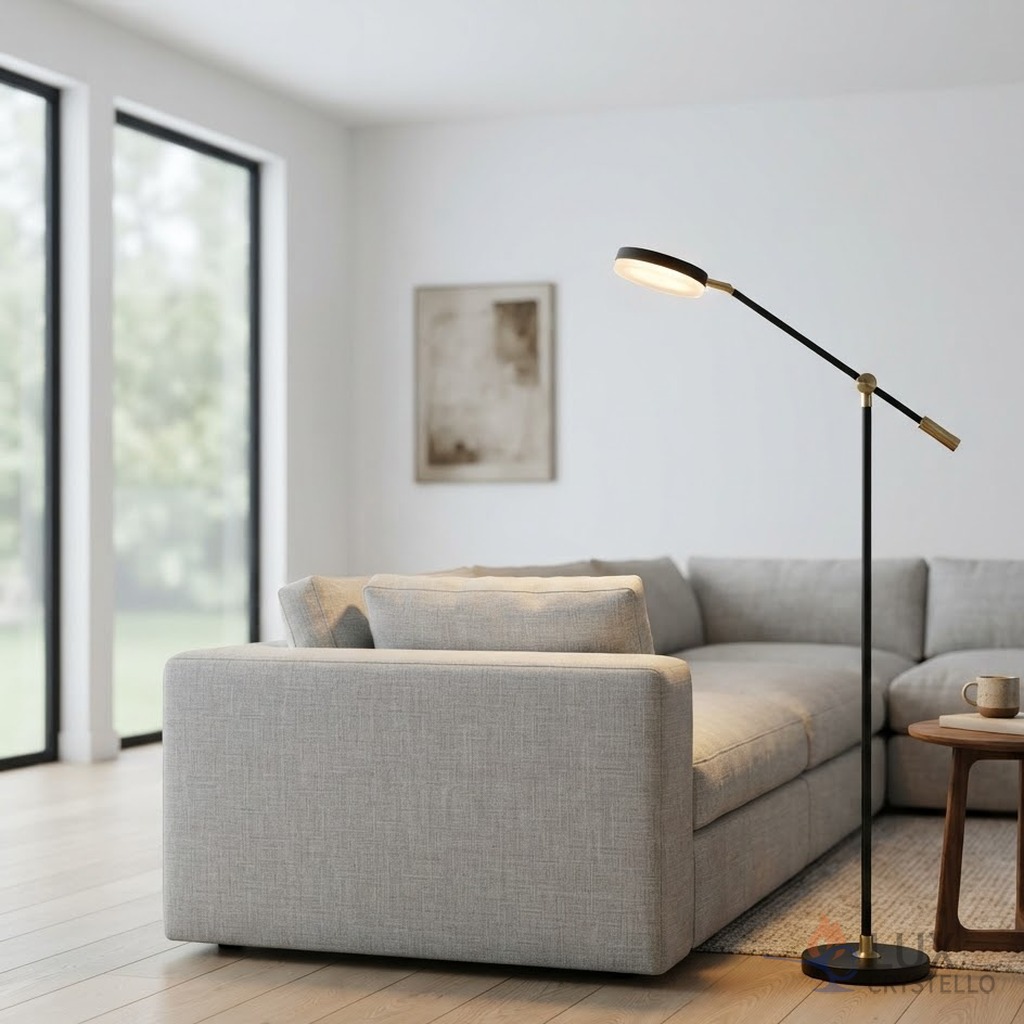
An arc design extends over a seating area, providing overhead-like light without ceiling installation. It works well beside a sofa or reading chair. The arc must be tall enough to clear the head of anyone sitting beneath it.
A tripod standing light adds sculptural presence to a room. The three-legged base provides stability on uneven surfaces, and the shade directs light both upward and outward. It works well in living rooms and bedrooms where ambient lighting is the priority.
A torchiere design directs light upward toward the ceiling, which bounces back down as soft ambient light. It is one of the most effective ways to illuminate a room without harsh direct light. The trade-off is that it does not provide task lighting for reading.
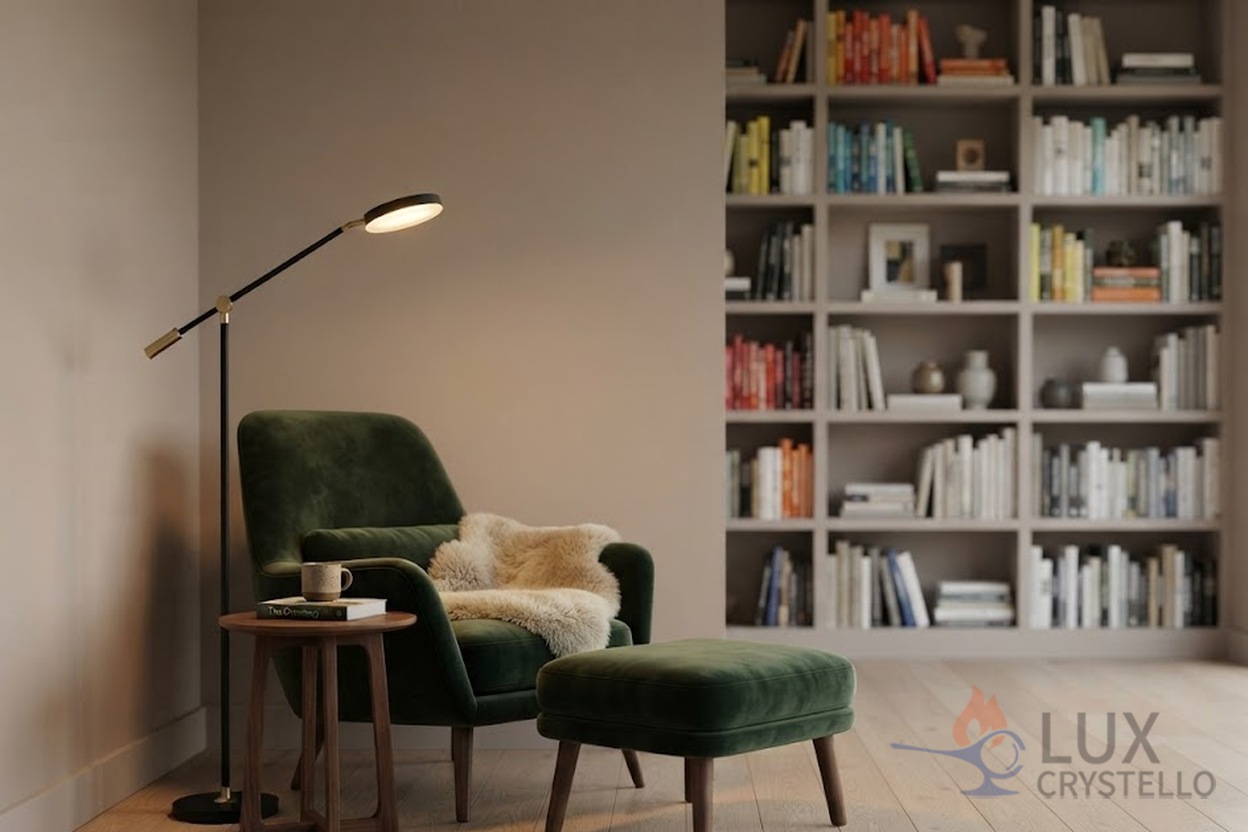
A reading light features an adjustable arm and directed shade. For rooms that double as reading spaces, pairing this with a living room chandelier modern overhead gives both task and ambient options.
How It Fits Into Layered Lighting
Professional lighting design uses three layers: ambient, task, and accent. A floor lamp typically serves the ambient or task layer, depending on its design.
A living room chandelier modern fixture provides the ambient overhead layer. A wall sconce french design adds accent lighting and visual interest to the walls. A standing light fills in the gaps — providing task lighting where overhead light does not reach.
The three-layer approach works because no single fixture type does everything well. A chandelier illuminates broadly but may leave reading corners dark. A wall sconce french fixture highlights a wall but does not light the floor. The standing light bridges these gaps.
Height, Shade, and Placement
Standing lights range from about 4 feet for short accent models to over 7 feet for arc and torchiere designs. Task lamps should position the shade at roughly eye level when seated. Ambient lamps can be taller since their light is less directional.
Shade material affects both light quality and aesthetics. Linen shades diffuse softly. Glass shades direct more precisely. Metal shades focus downward for task use. The shade should complement the room’s other fixtures — a wall sconce french design in wrought iron pairs better with linen than chrome.
Placement matters as much as the fixture itself. One behind a sofa creates a reading nook. Two flanking a fireplace create symmetry. The base must be stable enough for the surface — thick carpet can make some bases wobble.
What to Check Before Buying
Stability is the first test. A standing light that tips when someone brushes against it is a safety hazard. The base should be heavy and wide enough for normal conditions.
Switch location matters for daily use. A foot switch on the cord is convenient for fixtures placed beside seating. A rotary switch on the socket looks cleaner but is harder to reach.
Cord length and routing are often overlooked. A short cord limits placement options. A visible cord running across the floor is an eyesore. Models with built-in cord channels or long cords that route along baseboards look neater.
A floor lamp with a weighted base stays upright on thick carpet and hardwood alike. The base material — cast iron, steel, marble, or concrete — determines both the weight and the stability on different floor surfaces.
The shade on a floor lamp affects both the light quality and the room’s aesthetic. A linen shade diffuses light softly for ambient use. A metal shade directs light downward for task use.
For living rooms that double as home offices, a floor lamp with an adjustable arm provides task lighting for work and ambient lighting for relaxation.
Cord management is an often-overlooked detail. A floor lamp with a visible cord running across the floor looks unfinished. Models with cord channels or long cords that route along baseboards maintain a clean appearance.
A living room chandelier modern design in brushed brass or matte black provides ambient light while serving as a sculptural element. The fixture’s form matters as much as its light output — it should look good when turned off.
FAQ
Can a standing light be the primary light source?
A single fixture works in small rooms, but larger spaces benefit from layered lighting — combining this with a living room chandelier modern overhead and wall sconce french accents.
What height works best beside a sofa?
For reading, the shade bottom should be at eye level when seated — typically 58 to 64 inches from the floor. For ambient use, the shade can be higher.
How do I match it to existing fixtures?
Consider the metal finish, shade material, and style. A wall sconce french design in aged bronze pairs well with a similar finish. A living room chandelier modern piece in polished nickel suggests a more contemporary choice.
Conclusion
A floor lamp is one of the most versatile lighting fixtures in any room. It provides task lighting for reading, ambient lighting for entertaining, and visual interest that overhead fixtures alone cannot deliver. Whether paired with a living room chandelier modern overhead or a wall sconce french accent, it completes the lighting picture.
Finding the Right Floor Lamp
When selecting a floor lamp, consider how it fits into your room’s overall lighting plan. SHD Glassware offers standing lights, chandeliers, and wall sconces for residential and commercial spaces.
The right fixture does not just light a room — it defines it.