
Blogpost Keywords: brass crystal chandelier, crystal and brass light fixture, luxury brass chandelier
A brass crystal chandelier does something few other fixtures manage: it reads as jewelry for the ceiling while anchoring the room. The appeal is clear; the details separating a lasting piece from a fast regret are less obvious. This guide covers construction, finish, scale, and placement.
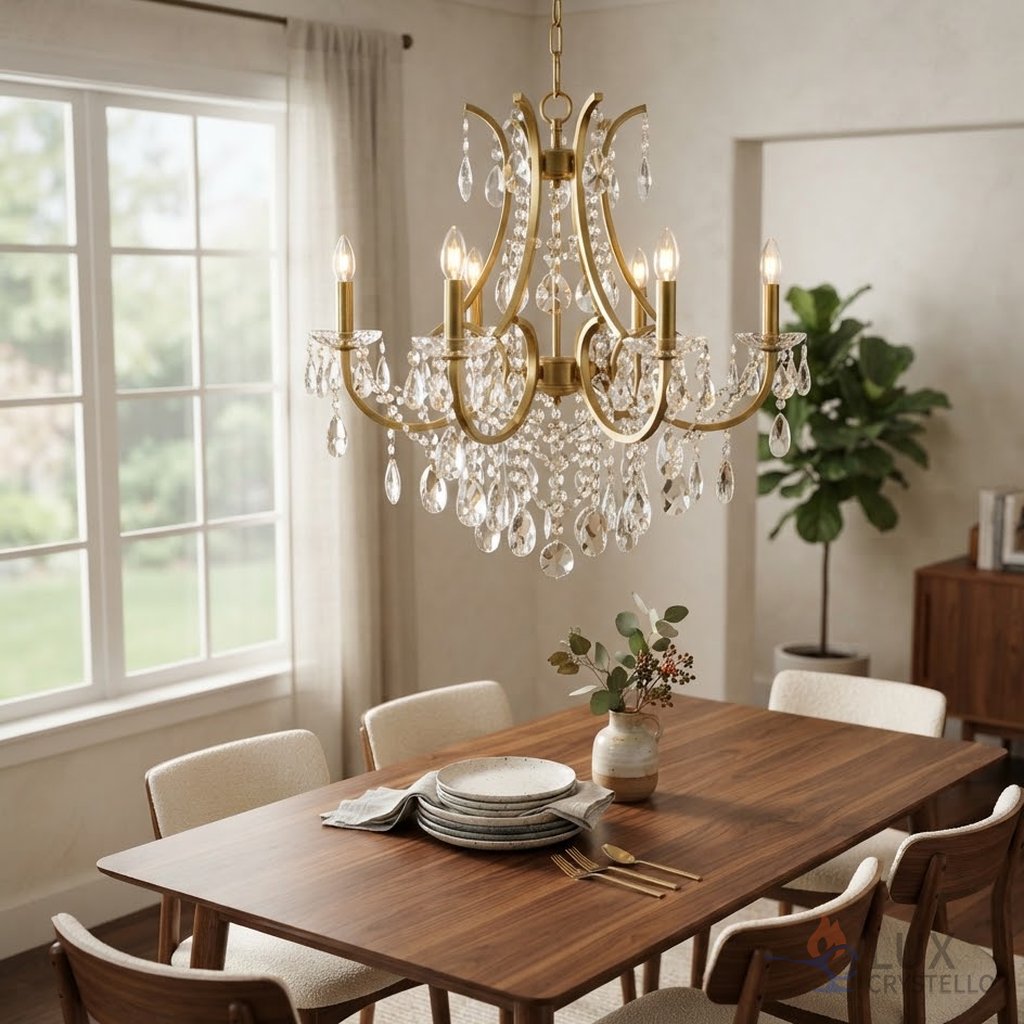
What Makes This Style Worth the Investment
The value sits in two materials working together. The frame carries the structure, ideally solid brass rather than brass-plated zinc, while the crystal catches and scatters light. A well-built piece shows even seams, smooth pivots, and level crystals. What separates a luxury brass chandelier from a decorative replica is hidden: machine-cut crystal, a lacquered or patinated finish, and stable hardware.
That matters because a chandelier is one of the few items you notice from every doorway; budget fixtures with glued-on crystal can look convincing in photos yet flat in person, since sparkle depends on facet count.
Brushed, Polished, or Antique: Pick a Finish First
Most buyers pick a finish from photos; smarter is matching the room’s metals first. Polished brass is mirror-bright and formal, at home in Art Deco settings. Brushed brass has a soft, matte glow suited to mid-century modern and minimalist interiors. Antique brass carries a darker patina that suits French ornate or farmhouse rooms. In practice, brushed brass is the easiest to live with, hiding fingerprints and tarnishing slowly.
Match the Fixture to the Room, Not the Catalog
Scale is the most common mistake. A brass crystal chandelier that looks graceful in a showroom can overwhelm a modest dining room, while a dainty piece vanishes under a two-story foyer ceiling. A common rule: add the room’s length and width in feet; that sum in inches is the ideal diameter. A crystal and brass light fixture follows the same math.
Hanging height matters too. In a dining room, roughly 30 to 34 inches above the tabletop keeps the light intimate; in practice, higher loses the glow, lower blocks the view. In an entryway, the chandelier is the first impression; center it on the sight line from the door. With a double-height ceiling, a luxury brass chandelier with cascading crystal is the classic showpiece. In living rooms, add a dimmer; in bedrooms, scale down.
A common scenario: a buyer orders an eight-arm fixture for a 10-by-12-foot dining room, then spends a weekend relocating it to the foyer because the proportions overwhelm the table — a costly, avoidable swap.
The Mixed Metals Question, Settled
The old rule that all room metals must match has faded, and brass is a big reason why. A brass crystal chandelier can sit beside matte black sconces, satin nickel pulls, or chrome table lamps, as long as one finish repeats three times. Brass anchors the scheme, softening cool grays and lifting dark woods. In an industrial loft full of black iron, a crystal and brass light fixture supplies the needed warmth.
Polished or Antique: A Finish Comparison
Choosing between finishes is the part of buying that buyers rush, yet it drives both look and upkeep. The table compares the two common directions; brushed brass lands between them.
| Consideration | Polished Brass | Antique Brass |
| Finish character | Mirror-bright, formal | Darkened patina, lived-in |
| Natural settings | Art Deco, glam, traditional dining | French ornate, farmhouse, rustic |
| Daily upkeep | Shows smudges, needs frequent wiping | Forgiving, ages gracefully |
| Best crystal pairing | Clear crystal, maximum sparkle | Champagne or amber crystal |
Polished brass delivers the strongest sparkle, especially with clear crystal, so it dominates formal dining rooms and Art Deco spaces. Antique brass trades brightness for depth, pairing with amber or champagne crystal in French ornate and farmhouse rooms. Upkeep is where buyers change their minds: polished shows every smudge; antique accepts patina as character. Buyers wanting minimal upkeep usually choose a crystal and brass light fixture in a brushed or antique finish.
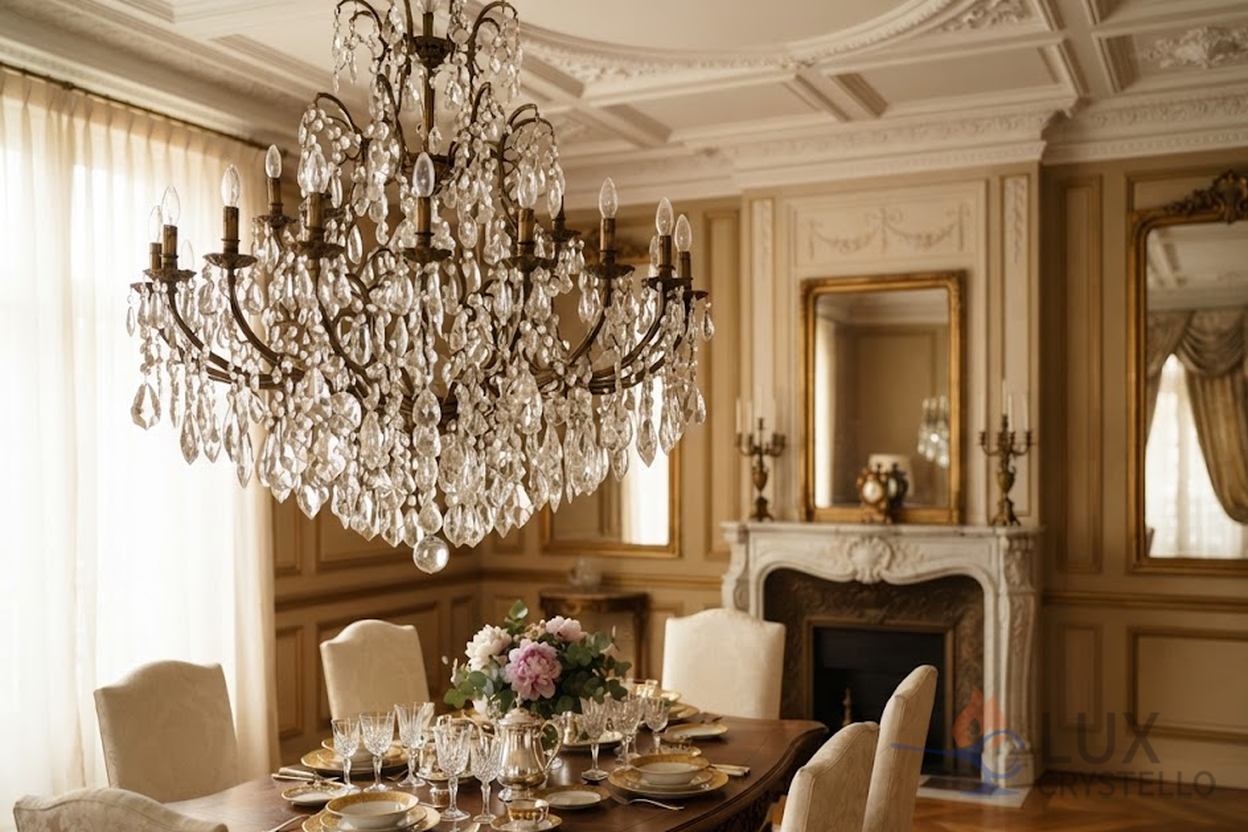
If polished brass is the tuxedo and antique brass the heirloom chair, brushed brass is the everyday blazer, versatile in mid-century modern, minimalist, or transitional rooms. That middle ground is why brushed finishes lead US catalogs, though a brass crystal chandelier in any of the three reads as a focal point the moment it switches on.
FAQ
How Much Light Does a Brass Crystal Chandelier Provide?
That depends on the arm count and bulbs. A six-arm fixture with dimmable LED candelabra bulbs typically suits a dining room; eight- or ten-arm pieces fit foyers.
Is It Hard to Maintain?
Care is simple: dust the crystal with a dry cloth, wipe the brass with a damp one. Avoid ammonia-based cleaners, which strip lacquer. A brass crystal chandelier with a brushed or antique finish needs less upkeep than a polished one.
Should It Be Hardwired or Plug-In?
Most full-size chandeliers are hardwired and need a ceiling junction box rated for the fixture’s weight, commonly 50 pounds or more. Plug-in versions exist for renters, though the cord stays visible. Confirm the fixture is UL listed.
Conclusion
A brass crystal chandelier rewards buyers who slow down: verify the construction, match the finish to the room’s metals, and size the piece to the space. The right fixture becomes the focal point for decades; the wrong one becomes a costly swap. The goal is a luxury brass chandelier that always belonged there, and with a short checklist, it is achievable.
Find the Chandelier That Fits Your Room
Shopping for a brass crystal chandelier is easier when someone else has done the sorting. Buyers can review the Lux Brass Lamps brass chandelier collection, grouped by finish, room, and style, with care guidance. A luxury brass chandelier should feel like a confident addition to the room, and with the right checklist, it will.