
Blogpost Keywords: light french brass and crystal chandelier, cut crystal arms, mixed material chandelier
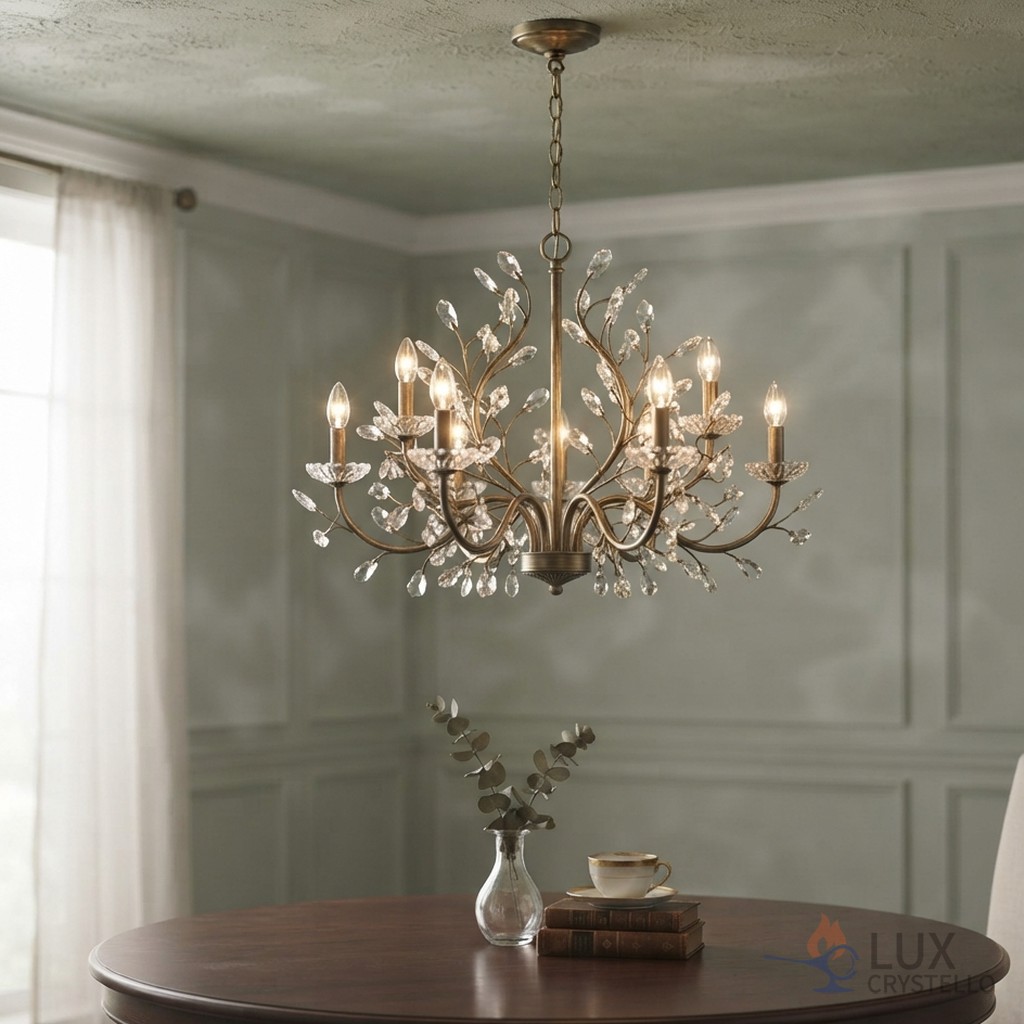
A light french brass and crystal chandelier is built on a contrast: the warm, soft metal of the frame against the cold, sharp flash of the crystal. That pairing is the whole point, and it is why the piece reads richer than brass alone without tipping into the icy formality of an all-crystal hotel fitting.
What a Light French Brass and Crystal Chandelier Combines
The frame carries the French character: slim scrolls, a bright or antique finish, and restraint in the arms. The crystal carries the performance: cut crystal arms or drops that bend the bulb’s beam into soft points across the wall. Together they make a mixed material chandelier that feels both warm and celebratory.
Brass keeps the crystal from going cold. Without the warm frame, cut crystal reads clinical; without the crystal, brass reads calm but plain. A practical consideration is balance: too much crystal buries the French scroll, too little leaves the frame looking undressed.
One buyer chose a piece with crystal only on the arms and found it read elegant at dinner yet quiet by day, because the brass led when the bulbs were off and the crystal led when they were on.
Crystal-on-Brass Versus Crystal-Only
Two constructions get confused. Horizontal comparison: a light french brass and crystal chandelier wraps crystal around a warm brass frame for balance; an all-crystal piece drops the metal and reads formal and cold; a mixed material chandelier may pair brass with glass or stone instead. The brass-and-crystal version is the warm middle.
| Build | Frame | Mood |
|---|---|---|
| Brass and crystal | Warm brass | Rich, balanced |
| All crystal | None or chrome | Formal, cold |
| Brass and glass | Warm brass | Calm, everyday |
Cut crystal arms cost more than glass and show it; a mixed material chandelier with glass reads nearly as good from across the room for less money.
Scale, Weight, and the Ceiling
Crystal adds weight fast. A light french brass and crystal chandelier with a full crystal load can exceed the rating of a standard ceiling box, so confirm the brace before ordering. Cut crystal arms in a smaller count keep the load sane for an older home.
For eight-and-a-half to ten-foot ceilings, a short drop over a round table reads elegant without crowding headroom. Over a long table, two smaller ones can feel more French than one large crystal statement.
One detail buyers miss: candle-style bulbs near the crystal run hot and can dull the facets over years. LED candle bulbs give the same silhouette with a fraction of the heat.
Finish, Bulbs, and Care
Bright brass makes the crystal pop; antique brass makes it feel older and softer. A lacquered finish spares you polishing. A responsible maker will state whether the piece is sealed, and that single line tells you how much upkeep to expect.
In practice, the sparkle you see in a showroom depends on the bulb colour, not just the crystal. Warm 2200K to 2700K bulbs make a light french brass and crystal chandelier sing; cool bulbs make it look like a clinic.
Cut crystal arms need the facets dusted a few times a year with a soft brush. A mixed material chandelier with sealed brass asks for nothing more than a dry wipe on the frame.
Where a Light French Brass and Crystal Chandelier Belongs
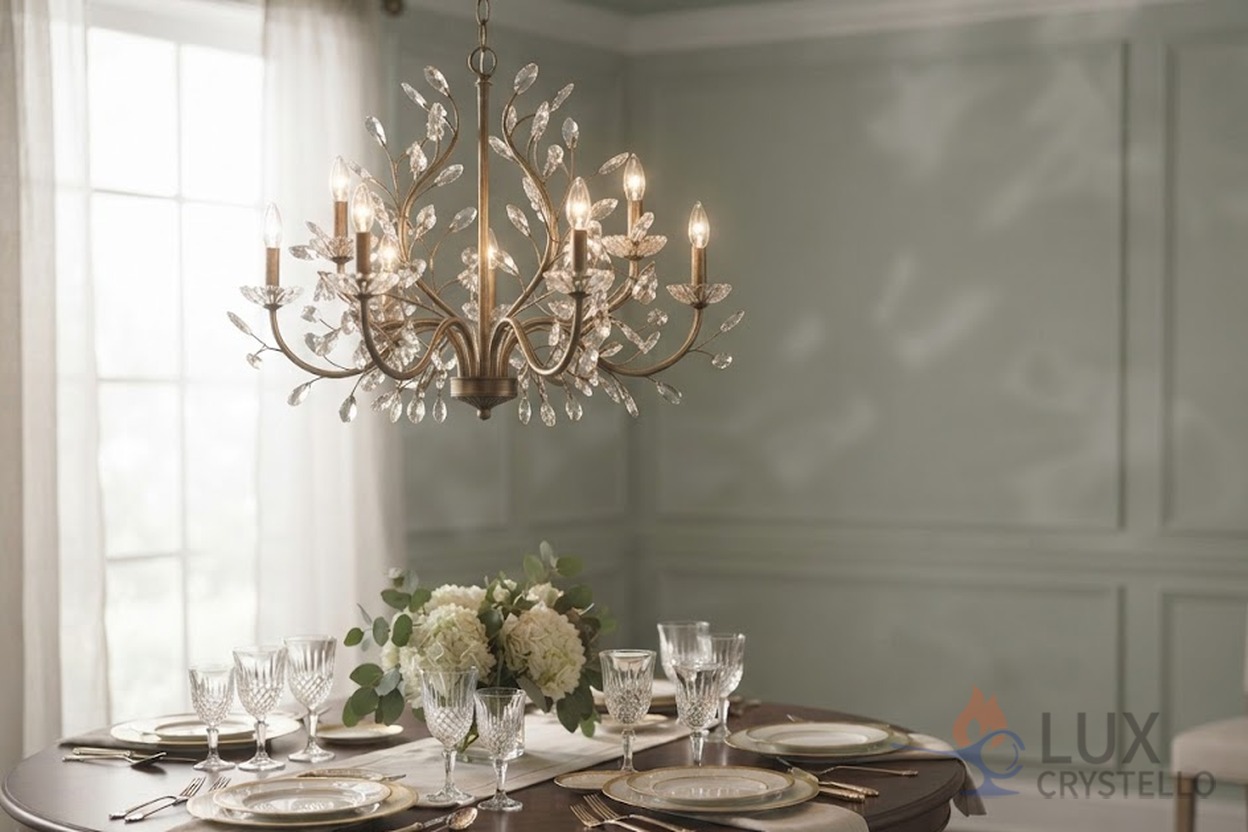
The brass-and-crystal piece belongs in rooms used mostly after dark, where the sparkle performs and the weight reads as occasion. Dining rooms and sitting rooms are the natural homes, especially with a pale wall to throw the points back.
A bedroom or dressing area also suits it, hung where the morning is soft and the evening is the point. The refraction reads as luxury rather than glare when the bulbs are warm and the room is calm.
Skip it over a busy kitchen island or a bright office, where the sparkle fights task light and just looks busy. In those rooms a glass-shade fitting does the job without the performance.
One practical note: place it where you can dust the facets a few times a year without a ladder drama. A fitting you cannot reach safely will stop being cleaned, and dull crystal is worse than none at all.
Let the bulb colour do the heavy lifting: warm 2200K to 2700K makes the crystal sing, while a cool bulb flattens the whole effect. A fitting planned around the bulb rather than against it stays convincing after dark.
A dimmer is the cheapest upgrade here, because the same fitting at full output welcomes a dinner and at a fifth of it becomes a quiet night light for the room.
FAQ
Is brass-and-crystal too formal?
No, in a slim French frame. The lighter scrollwork keeps it from feeling like a ballroom piece, so it works over a family table.
Does crystal weigh more than glass?
Yes, especially real lead crystal. Confirm the ceiling box rating or use a brace before hanging a full load.
What bulb colour suits it best?
Warm 2200K to 2700K. Cool bulbs kill the warmth and make the whole fitting look clinical.
Will the crystal dull over time?
Heat near the facets can, which is why LED candle bulbs are the safer long-term choice over incandescent.
Conclusion
A light french brass and crystal chandelier earns its place by pairing warmth with sparkle in one balanced piece. Keep the crystal on the arms, the arm count honest to the ceiling, and the room gains a focal point that performs after dark.
Bring the Look Home
Before you buy, decide whether the room is used mostly in the evening, because that single answer justifies the crystal against glass. A well-chosen light french brass and crystal chandelier turns dinner into an occasion, so the pairing is worth paying for.