
Blogpost Keywords: light french brass and glass chandelier, seeded glass shades, dual material chandelier
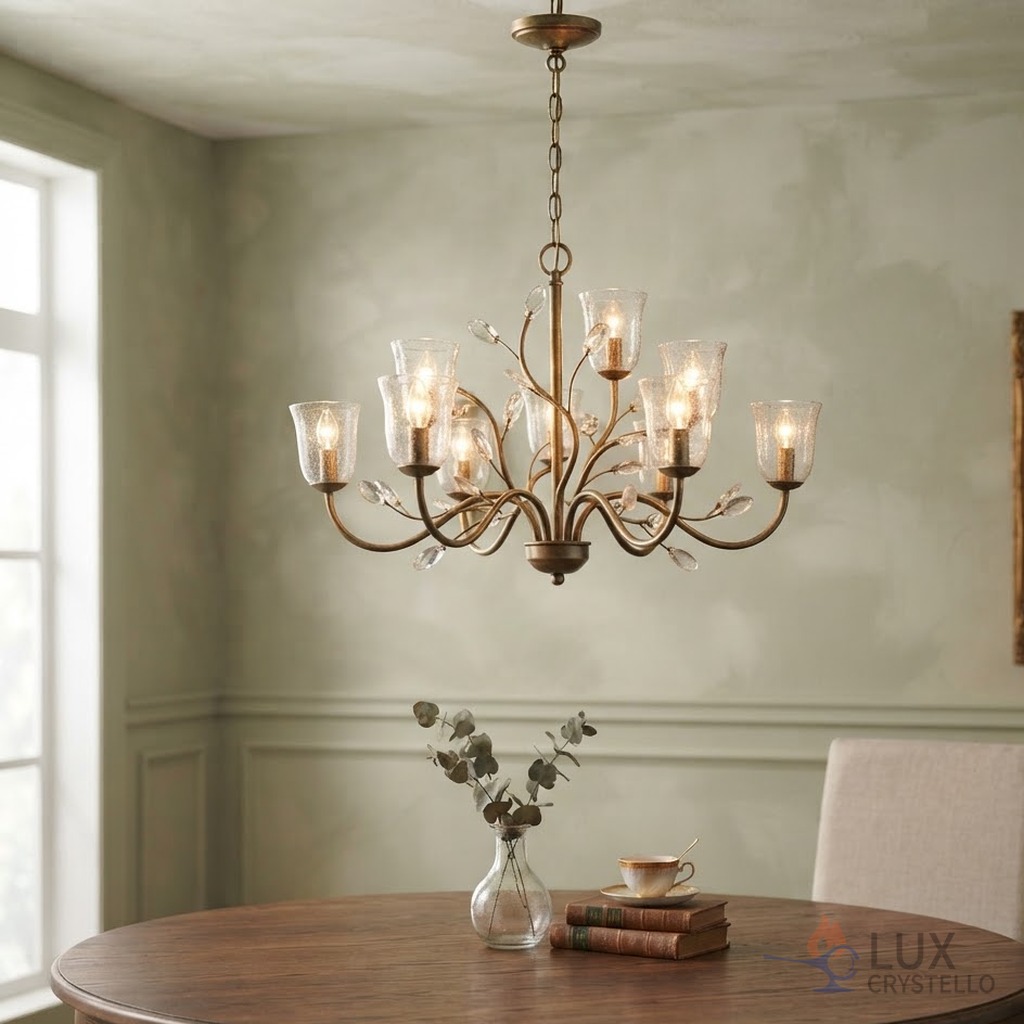
A light french brass and glass chandelier is built on a gentler contrast than the crystal version: the warm metal frame against the soft, light-diffusing glass. The pairing is what makes the piece feel livable rather than staged, which is why it shows up over family tables more than either material alone would.
What a Light French Brass and Glass Chandelier Mixes
The frame carries the French character: slim scrolls, a bright or antique finish, and restraint in the arms. The glass carries the calm: seeded glass shades that catch the beam and spread it instead of fracturing it. Together they make a dual material chandelier that feels both warm and easy.
Brass warms the glass. The metal returns a warm reflection on the inside of each shade, so even clear glass reads less clinical than the same shade in chrome. A practical consideration is the bulb position: a shade open at the bottom casts down, while a closed globe spreads evenly.
One buyer replaced an all-crystal piece with this pairing over a busy family table and found the room finally felt calm at dinner, because the glass washed the light instead of sparkling it into everyone’s eyes.
Glass-on-Brass Versus Crystal-on-Brass
Two pairings get confused. Horizontal comparison: a light french brass and glass chandelier wraps soft glass around a warm frame for everyday calm; a brass-and-crystal piece adds refractive sparkle for evening drama; a dual material chandelier may pair brass with stone or wood instead. Glass is the quiet, daily choice.
| Pairing | Second material | Mood |
|---|---|---|
| Brass and glass | Soft glass | Calm, everyday |
| Brass and crystal | Cut crystal | Rich, evening |
| Brass and wood | Warm wood | Collected, rustic |
Seeded glass shades hide a less-than-perfect bulb behind texture, while a dual material chandelier with crystal demands a prettier filament because it is on show.
Scale, Height, and the Ceiling
Because glass shades add bulk, the body can feel heavier than bare arms. A light french brass and glass chandelier suits eight-and-a-half to ten-foot ceilings with a short drop. Over a long table, two smaller ones can feel more French than one large.
One detail buyers miss: seeded glass shows fingerprints and dust faster than frosted, so plan on wiping the shades a few times a year. A dual material chandelier with clear shades shows water marks if cleaned wet, so use a dry cloth.
Candle-style bulbs in clear sleeves look authentic but run hot near the glass; LED candle bulbs give the same silhouette with a fraction of the heat.
Finish, Bulbs, and Care
Bright or antique brass both work; bright feels airy, antique feels collected. A lacquered finish spares you polishing. A responsible maker will state whether the piece is sealed, and that single line tells you how much upkeep to expect.
In practice, the finish you see online rarely matches the finish in your home because showroom lighting flatters metal. Ask for a sample before a full order ships so the light french brass and glass chandelier you receive matches a piece you approved.
Seeded glass shades with sealed arms ask for a dry cloth; a dual material chandelier wants the same, and neither shade should meet abrasive polish that strips the lacquer.
Where a Light French Brass and Glass Chandelier Belongs
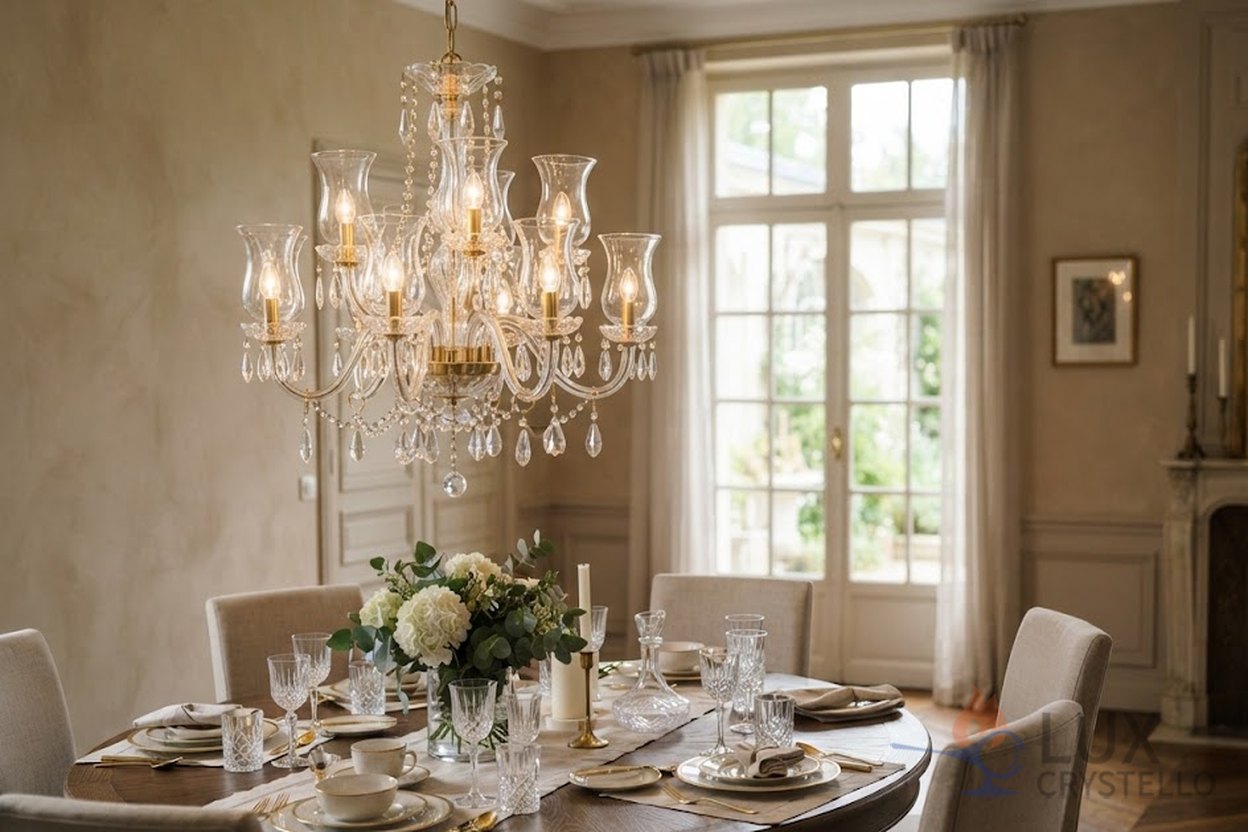
The brass-and-glass piece is the everyday dining fitting, calmer than crystal and warmer than plain metal. Over a family table it washes the room without sparkling into anyone’s eyes, which is why it outlasts trend-driven pieces.
Breakfast nooks and kitchens suit it too, especially with seeded shades that hide a less-than-perfect bulb. The texture reads crafted rather than precious, which fits a room that sees real life.
Avoid it in a very formal dining room where you want drama; crystal will read as the occasion and glass will read as Tuesday. Match the material to how the room is actually used, not how it photographs.
One practical note: seeded and clear shades show dust faster than frosted, so plan a quick dry wipe a few times a year. A fitting you can reach from a step stool gets cleaned; one that needs a ladder slowly disappears under film.
Let the bulb do quiet work: warm 2700K dimmable LEDs keep the glass glow soft and cut energy versus halogens. A fitting planned around the bulb rather than against it stays useful from dinner to the late evening clean-up.
A dimmer is the cheapest upgrade here, because the same fitting at full output welcomes a dinner and at a fifth of it becomes a quiet night light for the room.
FAQ
Is glass calmer than crystal?
Yes. Glass diffuses the beam softly, while crystal refracts it into sparks. Glass suits everyday dining; crystal suits evening drama.
Seeded or clear glass for a kitchen?
Seeded hides imperfections and reads crafted; clear shows the bulb as a feature. Busy kitchens often prefer seeded.
Does glass show dust?
Seeded and clear show it faster than frosted. A quick dry wipe a few times a year keeps them clear.
Can it work in a low ceiling room?
Yes, with a short-drop or semi-flush glass version. Avoid long drops under eight feet.
Conclusion
A light french brass and glass chandelier earns its place by washing a room in warm, even light rather than sparkling it. Choose the glass for the mood, size it to the table, and the fitting will anchor family dinners for years.
Bring the Look Home
Before you order, decide whether you want the bulb on show or hidden, because that single choice picks the glass. A well-chosen light french brass and glass chandelier turns a functional dining room into the one guests remember, so the pairing is worth choosing with care.