
Blogpost Keywords: light french brass and glass wall light, frosted glass wall light, frosted wall mounted sconce
A light french brass and glass wall light lives or dies on two things behind the backplate: the junction box and the shade type. The style is easy to love; what trips people up is the box size, the mounting height, and the glass that decides whether you see the bulb.
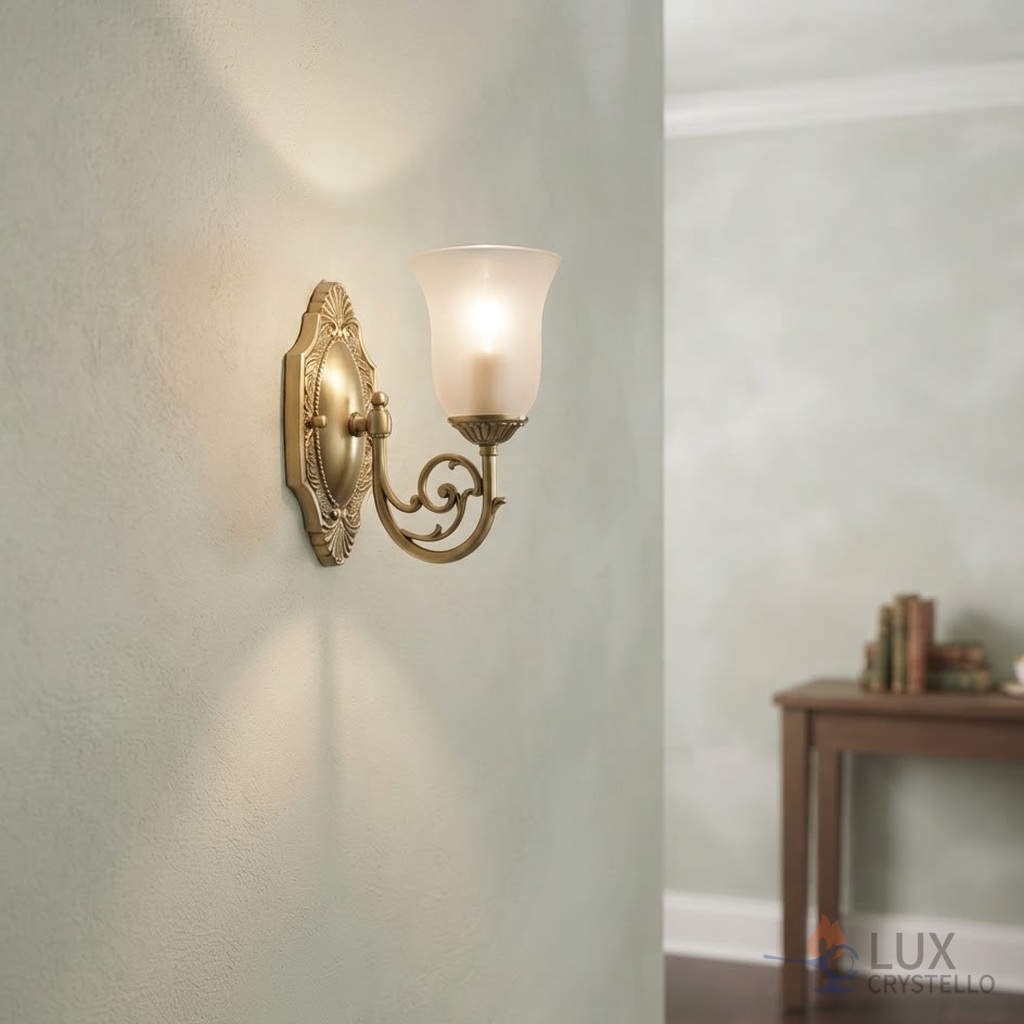
What a Light French Brass and Glass Wall Light Needs Behind It
Every hardwired fitting lands on a box, and boxes are not interchangeable. A modern round box takes most backplates; an older octagonal or four-inch square box often sits wider than a slim French plate covers, leaving a crescent of drywall. A frosted glass wall light with a generous plate avoids the problem entirely.
The fix is cheap if you know in advance: a paintable extension ring or a slightly larger backplate. Measure the box before ordering, not after the fitting arrives. A frosted wall mounted sconce with a 4.5-inch plate covers almost anything standard.
Weight is rarely an issue with this format, since most examples come in under four pounds, but a deep-armed piece creates leverage. Two screws into the box are fine; two screws into drywall alone are not, and that shortcut is the most common cause of a fitting that slowly tilts.
Clear Glass Versus Frosted Glass
Two shade families get swapped constantly. Horizontal comparison: a light french brass and glass wall light with a frosted glass wall light reads gallery and clean, showing the bulb; one with a frosted wall mounted sconce reads calm and hidden; a frosted glass wall light with a pretty filament becomes the feature. The glass type changes the whole mood.
| Shade | Look | Best spot |
|---|---|---|
| Clear glass | Shows bulb | Mirror, display |
| Frosted | Soft, hidden | Bedside, bath |
| Seeded | Textured | Hall, stair |
A frosted wall mounted sconce tolerates more bulb output because the diffusion hides a hot filament; a frosted glass wall light wants a warm low-lumen bulb so the bare filament never becomes a glare.
Height by Room, Not by Rule
One height does not serve every wall. Horizontal comparison: beside a mirror the source belongs near face height, roughly 62 to 66 inches; beside a bed it drops to 48 to 54 inches so the pool lands on a page; in a stairwell it follows the rake, holding a consistent distance above each tread. A frosted glass wall light mounted by room logic beats a fixed rule.
Projection matters as much as height in a corridor. Anything standing more than five inches off the wall will catch a shoulder in a 36-inch hall. A frosted wall mounted sconce with a tight arm is the practical choice where people pass.
One detail buyers miss: the backplate has to cover the junction box, not merely sit near it. A slim plate on an old octagonal box can leave a crescent of drywall showing, and a paintable extension ring is much easier to order in advance.
Finish, Rating, and Living With It
Damp rating is not optional near a shower or a tub. A dry-rated fitting in a bathroom zone will corrode from the inside, and the failure shows up as a flickering socket long before the brass looks tired. A light french brass and glass wall light belongs outside the splash area, however tempting the placement looks.
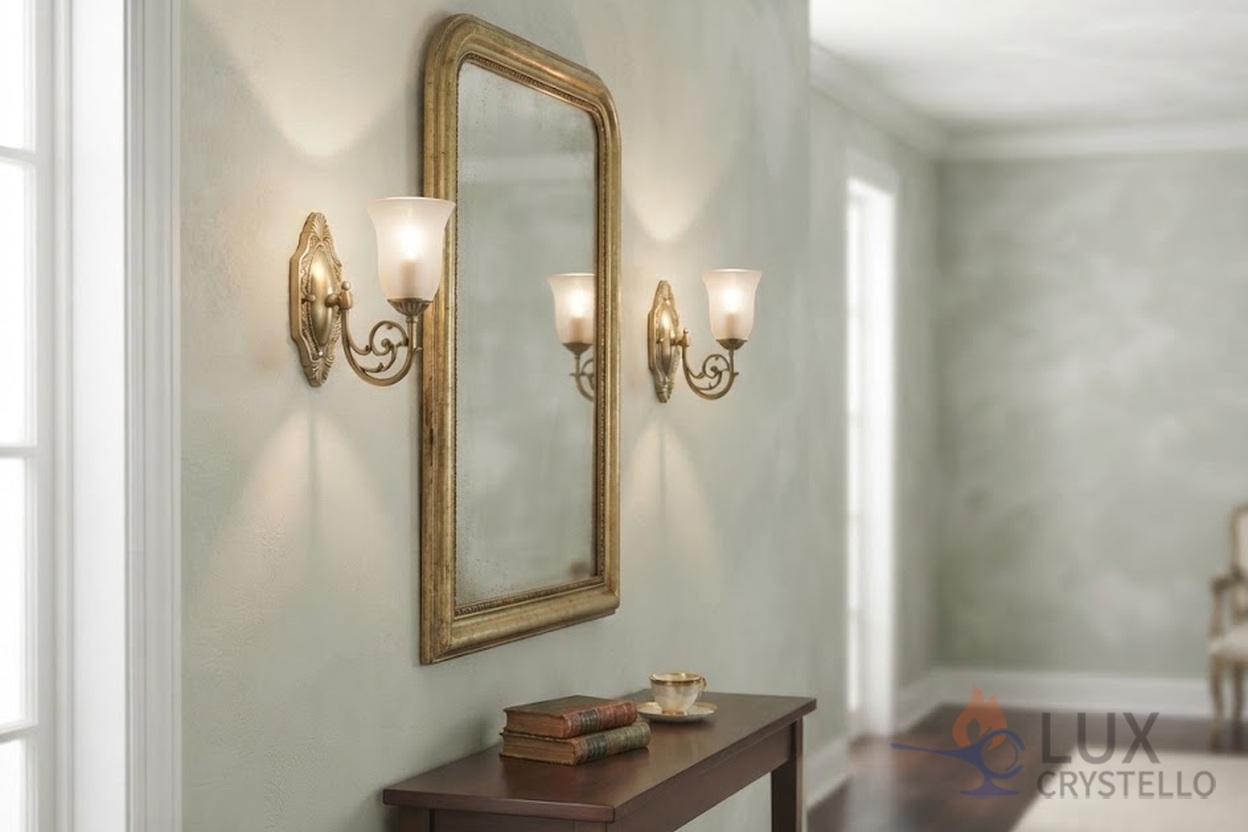
Sealed brass wants a dry cloth. Unsealed brass will move, darkening around any part hands touch. A frosted wall mounted sconce in unsealed brass gains a pleasant unevenness over years; the same finish beside a bathroom mirror simply looks patchy.
In practice, a responsible maker states the plate size, the projection, the rating, and whether the finish is lacquered. If a listing omits all four, assume nothing and ask before ordering a pair of anything. This wall light is easy to get right and annoying to fix afterwards.
Where a Light French Brass and Glass Wall Light Belongs
The wall light belongs beside a mirror or a bed, where the soft wash flatters a face or a page without the glare of a bare bulb. A pair frames the spot and reads as intention rather than accident.
Halls and stair landings suit it too, repeated at even intervals so the gaps at each end match the gaps between. A single fitting halfway down a wall tends to look stranded rather than placed.
Avoid it where water lands directly unless the rating says otherwise; a damp-rated sealed piece belongs outside the splash, not inside it. The brass will thank you by staying even in tone.
One practical note: the backplate must cover the junction box, not merely sit near it. A slim plate on an old box leaves a crescent of drywall showing, and a paintable extension ring is far easier to order in advance.
FAQ
What backplate size is safe?
Around 4.5 inches covers most modern and older boxes. Measure the box first, or plan on a paintable extension ring.
Clear or frosted glass for a bedroom?
Frosted hides the bulb and softens the pool, which suits a bedside better than clear glass.
How high beside a mirror?
Roughly 62 to 66 inches to the light source, so the glow reaches a face instead of skimming the head.
Is brass suitable for a bathroom wall?
Yes, with a damp-rated fitting and a lacquered finish, kept clear of the shower or tub splash zone.
Conclusion
A light french brass and glass wall light rewards the boring preparation. Measure the box, pick the glass for the mood, and settle the switch before the walls are closed up.
Bring the Look Home
Before you order, photograph the junction box and decide the shade type, because those two choices narrow the field fast. A light french brass and glass wall light installed with the right plate and glass looks built into the house rather than added to it.