
Blogpost Keywords: Napoleon style brass chandelier, Empire style chandelier, ornate brass chandelier
A Napoleon style brass chandelier brings timeless imperial elegance to any room, combining the grandeur of 19th-century French design with the warm glow of polished brass. For homeowners seeking a statement piece that bridges classical artistry and modern living, this lighting fixture delivers both visual drama and practical illumination. In this buyer’s guide, we walk through everything you need to know before investing in one of these iconic fixtures.
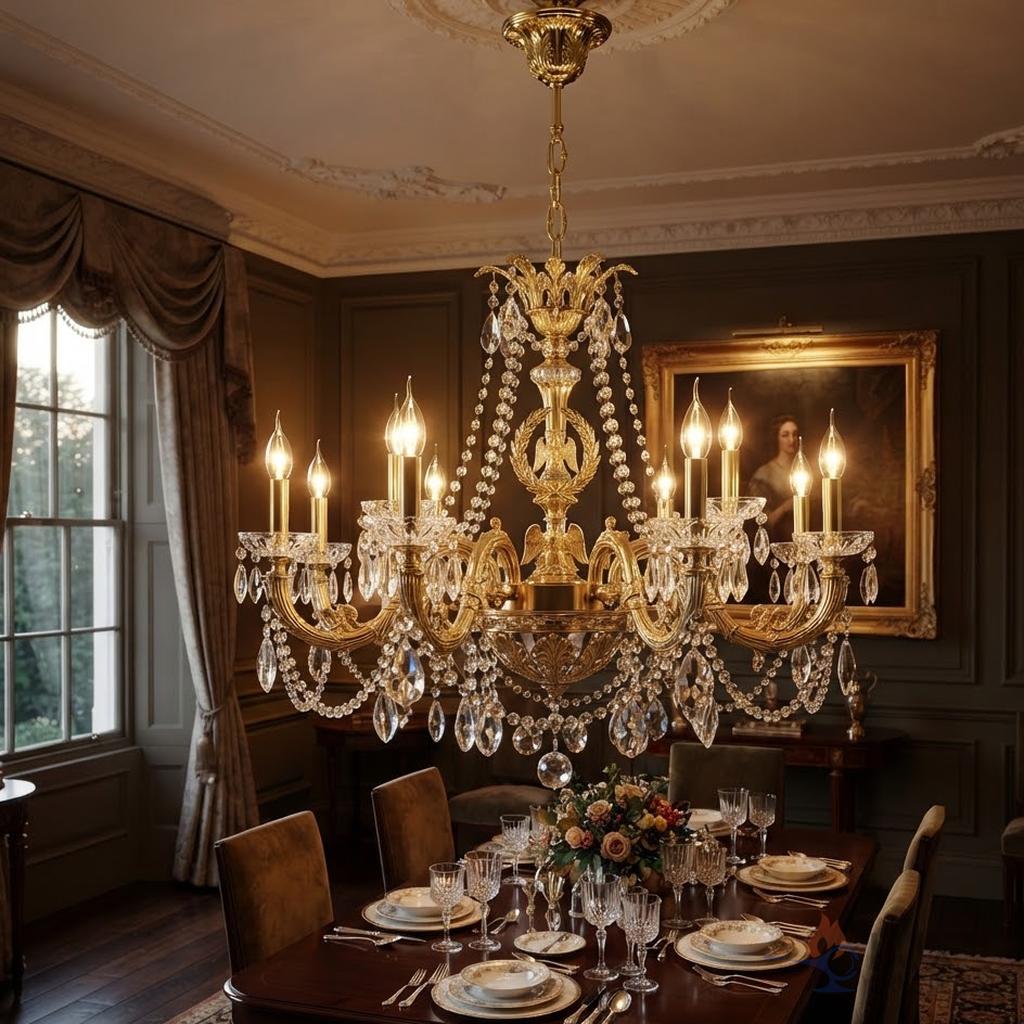
What Defines a Napoleon Style Brass Chandelier?
Originating from the Napoleonic era, this design draws heavily from the Empire aesthetic—symmetrical forms, gilded finishes, and ornate detailing. These fixtures typically feature tiered arms, candle-style lights, and decorative motifs such as laurel wreaths, eagles, or acanthus leaves. The brass construction ensures durability while adding a warm tone that complements both traditional and transitional interiors.
Unlike purely decorative pieces, an Empire style chandelier serves a dual purpose as both a focal point and a practical light source. Designers often note that the Napoleon style brass chandelier carries a particular visual weight—it commands attention without overwhelming the space, especially when proportioned correctly for the room size.
Napoleon Style Brass Chandelier vs. Other Period Lighting
When comparing period-inspired lighting, buyers frequently weigh this fixture against alternatives like Art Deco pendants, Victorian crystal options, and Baroque-inspired lanterns. Each style has its own character, but few match the balanced sophistication of Empire-inspired designs.
An Empire style chandelier favors bold geometric symmetry and strong vertical lines, while Victorian options lean toward elaborate scrollwork. A ornate brass chandelier, meanwhile, blends warm brass with the sparkle of hand-cut crystals, creating a regal yet approachable look. For many buyers, this particular style strikes the ideal middle ground—ornate enough to impress, yet refined enough to endure.
| Feature | Napoleon Brass Chandelier | Victorian Crystal Fixture | Art Deco Pendant |
|---|---|---|---|
| Era Inspiration | Early 19th-century France | 19th-century England | 1920s–1930s |
| Primary Material | Brass | Brass + Crystal | Chrome/Glass |
| Style Profile | Symmetrical, gilded | Elaborate, ornate | Geometric, sleek |
| Best For | Foyers, dining rooms | Formal parlors | Modern living spaces |
| Price Range | Mid to High | High | Mid |
The comparison above shows why the Napoleon style brass chandelier continues to attract buyers across diverse design preferences. Its versatility lies in the brass material, which pairs effortlessly with warm wood tones, neutral palettes, and bold accent colors. A ornate brass chandelier offers extra sparkle for those who want added glamour, while a purely brass fixture keeps things understated and classic.
How to Choose the Right Fixture for Your Space
Selecting the perfect piece involves more than aesthetics. Consider these key factors:
Room Size and Ceiling Height — Grand foyers with soaring ceilings can accommodate larger, multi-tiered models. For standard 8-to-9-foot ceilings, choose a compact Napoleon style brass chandelier that won’t dominate the room. A good rule of thumb: add the room’s length and width in feet, then convert to inches for the ideal fixture diameter.
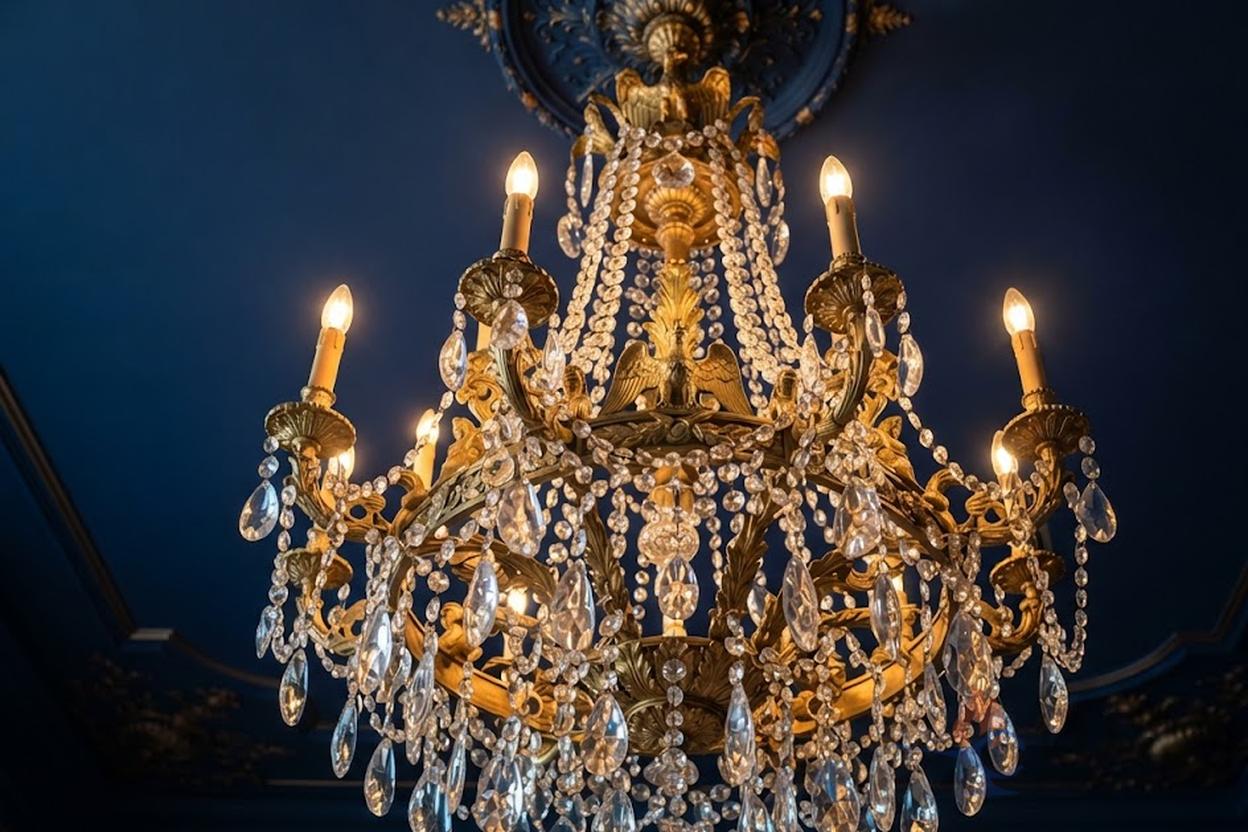
Finish and Patina — Brass finishes range from bright polished gold to aged antique patinas. An Empire style chandelier in antique brass works beautifully in rustic spaces, while polished brass suits formal settings. For extra sparkle, a ornate brass chandelier with hand-cut crystal drops adds stunning light refraction.
Light Output — Many fixtures use candelabra-base bulbs for warm, ambient lighting that mimics the soft glow of candlelight. For brighter rooms, look for models with six or more arms, or choose dimmable LED candelabra bulbs that allow you to adjust brightness throughout the day. Pay attention to the lumen output recommended for your room size—dining rooms typically need 300 to 400 lumens, while larger foyers may require 700 lumens or more.
Where to Place Your Chandelier for Maximum Impact
Placement matters as much as selection. Formal dining rooms, entry foyers, and grand staircases are ideal locations. In a dining room, hang the chandelier 30 to 36 inches above the table surface to ensure proper illumination without obstructing sight lines. For foyers, maintain at least seven feet of clearance from the floor to the bottom of the fixture.
Living rooms and bedrooms benefit from smaller-scale versions. An Empire style chandelier in a bedroom adds luxury without overwhelming the space, while a ornate brass chandelier in a living room creates a stunning centerpiece guests will notice immediately.
Care and Maintenance
Brass develops a natural patina over time, which many owners appreciate as part of the material’s character. For a bright, polished look, wipe your Napoleon style brass chandelier regularly with a soft, dry cloth to prevent dust buildup. Use brass-safe cleaners for deeper cleaning and always avoid abrasive materials that could scratch the surface. Crystal accents, if present, should be dusted gently with a microfiber cloth to maintain their clarity and light-refracting properties.
Periodic inspection of mounting hardware is recommended, especially for heavier models. Check that all screws and canopy brackets remain tight, and ensure electrical connections are secure. Professional installation is advisable for fixtures exceeding 25 pounds, as proper mounting preserves both safety and alignment over years of use.
FAQ
What makes a Napoleon style brass chandelier different from other brass chandeliers?
This style is distinguished by its Empire-era design influences, including symmetrical forms, tiered arms, and classical decorative motifs. While standard brass chandeliers may adopt various styles, this specific design draws from early 19th-century French aesthetics, giving it a distinctive regal character.
Can I install a Napoleon style brass chandelier in a modern home?
Absolutely. The versatility of this design allows it to complement both traditional and contemporary interiors. In modern spaces, the fixture serves as a striking contrast piece, adding warmth and historical depth to clean-lined rooms.
How do I maintain the brass finish on my chandelier?
Regular dusting with a soft cloth keeps your fixture looking its best. For tarnished brass, apply a brass-safe polish sparingly. If your fixture includes crystal elements, clean them separately with a lint-free cloth to avoid streaking.
Is a ornate brass chandelier heavier than a standard brass chandelier?
Yes, a ornate brass chandelier typically weighs more due to the additional crystal components. Ensure your ceiling can support the fixture’s weight, and consider professional installation for larger models.
What room size is best suited for this type of lighting fixture?
This style works well in rooms ranging from small formal dining areas to large foyers. For spaces under 200 square feet, choose a fixture with four to six arms. Larger rooms can accommodate grander models with eight or more arms for adequate light distribution.
Conclusion
Choosing a Napoleon style brass chandelier is an investment in enduring elegance. From its Empire-inspired design roots to its versatile brass construction, this fixture elevates any space it graces. Whether you prefer the classic charm of plain brass or the added radiance of crystal accents, the right chandelier transforms your room from ordinary to extraordinary. Take the time to measure your space, consider your lighting needs, and select a finish that harmonizes with your decor.
Explore Our Collection
Ready to find the perfect Napoleon style brass chandelier for your home? Explore our curated collection of handcrafted brass lighting fixtures and discover the piece that speaks to your style.