
Blogpost Keywords: Napoleon style brass glass chandelier, glass and brass ceiling lamp, empire glass chandelier
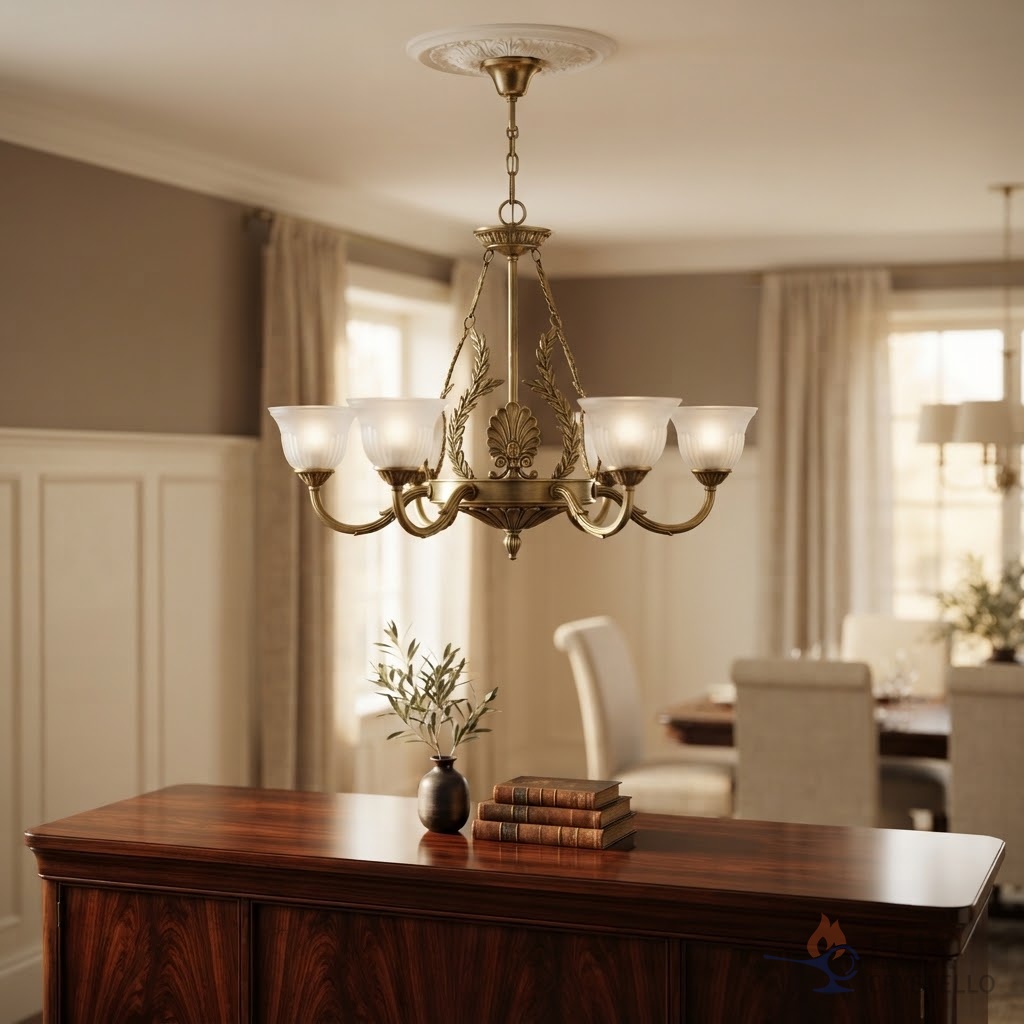
A Napoleon style brass glass chandelier pairs the warm metallic glow of Empire-period brasswork with the translucency and texture of glass — a combination that diffuses light more gently than all-metal or all-crystal fixtures. The glass elements can range from simple frosted panels to hand-blown bell shades, and the choice between them dramatically affects both the lighting quality and the room’s character. Buyers who understand these distinctions avoid the most common pitfalls.
What a Napoleon Style Brass Glass Chandelier Seller Will Not Tell You
Not all glass on these chandeliers is decorative — some of it is structural. On cheaper models, the glass shades serve as the primary visual element while the brass underneath is thin, stamped, and sometimes plated rather than solid. The glass looks convincing in product photos, but the brass frame may flex under hand pressure and corrode within a few years. A glass and brass ceiling lamp with thin brass is essentially a glass fixture with a brass accent, not a genuine brass chandelier.
A Napoleon style brass glass chandelier should have a brass frame that feels rigid when you handle it. If the seller cannot confirm solid brass construction, assume it is plated and price accordingly. The glass itself matters too — mouth-blown glass has subtle variations that machine-pressed glass lacks, and those variations are what give the fixture its handcrafted character. An empire glass chandelier with quality glass and solid brass will outlast a cheaper alternative by decades.
Glass Types and Their Lighting Effects
Frosted glass produces the most even, diffused light and works well in bedrooms and living rooms where harsh glare is unwelcome. Clear glass shows the bulb and creates sharper light patterns on walls and ceilings — better for dining rooms and entryways where visual drama matters. Seeded glass, with its tiny embedded bubbles, adds a handcrafted quality that pairs naturally with brass. A glass and brass ceiling lamp with seeded glass bridges the gap between formal and casual.
An empire glass chandelier with bell-shaped shades channels light downward and outward, making it effective over dining tables. Cylindrical or drum-shaped shades distribute light more broadly, which suits larger rooms where the chandelier provides ambient rather than task lighting. A Napoleon style brass glass chandelier with drum shades in a living room provides broad ambient coverage without the focused intensity of bell shades.
Matching Glass Chandeliers to Interior Styles
The Napoleon style’s geometric discipline pairs surprisingly well with several design approaches. In a mid-century modern room, a brass glass chandelier with clean cylindrical shades bridges the gap between the room’s angular furniture and the brass warmth the space needs. In a French country kitchen, frosted bell shades soften the Empire formality and create a welcoming glow. A glass and brass ceiling lamp in brushed brass with frosted glass adapts to nearly any design vocabulary.
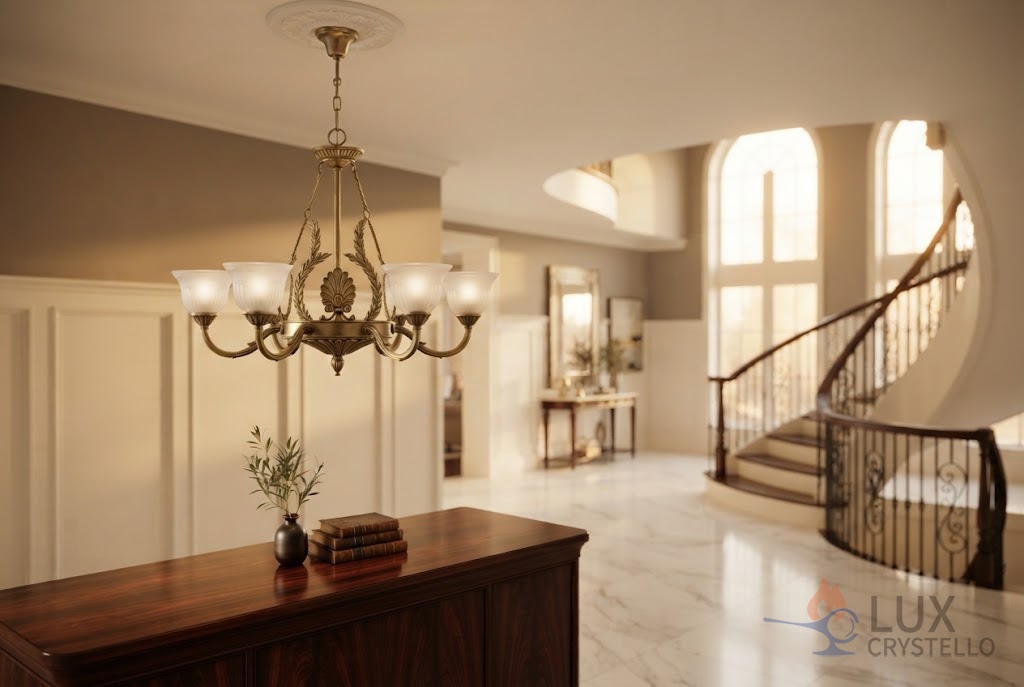
A common mistake is choosing glass that fights the room’s existing palette. Warm-toned rooms with wood, terracotta, and amber textiles call for clear or seeded glass that maintains the warmth. Cool-toned rooms with gray, white, and blue benefit from frosted glass that prevents the brass from looking too golden against the muted backdrop. An empire glass chandelier chosen with the room’s palette in mind looks intentional rather than accidental.
Replacement and Repair Considerations
Glass shades break. It happens — during installation, cleaning, or from a stray object. Before purchasing a Napoleon style brass glass chandelier, verify that replacement shades are available from the manufacturer or through aftermarket suppliers. Standard shade sizes (6-inch fitter, 4-inch fitter) are easier to replace than proprietary shapes.
Brass frames, if solid, can be repaired or refinished by a metalworker. Plated frames are essentially disposable once the plating chips — refinishing costs more than replacing the fixture. This is another reason to invest in solid brass up front, especially for fixtures in high-traffic areas where bumps and scratches are inevitable. A glass and brass ceiling lamp with a solid frame is a long-term investment; a plated one is a consumable.
Glass Shade Types Compared
| Feature | Option A | Option B |
|---|---|---|
| Light Quality | Even, diffused | Sharp, visible bulb |
| Best Room | Bedroom, living room | Dining room, foyer |
| Bulb Visibility | Hidden | Fully visible |
FAQ
Can I swap the glass shades on my Napoleon brass chandelier?
If the shades use standard fittings (spider, fitter, or uno), yes — aftermarket shades in compatible sizes work. Proprietary fittings limit your options to the original manufacturer.
Is clear or frosted glass better for a dining room?
Clear glass creates sharper light and shows decorative bulbs, which suits formal dining. Frosted glass softens the light for a more relaxed atmosphere. Many buyers choose clear for dining rooms and frosted for bedrooms.
How do I prevent glass shades from yellowing?
Quality glass does not yellow. If shades yellow over time, the issue is usually the bulb — cheap incandescent bulbs emit heat and UV that can discolor lower-quality glass over years. LED bulbs eliminate this concern.
Conclusion
A Napoleon style brass glass chandelier offers a softer, more nuanced lighting experience than all-brass or all-crystal alternatives. The glass elements diffuse light, reduce glare, and add textural interest that complements the Empire frame. Buyers who verify brass construction quality, choose glass types that match their room’s palette, and confirm shade replacement availability set themselves up for a fixture that performs beautifully for years.
Choosing Glass and Brass With Care
Napoleon style brass glass chandelier options reward hands-on evaluation. Request close-up photos of the brass frame joints and glass thickness before purchasing online. A glass and brass ceiling lamp that looks elegant in a catalog photo may disappoint if the brass is thin or the glass is machine-pressed without character. The extra scrutiny pays off in a fixture that justifies its place in the room.