
Blogpost Keywords: Napoleon style brass lighting, empire style brass fixtures, decorative brass light design
Napoleon style brass lighting occupies a peculiar position in the interior design world. It draws from the Empire period of early 19th-century France, yet it continues to surface in contemporary homes, boutique hotels, and upscale restaurants. The reason is not nostalgia alone — brass, when cast into these classical silhouettes, delivers a warmth and gravitas that few modern materials can replicate. For buyers weighing their options, understanding what separates authentic Napoleon style brass lighting from loosely labeled “imperial” fixtures makes the difference between a statement piece and a costly mistake.
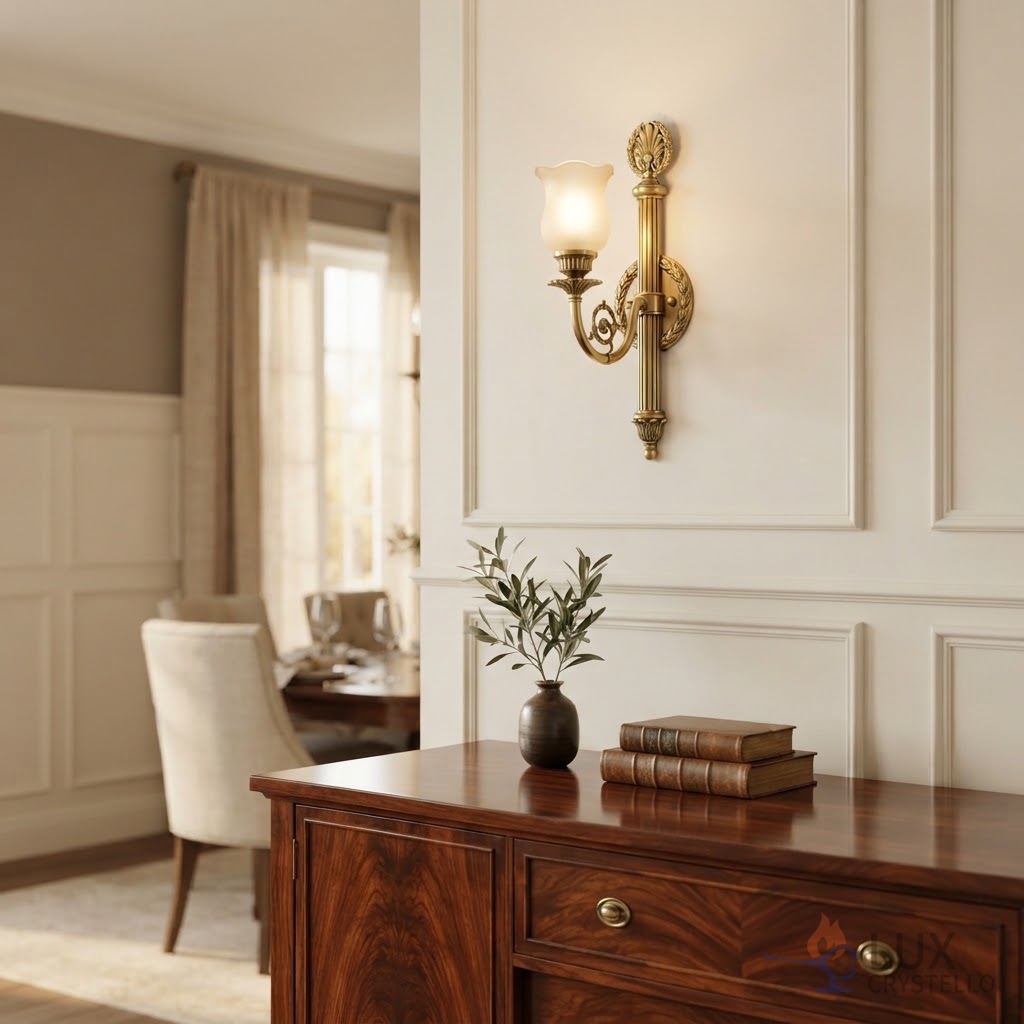
What Defines Napoleon Style Brass Lighting in Modern Homes
The Napoleon style traces its roots to the decorative arts favored during the French Empire under Napoleon Bonaparte. Expect clean geometric lines, laurel wreath motifs, symmetrical arm arrangements, and classical urn or column forms. In brass lighting, these elements translate into fixtures that feel structured rather than ornate — more architectural than whimsical. Buyers searching for empire style brass fixtures often discover that the category spans a wider range than expected, from near-minimalist interpretations to richly detailed period reproductions.
A practical consideration is the finish. Brushed brass tends to soften the imperial formality and works well in transitional interiors, while polished brass amplifies the period authenticity but demands more maintenance to keep fingerprints and tarnish at bay. Antique brass, with its darker patina, bridges the gap between old-world charm and contemporary restraint. The decorative brass light design of a Napoleon piece is defined by proportional discipline — every element relates to the whole in a structured way.
Choosing the Right Fixture Type for Your Space
Napoleon style brass lighting spans several fixture categories, and the wrong choice can throw a room off balance. Chandeliers anchor dining rooms and foyers with dramatic presence. Wall sconces flank mirrors or artwork in hallways. Table lamps bring the motif to desks and nightstands without overwhelming a smaller room. Empire style brass fixtures in each category follow the same design vocabulary but serve very different spatial functions.
Scale matters more than most buyers realize. A Napoleon style chandelier designed for a 12-foot ceiling will look absurd in a room with standard 8-foot ceilings. In practice, the fixture diameter in inches should roughly equal the room’s length plus width in feet — a guideline that prevents both undersized and oversized installations. Decorative brass light design also depends on the room’s existing material palette — warm wood tones and natural textiles complement brass’s golden undertone, while cool grays and whites create a more formal contrast.
Empire Style Brass Fixtures vs. Other Period Styles
Buyers often confuse empire style brass fixtures with Victorian or Art Deco lighting, and the distinctions are worth understanding. Victorian fixtures lean toward heavy ornamentation, floral patterns, and darker finishes. Art Deco introduces stepped geometric forms and chrome or nickel accents. Napoleon style pieces sit between these extremes — disciplined geometry with classical references, rendered in warm brass.
A common mistake is mixing too many period references in a single room. A Napoleon style brass chandelier paired with Art Deco wall sconces can work if both share a metallic finish, but adding Victorian table lamps to the mix typically creates visual noise rather than layered interest. Empire style brass fixtures work best when they anchor the room’s metallic palette while allowing complementary styles in supporting roles.
Material and Build Quality to Watch For
Not all brass lighting is created equal. Solid brass fixtures carry a satisfying heft and develop a natural patina over time. Brass-plated steel or zinc alloy pieces look convincing initially but may chip, corrode, or lose their finish within a couple of years — especially in humid environments like bathrooms. Decorative brass light design involves the quality of joins and welds — seams that are ground smooth and invisible to the eye indicate careful manufacturing.
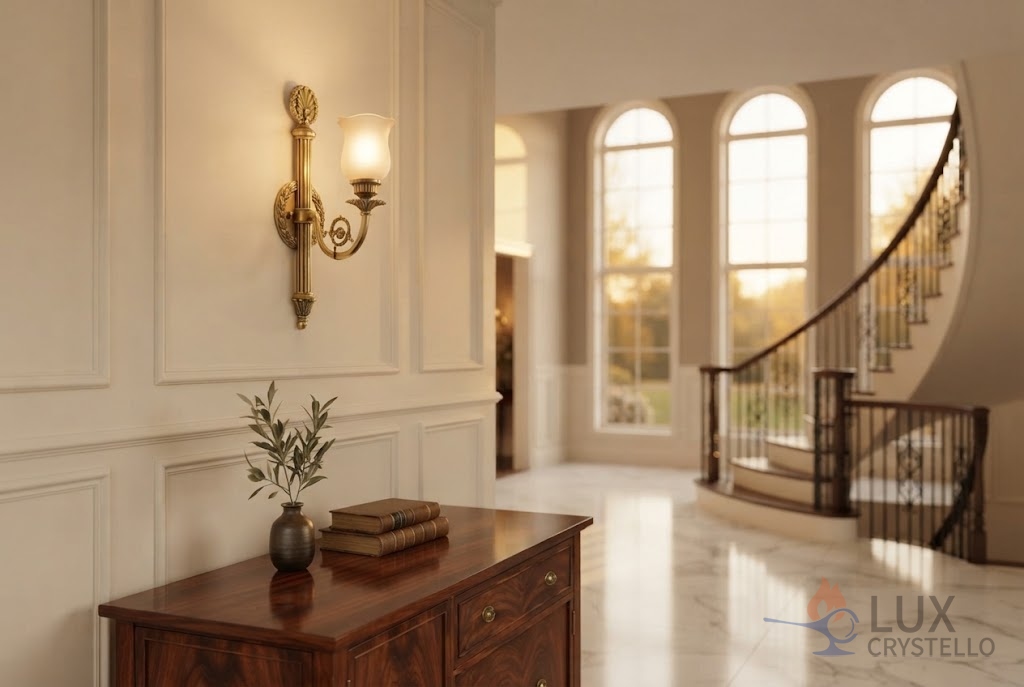
A useful test: ask the seller whether the fixture is solid brass or brass-plated. Responsible manufacturers disclose this clearly. Napoleon style brass lighting built from solid brass also holds up better during shipping — plated fixtures are more prone to edge chipping during transit. For dimmable options, verify compatibility with LED bulbs before purchase. Some older-style Napoleon fixtures ship with candelabra sockets that limit bulb choices, and not all dimmer switches play nicely with LED candelabra bulbs.
Brass Finish Comparison at a Glance
| Feature | Option A | Option B |
|---|---|---|
| Appearance | Warm, slightly muted | High shine, reflective |
| Maintenance | Low — hides fingerprints | High — shows every mark |
| Best For | Transitional, modern | Formal, period-accurate |
FAQ
Is Napoleon style brass lighting suitable for modern interiors?
Absolutely. Many designers use Napoleon style pieces as a counterpoint to minimalist rooms. A single brass chandelier with Empire lines can anchor a contemporary dining room without making it feel like a museum. The key is keeping surrounding elements simple.
How do I clean and maintain brass lighting fixtures?
For solid brass, a soft cloth with a mild brass cleaner every few months keeps tarnish in check. Avoid abrasive pads. Lacquered brass requires only a damp wipe — never use polish on lacquered surfaces, as it clouds the coating.
Can Napoleon style brass lighting be used with LED bulbs?
Yes, most modern Napoleon style fixtures accept LED bulbs. Check the socket type — E12 candelabra and E26 medium base are both common. For dimming, pair the fixture with an LED-compatible dimmer to avoid flicker.
Conclusion
Napoleon style brass lighting offers a rare combination of historical depth and decorative versatility. It works in formal dining rooms, transitional living spaces, and even eclectic bedrooms — provided the buyer pays attention to scale, finish, and build quality. The investment rewards patience: a well-made brass fixture outlasts trends and improves with age.
Finding the Right Napoleon Style Piece for Your Home
Napoleon style brass lighting rewards careful selection. Before committing, measure the room, confirm ceiling height, and decide whether brushed, polished, or antique brass best suits the existing palette. Reputable lighting showrooms and specialty retailers often provide finish samples — a small step that prevents expensive surprises when investing in decorative brass light design.