
Blogpost keywords: lost wax copper branch chandelier manufacturing, copper branch chandelier production, lost wax copper chandelier
Lost wax copper branch chandelier manufacturing creates sculptural lighting with organic forms. Learn about process, quality, and B2B sourcing considerations.
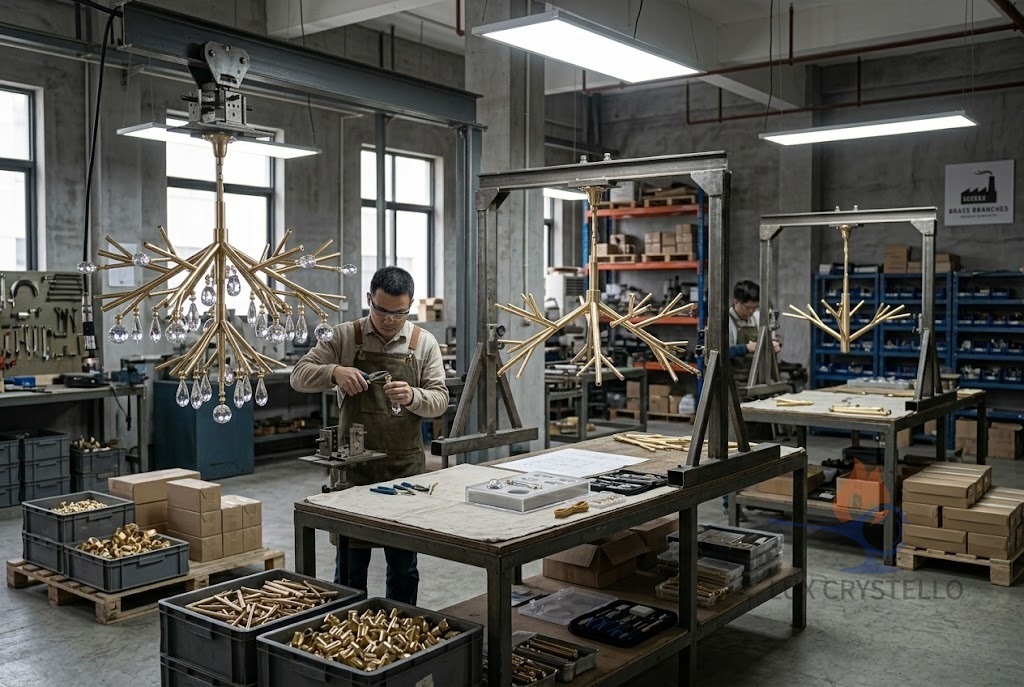
Lost Wax Copper Branch Chandelier Manufacturing: Sculptural Lighting Craftsmanship
Lost wax copper branch chandelier manufacturing sits at the intersection of art, engineering, and traditional metalworking. These chandeliers are not just lighting fixtures—they are sculptural centerpieces inspired by natural forms such as tree branches, vines, and organic growth. For professional buyers and distributors, this category offers strong differentiation in the decorative lighting market, especially for hospitality, luxury residential, and lifestyle-focused projects where visual impact matters as much as function.
Compared with mass-produced lighting, branch-style chandeliers made through lost wax casting deliver depth, irregularity, and character that are difficult to replicate by other methods. This makes them particularly appealing to buyers looking for distinctive, high-value products.
Lost Wax Copper Branch Chandelier Manufacturing: Concept and Process
At the core of lost wax copper branch chandelier manufacturing is the ability to translate complex, organic shapes into durable metal structures. The process begins with a detailed wax model, often sculpted by hand or refined from a prototype. Every curve, branch joint, and surface texture is defined at this stage.
The wax model is then coated in a ceramic shell that hardens to form a mold. Once heated, the wax melts away, leaving a precise cavity. Molten copper is poured into this cavity, capturing fine details that would be impossible with simpler casting techniques. After cooling, the shell is removed, and individual components are cleaned, refined, and prepared for assembly.
For branch chandeliers, multiple cast elements are often joined together. Skilled welding and finishing ensure that connection points blend naturally into the overall form, maintaining the illusion of a single, organically grown structure.
Why Lost Wax Casting Is Ideal for Branch-Style Copper Chandeliers
Branch chandeliers are inherently complex. Their uneven arms, varied thicknesses, and asymmetrical layouts require a manufacturing process that allows freedom of form without sacrificing strength. Lost wax casting excels in this area because it does not rely on rigid molds or simplified geometries.
Copper further enhances this advantage. It is strong enough to support extended branch arms while remaining workable for fine detailing. In lost wax copper chandelier production, manufacturers can control wall thickness and internal reinforcement, ensuring stability even in large-scale designs.
Finishing is another key benefit. Copper responds beautifully to hand-applied patinas, brushing, and aging techniques. Whether buyers prefer a warm antique tone or a darker, more dramatic finish, lost wax copper lighting offers flexibility to match different interior styles and market preferences.
Design Applications and Market Demand for Copper Branch Chandeliers
Copper branch chandeliers are widely used in spaces where atmosphere and storytelling are important. Boutique hotels, luxury resorts, wedding venues, and high-end restaurants often choose them as statement pieces for lobbies, ballrooms, or dining areas. In residential settings, they are popular in villas, double-height living rooms, and custom-designed homes.
From a B2B perspective, branch chandelier lighting has proven to be relatively trend-resistant. Natural and organic design themes continue to perform well across global markets, making these chandeliers suitable for long-term product lines rather than short-lived collections.
Distributors also value their versatility. A single base design can be adapted in size, finish, or arm configuration to suit different projects, allowing suppliers to serve multiple client segments without developing entirely new models.
Key Manufacturing and Quality Considerations for Branch Chandeliers
Quality control is critical in lost wax copper branch chandelier manufacturing. Structurally, branch arms must be balanced to prevent sagging or uneven weight distribution. Experienced manufacturers pay close attention to internal supports, hanging points, and overall load calculations.
Surface finishing is equally important. Natural-looking transitions between branches, smooth weld joints, and consistent patina application all contribute to the final appearance. From a practical standpoint, chandeliers must be designed to accommodate standard light sources and wiring systems.
For export markets, professional suppliers usually consider general safety and compliance needs, such as compatibility with CE or UL standards, without overclaiming specific certifications. Packaging also matters—branch chandeliers often require customized protective packing to prevent damage to protruding elements during shipping.
FAQ About Lost Wax Copper Branch Chandelier Manufacturing
How does lost wax casting support complex branch structures?
Lost wax casting allows each branch and joint to be formed with precise detail, making it ideal for organic, irregular shapes that other methods cannot easily produce.
What copper materials and finishes are commonly used?
Most chandeliers use high-quality copper alloys that balance strength and workability. Finishes range from brushed copper to antique or darkened patinas.
Which projects and markets favor branch-style chandeliers?
Hospitality projects, luxury residential developments, and lifestyle-focused commercial spaces are the main markets for branch chandelier lighting.
What customization options are available for B2B buyers?
Common options include size, number of branches, finish tone, and lighting configuration. Custom projects often start from an existing design and adjust key elements.
What should buyers know about MOQ and lead time?
Because the process is labor-intensive, MOQs are typically higher than mass-produced lighting. Lead times should account for mold preparation, casting, assembly, and finishing.
Working with Experienced Manufacturers
Choosing the right partner for lost wax copper branch chandelier manufacturing is essential. Clear communication about design intent, installation environment, and finish expectations helps avoid costly revisions. Many buyers request samples or finish swatches before confirming bulk orders, especially for new collections.
Conclusion
Lost wax copper branch chandelier manufacturing offers a unique combination of artistic freedom, material durability, and market versatility. These chandeliers stand out as sculptural lighting solutions that add character and warmth to a wide range of interiors. For professional buyers and distributors, they represent an opportunity to offer products with lasting appeal and strong visual identity.