
Blogpost keywords: lost wax copper chandelier production, copper chandelier manufacturing, lost wax copper lighting production
Lost wax copper chandelier production offers handcrafted quality, design flexibility, and durability. Learn about process, advantages, and B2B sourcing tips.
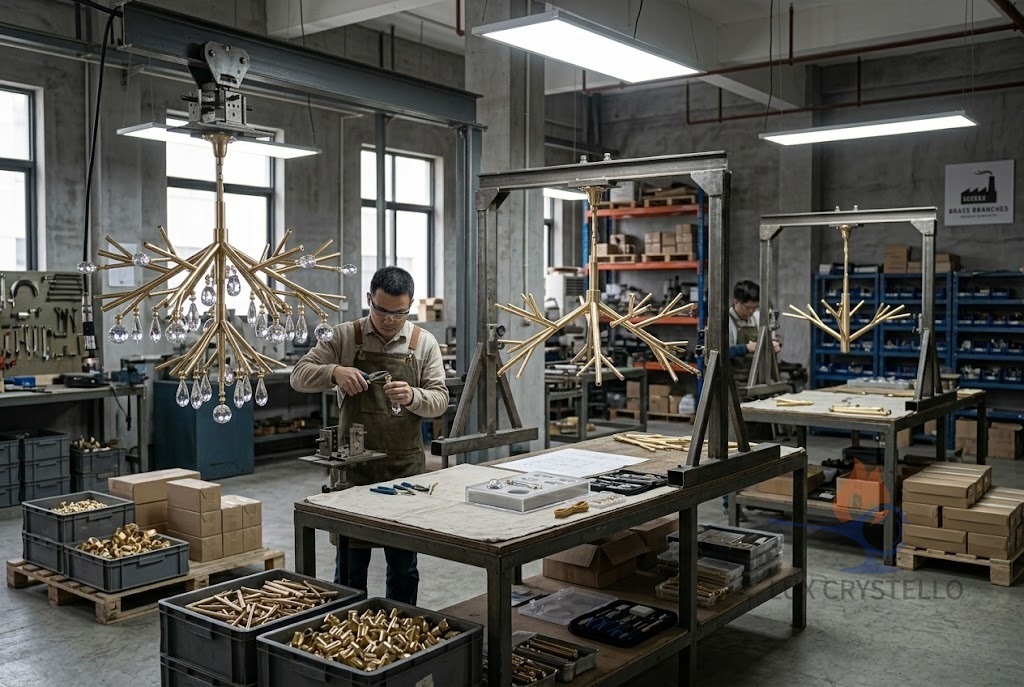
Lost Wax Copper Chandelier Production: From Craftsmanship to Finished Lighting
Lost wax copper chandelier production is widely recognized as one of the most reliable methods for creating decorative lighting with depth, character, and long-term value. For professional buyers and distributors, this process offers a balance between artistic freedom and production consistency—two qualities that are often difficult to achieve at the same time. Whether used in hospitality projects, luxury residences, or curated retail collections, copper chandeliers made through lost wax casting stand out for their sculptural quality and material richness.
As demand grows for lighting that feels authentic rather than mass-produced, more buyers are revisiting traditional production techniques. Lost wax casting, in particular, continues to play a central role in high-end copper chandelier manufacturing.
Lost Wax Copper Chandelier Production: Process Overview and Background
Lost wax casting, also known as investment casting, is an ancient technique adapted to modern lighting production. In lost wax copper chandelier production, the process begins with a wax model that defines the exact shape of the chandelier components. Arms, decorative elements, and structural parts are often modeled separately to ensure precision and balance.
Each wax piece is coated with layers of ceramic slurry to form a hard shell. Once cured, the shell is heated so the wax melts and drains away, leaving a hollow mold. Molten copper is then poured into this cavity, capturing fine surface details that other casting methods struggle to reproduce. After cooling, the ceramic shell is broken away, and the raw castings are cleaned and refined.
This method allows manufacturers to control proportions, thickness, and surface texture—critical factors when producing chandeliers that must be both visually striking and structurally sound.
Key Advantages of Lost Wax Casting for Copper Chandeliers
One of the biggest advantages of lost wax copper chandelier production is design freedom. Unlike stamping or simple mold casting, lost wax does not restrict designers to flat or symmetrical shapes. Curved arms, layered ornamentation, and organic forms can all be produced as integral parts of the structure.
Copper further enhances these advantages. It is strong enough to support multi-arm chandeliers while remaining workable for detailed finishing. Copper also reacts well to surface treatments, making it ideal for brushed, antiqued, or naturally aged finishes. For buyers, this means a single chandelier design can be offered in multiple finish options without altering the core structure.
From a durability perspective, lost wax casting produces dense, solid components with fewer internal weaknesses. This contributes to better long-term performance, especially in large or complex chandeliers intended for commercial environments.
Design Flexibility and Applications in the Lighting Market
Copper chandeliers produced through lost wax casting are used across a wide range of projects. In hospitality spaces—such as boutique hotels, resorts, and restaurants—they often serve as focal points that define the atmosphere of a room. Their warm tones and handcrafted appearance complement both classic and contemporary interiors.
In residential markets, handcrafted copper chandeliers appeal to homeowners seeking statement lighting rather than purely functional fixtures. Double-height living rooms, staircases, and dining areas are common installation points.
From a B2B perspective, design flexibility is a major selling point. Buyers can request variations in size, arm count, finish tone, or decorative details while maintaining a consistent design language across a collection. This adaptability makes lost wax copper lighting production suitable for long-term product lines rather than short-lived trends.
Quality, Structure, and Production Considerations for B2B Buyers
When sourcing through lost wax copper chandelier production, quality evaluation goes beyond appearance. Structurally, chandeliers must be balanced to avoid uneven weight distribution. Experienced manufacturers pay close attention to hanging points, internal reinforcement, and load-bearing capacity, especially for large-scale designs.
Finishing quality is equally important. Smooth transitions at welded joints, consistent patina application, and careful surface polishing all contribute to the final perception of quality. Buyers should also consider how electrical components are integrated. Well-designed chandeliers accommodate standard sockets, wiring, and grounding systems, making them easier to adapt for different markets.
From a logistics standpoint, copper chandeliers often require customized packaging to protect arms and decorative elements during transport. Lead times can be longer than mass-produced lighting, as mold preparation, casting, and hand finishing are time-intensive steps.
FAQ About Lost Wax Copper Chandelier Production
What types of chandelier designs are suitable for lost wax casting?
Lost wax casting is ideal for detailed, multi-arm, or sculptural chandelier designs where surface texture and form complexity are important.
How does copper quality affect durability and finish?
Higher-quality copper alloys provide better structural strength and respond more evenly to finishing and aging processes.
Which markets most commonly source lost wax copper chandeliers?
Hospitality, luxury residential, and lifestyle-focused commercial projects are the primary markets, especially in Europe, North America, and the Middle East.
What are typical MOQ and customization options?
MOQs vary depending on design complexity. Many manufacturers offer customization in size, finish, and configuration, often starting from existing models.
What should buyers consider regarding lead time and safety?
Buyers should plan for longer lead times and ensure designs align with general electrical and installation standards used in their target markets.
Working with the Right Production Partner
Successful lost wax copper chandelier production depends heavily on communication between buyers and manufacturers. Clear drawings, reference images, and finish samples help reduce misunderstandings. Many professional buyers request pre-production samples, especially when introducing new designs or finishes to their collection.
Conclusion
Lost wax copper chandelier production remains one of the most effective ways to create lighting that combines craftsmanship, durability, and design flexibility. By leveraging traditional casting techniques and the natural beauty of copper, manufacturers can produce chandeliers with lasting appeal across multiple markets. For B2B buyers and distributors, this approach offers a strong foundation for differentiated, high-value lighting collections.