
Blogpost Keywords: brass ceiling chandelier, ceiling mounted brass light, brass flush chandelier
A brass ceiling chandelier is one of the few lighting decisions that changes how a whole room feels, not just how it looks. Warm brass tones, candle-style bulbs, and a centered position add depth a plain ceiling light rarely delivers. The wrong pick — too large, too low, or a clashing finish — is expensive to undo. This guide covers the sizing, finishes, and style pairings that matter.
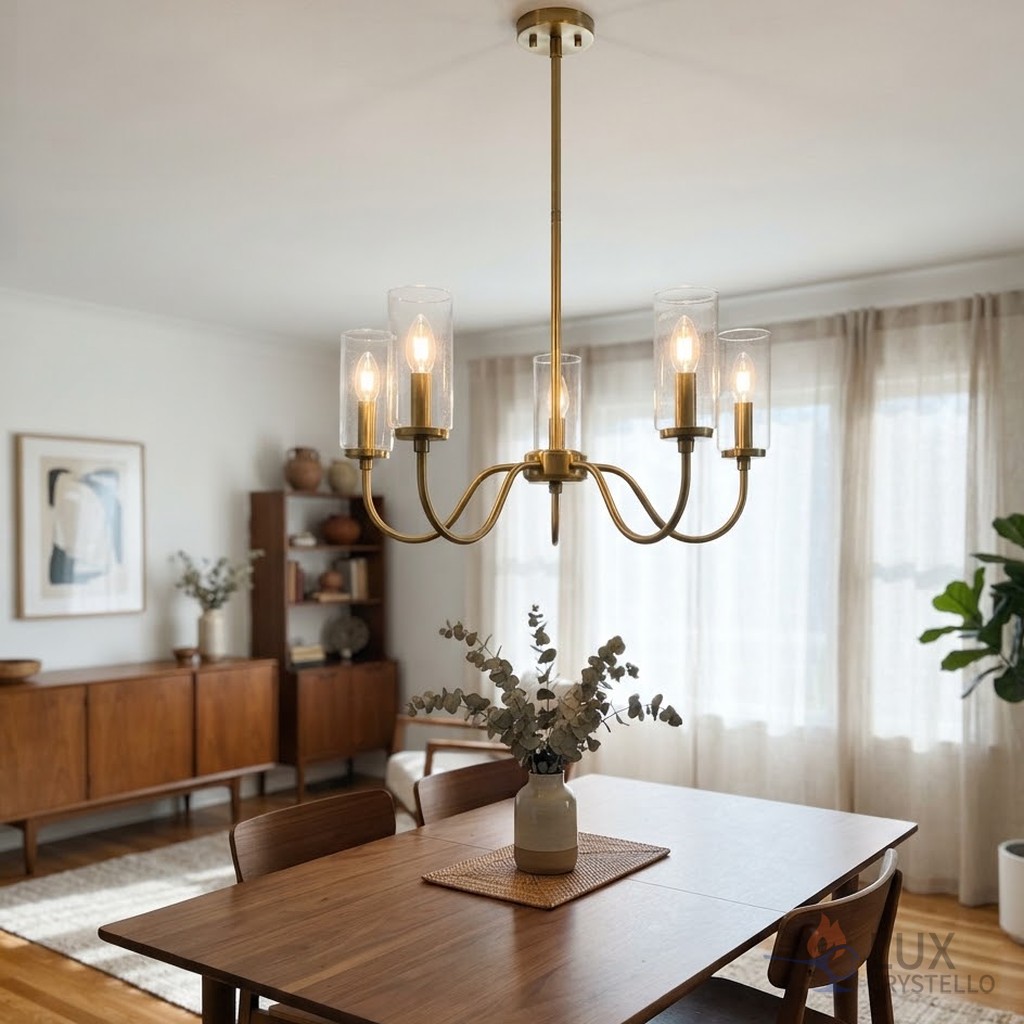
Choosing a Brass Ceiling Chandelier: Start With Ceiling Height
Height is the first constraint because it quietly eliminates half the catalog. The rule of thumb: 30 to 36 inches above a dining table and at least 7 feet of clearance beneath it. In an 8-foot room, that math rules out a long drop, so buyers shift to lower profiles.
A practical consideration: most pieces sold as a brass flush chandelier are actually semi-flush, sitting 4 to 12 inches below the ceiling. A true flush mount hugs the ceiling, and a ceiling mounted brass light in that format keeps hallways feeling open. On 9- or 10-foot ceilings, a hanging brass ceiling chandelier earns its presence across the room.
Finish Matters More Than You Think
Finish does more to determine how a fixture ages than any other specification, and it is the one buyers most often skip. Brushed and antique brass are the most forgiving options; polished behaves differently. The table below summarizes the difference.
| Feature | Brushed Brass | Antique Brass |
| Surface | Satin, low-gloss sheen | Aged tone with darker recesses |
| Daily Wear | Hides fingerprints and smudges | Hides dust and light tarnish |
| Best Setting | Mid-century modern, minimalist | French ornate, traditional rooms |
Compare the three looks: polished reads formal and reflective, brushed quiet and contemporary, antique collected and lived-in. None is objectively better — the right finish depends on the room. Brushed brass is the low-maintenance choice; antique brass rewards rooms that lean traditional.
One detail most listings skip: brass is an alloy, and the finish can be lacquered or unlacquered. Unlacquered brass slowly darkens into a natural patina; lacquered keeps its original tone. Want it to stay as photographed? Choose lacquered. Prefer character that grows? Unlacquered changes on purpose.
Room by Room: Scale and Placement
Dining rooms are where a brass ceiling chandelier earns its keep. Choose a piece roughly half to two-thirds the width of your table, center it, and add a dimmer. In an entryway or foyer, scale down so it clears the door swing and reads as a statement piece.
Low Ceilings, Bedrooms, and Hallways
Bedrooms and hallways with 8-foot ceilings are the natural territory of flush profiles. A brass flush chandelier with a semi-flush drop adds a hint of silhouette above a bed without hovering near head height. For tight spaces, a ceiling mounted brass light in a true flush format delivers ambient light with almost zero bulk.
Style Pairings and the Mixed Metals Question
Mid-Century Modern and Beyond
Brass is a chameleon metal. In a mid-century modern room, it echoes the era’s warm hardware and pairs well with walnut. An Art Deco room suits a stepped or geometric fixture against mirrored surfaces and deep greens. French ornate rooms call for curving arms and candle bulbs; minimalist spaces, a simple silhouette; industrial lofts, brass against black steel.
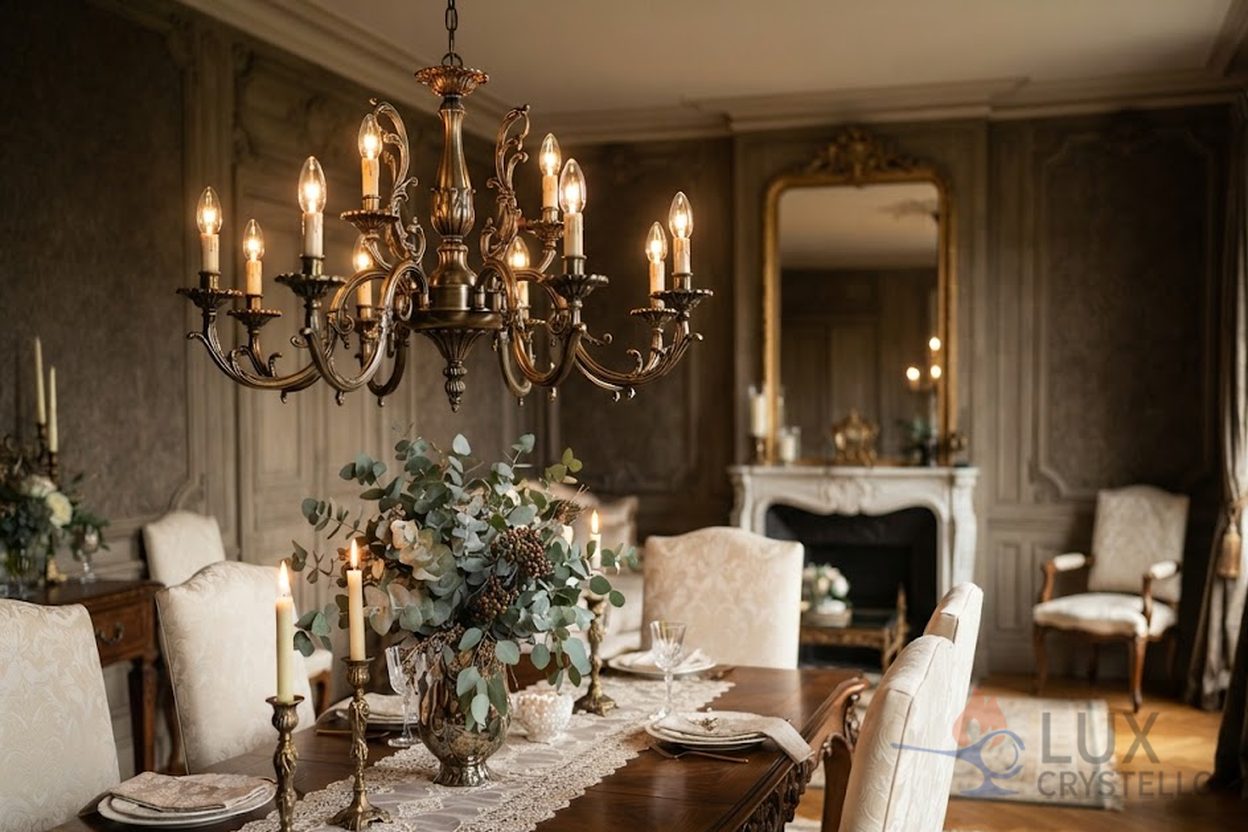
The mixed metals trend has run for years, and brass is its natural anchor. A brass ceiling chandelier complements matte black sconces, chrome bath fittings, and steel-framed furniture — repeat each finish twice so nothing reads as an accident.
A common scene: a homeowner orders a wide six-light fixture for an 8-foot foyer without checking the door swing. The bottom finial clears the header by a couple of inches — workable, only because the ceiling was generous. A tape measure removes the suspense.
FAQ
How far above a dining table should a brass ceiling chandelier hang?
The common guidance is 30 to 36 inches from tabletop to the bottom of the fixture. If the room opens into other spaces, check from doorways too — the eye should land on the table.
Can a brass flush chandelier work with 8-foot ceilings?
Yes — often the best answer. A semi-flush brass flush chandelier drops only a few inches and keeps headroom comfortable, while a true flush mount works in hallways.
Do brass ceiling chandeliers require hardwiring?
Most ceiling mounted brass light fixtures are hardwire pieces that connect to a ceiling box and wall switch. Some semi-flush designs ship with a plug-in option — confirm a UL listing before you install.
How do you clean brass without dulling the finish?
Dust regularly with a soft dry cloth, wiping with mild soapy water when needed. Skip abrasive and ammonia-based cleaners that strip lacquer. On unlacquered brass, expect gentle darkening — that is the patina working.
Will brass clash with other metals in my home?
Usually not, if the metals are balanced. Repeat each finish at least twice and separate by material — brass lighting with brass hardware, black frames with black legs.
Conclusion
The right brass ceiling chandelier balances three things: ceiling height, finish, and room scale. In practice, the happiest buyers measure first, then pick the profile — hanging, semi-flush, or flush — the room allows. Whether that means a statement piece over the table or a ceiling mounted brass light in a hallway, brass carries the room’s warmth for years.
Find the Right Fit for Your Space
Start with a tape measure and your finish palette, then compare hanging silhouettes against flush profiles. If a brass flush chandelier is what your ceiling height demands, or a full drop is what your foyer deserves, the Lux Brass Lamps collection lists dimensions and finish details for each piece. A brass ceiling chandelier that fits its room is the piece you stop noticing — because it feels like it was always there.