
Blogpost Keywords: brass glass wall light, brass glass wall sconce, wall mounted brass lamp
A brass glass wall light does something most fixtures cannot: it delivers warm, diffused glow without claiming a single inch of floor space. Mounted at eye level, it pulls double duty as task light and sculptural accent, and the shade does most of the work on comfort. The category spans mid-century cylinders, Art Deco arcs, French ornate arms, and industrial cage designs, so the real challenge is separating the details that matter from the marketing.
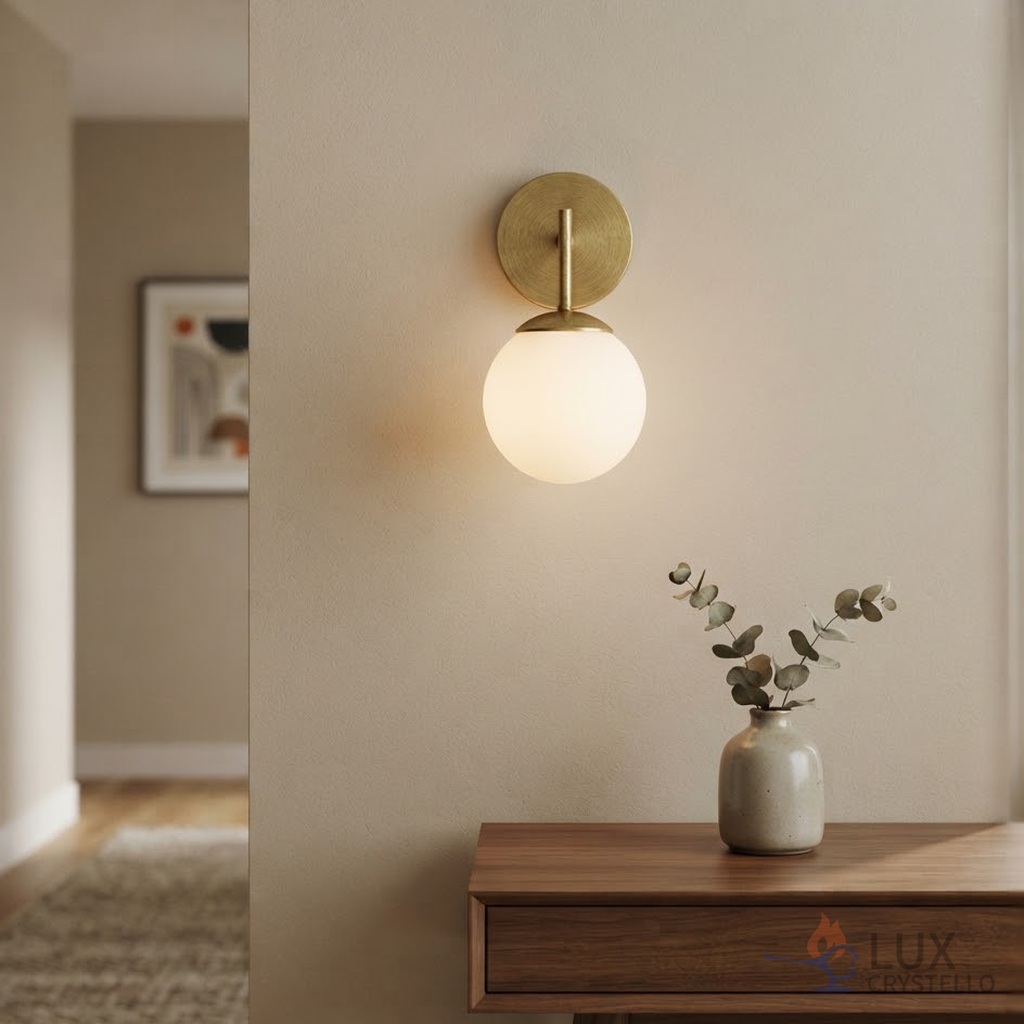
How to Choose a Brass Glass Wall Light Without Regret
Start with the glass, not the metal. For most people, a brass glass wall light with an opal shade is the safest first purchase: the white glass spreads light evenly and hides the bulb, which is why it dominates hallway and bedroom installs. Clear or seeded glass shows the filament and throws sharper shadows, suiting dining rooms and accent walls where drama is the point. In practice, buyers fixate on finish first and discover too late that an exposed bulb in a seeded shade creates glare at reading height.
| Feature | Opal Glass Shade | Clear Glass Shade |
| Light character | Even, glare-free glow | Crisp shadows, visible filament |
| Best rooms | Hallways, bedrooms, baths | Dining rooms, accent walls |
| Bulb pairing | Basic LED works fine | Edison or filament LED preferred |
The opal route hides whatever sits inside, so a basic LED works fine and dimming stays drama-free. Clear shades are less forgiving: the bulb becomes part of the design, and a mismatched filament can ruin the silhouette. That difference, more than wattage, explains why the same brass glass wall light feels cozy in one room and harsh in another.
Finish, Scale, and the Direction of Light
Polished brass reads bright and formal; brushed and satin finishes soften the reflection and hide fingerprints, which matters in busy entries. Antique brass adds depth against dark paint. Scale follows the same logic as any wall decor: a 10-inch arm suits a hallway, while a sconce over a console table usually sits 60 to 66 inches from the floor, near eye level when seated. You will also choose between hardwire and plug-in wiring. Hardwired fixtures look cleaner but demand a junction box at the right height; plug-in sconces run a cord to a nearby outlet and are easier for renters to install. For either route, a UL listed fixture is worth the premium.
Brass Glass Wall Sconce vs. Utility Fixture: Know What You Are Getting
A brass glass wall sconce is a design statement first and a light source second; a basic utility fixture is the reverse. Put the same bulb in both and the sconce still feels warmer, because the shade, the metal, and the arm geometry shape the glow. A wall mounted brass lamp, by contrast, usually points light where you need it, over a desk, a vanity, or a stairwell, with less pretense about decoration. Neither is better; they simply answer different questions.
Room by Room: Where a Wall Mounted Brass Lamp Earns Its Keep
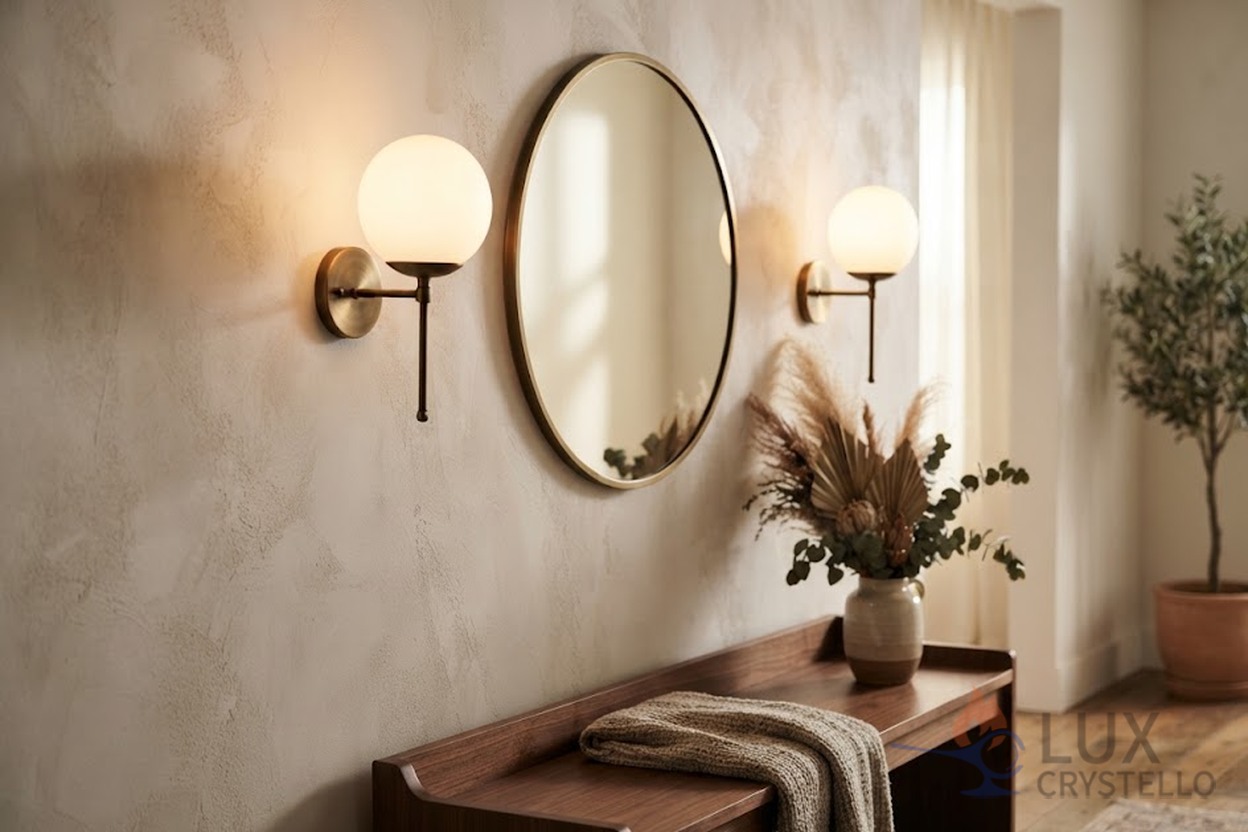
In the entryway, a pair of brass glass wall sconces flanks the mirror and anchors the foyer without competing with a chandelier overhead. Hallways want the shade mounted just above head height, which keeps the glow out of your eyes as you walk through. If the hallway doubles as a gallery wall, keep the shade simple so the art stays the star.
Bedrooms favor a downlight effect: the light pools on the nightstand instead of washing the ceiling, which makes a wall mounted brass lamp a natural bedside companion when a table lamp would crowd the nightstand. Dining rooms and reading nooks can take bolder silhouettes, but the shade should still land near eye level when seated. For dining rooms, mount pairs beside a buffet rather than flanking a window.
Mixed Metals: Brass, Black, and the Rules That Changed
The old one-metal-per-room rule has loosened. Brass now pairs naturally with matte black, oil-rubbed bronze, and even unlacquered steel, provided the undertones stay in the same temperature family. A practical consideration: a brass glass wall light over a black console with brushed nickel knobs reads intentional, while three different metals in one small bathroom reads chaotic. Start mixing at hardware scale and work up to fixtures.
Mistakes That Come Back to Haunt Buyers
Three errors show up constantly. First, ignoring arm projection: a brass glass wall sconce with a long arm can collide with door casings, curtains, or the edge of a mirror. Second, assuming every fixture dims, check the bulb and the switch before you commit. Third, treating all brass finishes as if they age alike; an unlacquered finish patinas over time, while coated finishes hold their tone; a responsible seller tells you which one you are getting before you order.
One buyer ordered a pair of sconces for a narrow hallway and spent an afternoon relocating the junction boxes because the arms hit the door casing on both sides. The same math applies to any wall mounted brass lamp: measure from the wall to the outer edge of the shade, and confirm the wall width, before you order.
FAQ
Can a brass glass wall light go in a bathroom?
Yes, if the fixture carries a damp or wet location rating and you pair it with a sealed bulb. Bathroom sconces should sit beside the mirror rather than directly above a sink, away from direct spray. Check the rating on the listing before purchase, since not every brass fixture suits humid rooms.
What bulb works best behind a glass shade?
Brass glass wall sconces with opal shades accept almost any LED and hide it well. With clear or seeded glass, a filament-style LED keeps the aesthetic intact. For dimmable setups, confirm that both the bulb and the fixture are dimmer compatible, or you may get flicker at low levels.
Do brass wall fixtures tarnish, and how do you clean them?
It depends on the finish. Lacquered and coated brass stays bright with a dry microfiber wipe; unlacquered brass develops a natural patina that many buyers actually want. Avoid ammonia-based cleaners, which can strip protective coatings.
How high should a wall mounted brass lamp sit?
For general wall lighting, aim for 60 to 66 inches from the floor, which lands the shade near eye level. In hallways, mount higher so the shade clears head height; beside a bed, position the light so it lands on the nightstand. Adjust for ceiling height and the fixture’s arm reach.
Conclusion
Choosing a brass glass wall light comes down to three things: how the shade behaves with your bulb, how far the arm reaches into your room, and how honest the finish is about aging. Get those right and the fixture disappears into the room’s best moments, warm entries, calm hallways, and reading corners that finally feel finished.
Give Your Wall a Warm, Working Light
When you are ready to shop, look for listings that show the shade from several angles, state the finish clearly, and publish the dimensions. A brass glass wall light with honest specs and a sensible return policy beats a dramatic photo every time, and most reputable sellers will answer wiring questions before you order.