
Blogpost Keywords: brass glass ceiling light, ceiling mounted brass glass fixture, brass glass flush light
The brass glass ceiling light has become one of the most dependable fixtures in American homes, showing up in foyers and breakfast nooks. It pairs warm metal with softly diffused glass, which is why designers circle back to it. Flush, semi-flush, and pendant profiles each feel different.
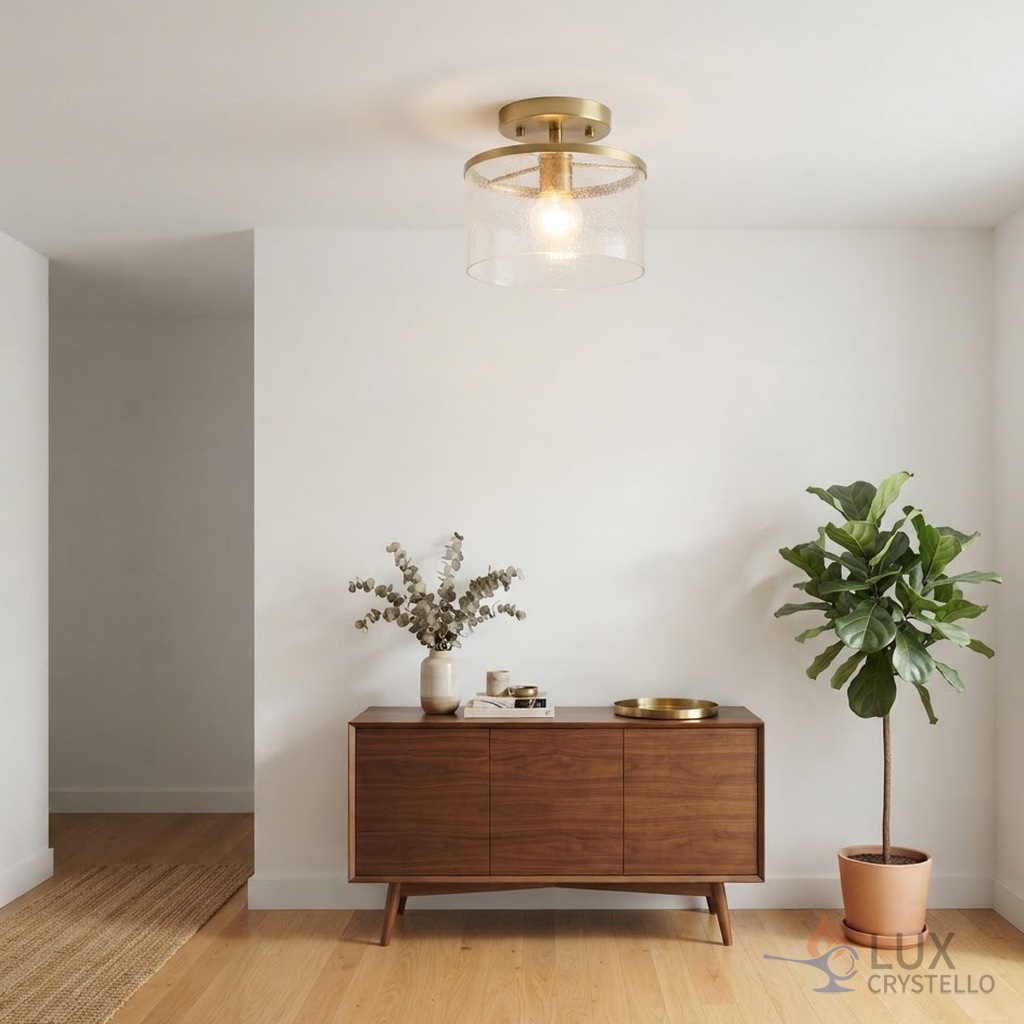
What a Brass Glass Ceiling Light Actually Offers
A well-made brass glass ceiling light layers materials instead of hiding them: the frame draws the eye while the shade softens the bulb into ambient light. Seeded glass scatters the glow and hides fingerprints; opal glass gives a milky wash; clear glass shows the filament. In practice, the shade drives how a room looks at dusk.
Why the Glass Matters
A practical consideration: glass is the part you clean, brass is the part that develops a patina, and the two interact — alkaline cleaners can strip the lacquer off the frame if they drip. On a brass glass flush light in a hallway, residue shows immediately.
Flush, Semi-Flush, or Pendant: Shape the Light First
Ceiling height narrows the field fastest. A brass glass flush light hugs the ceiling, making it the default for hallways and bedrooms with eight-foot ceilings. Semi-flush profiles drop a few inches and throw light up and down, suiting dining rooms. A pendant hangs lower and becomes the focal point.
| Feature | Brass Glass Flush Light | Semi-Flush Glass Fixture |
| Ceiling clearance | A few inches | Roughly 6-12 inches |
| Light spread | Even low-profile wash | Uplight and downward pool |
| Best rooms | Hallways, bedrooms | Dining rooms, foyers |
Read the rows together. A ceiling mounted brass glass fixture wins on clearance but pushes most of its light sideways, leaving a tall room flat. The semi-flush option bounces part of the beam off the ceiling at the cost of headroom. If headroom is tight, the flush profile is the safer bet.
Picture a hallway renovation: a semi-flush piece looks great on paper, until an eight-foot ceiling leaves the shade at forehead height. A flush profile fixes it without losing the brass-and-glass look.
Styling must answer to the room: mid-century modern calls for slim brass arms and a drum-shaped glass shade, French ornate wants curves and a bell silhouette, Art Deco leans geometric, minimalists prefer a plain cylinder, and industrial spaces read best with bare Edison bulbs behind seeded glass.
Brushed, Antique, or Polished: Choose a Finish
The finish of a brass glass ceiling light is where the confusion lives. Brushed brass reads modern and resists fingerprints; antique brass arrives pre-darkened and forgives daily wear; polished brass is the brightest but smudges fast. That depends on how the fixture will live: a hallway light gets touched rarely, a dining fixture constantly.
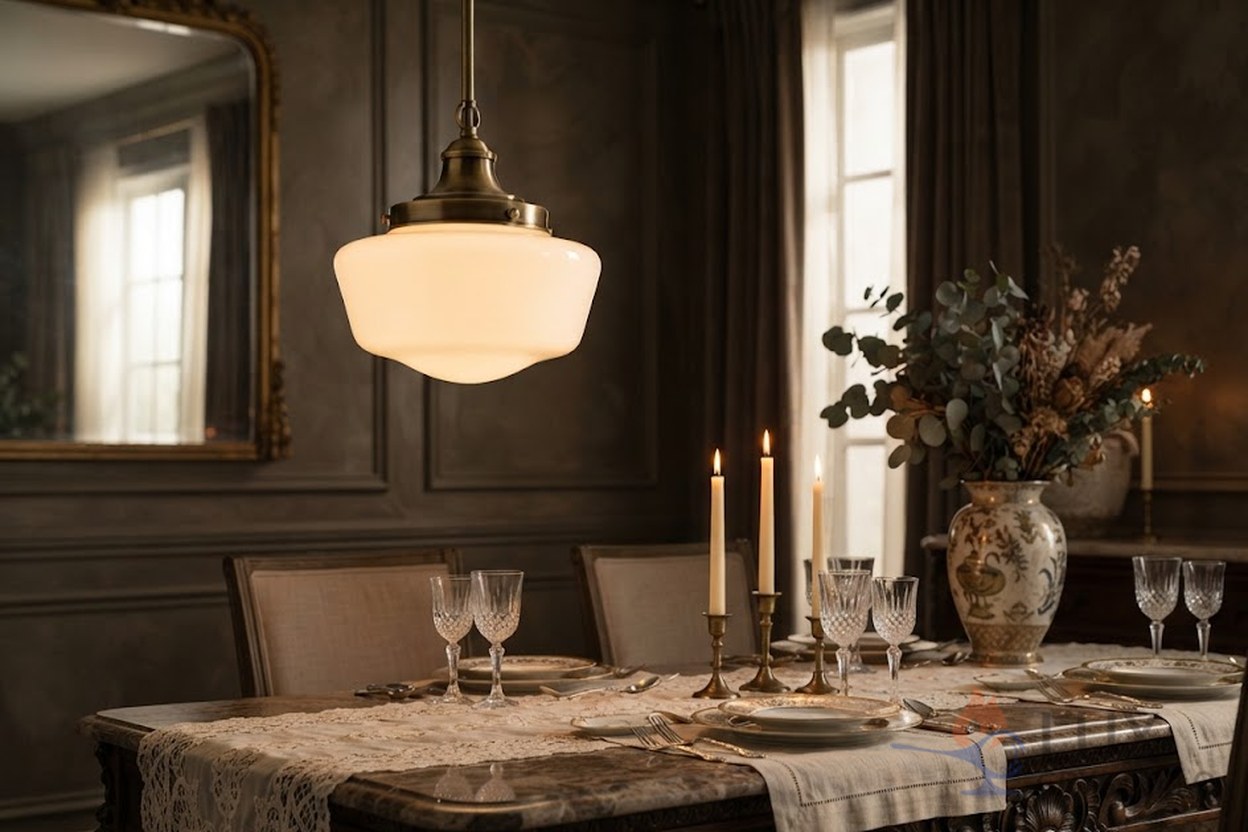
Mixed metals matter because brass rarely sits alone. Designers usually let one metal dominate with a second as an accent — brass against satin nickel, or black with brass detailing — and the same applies to a ceiling mounted brass glass fixture in a chrome-heavy kitchen. Keep the ratio roughly two-thirds to one-third, whether the piece is a chandelier or a brass glass flush light.
Room-by-Room Placement Guidance
Scale and placement change with the room — a profile that anchors a foyer can fight a low hallway.
Entryways and Foyers
An entryway works best with a ceiling mounted brass glass fixture in semi-flush form, drawing the eye upward on arrival. Hang it above the tallest person who will walk under it.
Dining Rooms
In a dining room, hang the fixture low enough to feel intimate but high enough to clear sightlines. A dimmable brass glass ceiling light shifts from bright family dinners to low, candle-like evenings.
Bedrooms and Hallways
Bedrooms and hallways are where the brass glass flush light earns its keep: flush profiles keep headroom intact, soft opal shades soften the glare overhead, and even spacing keeps light uniform.
FAQ
Is a glass and brass ceiling fixture safe for bathroom use?
Yes, if the fixture is UL listed for damp locations. Bathrooms produce steady humidity, so check the rating first. A sealed glass shade over brass is the practical pairing.
What bulb type works best with a brass glass flush light?
Most accept standard Edison-base bulbs; warm-white LEDs keep the brass tone flattering. Pair dimmable bulbs with a wall dimmer and check the wattage rating first.
Does brass tarnish, and how do I care for it?
Brass does darken over time. Lacquered finishes need only a soft dry cloth, while unlacquered brass develops a patina some homeowners encourage. Avoid abrasive pads and clean the glass with a mild solution.
Conclusion
Choosing a brass glass ceiling light comes down to three honest questions: how much ceiling you can spare, what the glass should do to the light, and which finish will live comfortably with the room. Answer those first, and the rest follows. Match the fixture to the room, not to a trend, and the lighting still looks right years later.
One Final Checklist Before You Buy
Before you add that brass glass ceiling light to your cart, measure the ceiling height, note the room’s metal finishes, and match the glass shade to the room’s use — whether you’re ordering a pendant or a ceiling mounted brass glass fixture. Lux Brass Lamps carries flush and semi-flush profiles in brushed, antique, and polished brass; bring your measurements, and the right fixture is easier to spot.