
Blogpost Keywords: brass lighting, decorative brass fixtures, ambient brass lighting
Few upgrades change a room’s mood as quickly as brass lighting. The finish has cycled through American homes for a century, and this is one of its strongest runs. Brass reads differently depending on finish and placement, which is why buyers love a fixture in the showroom and second-guess it at home.
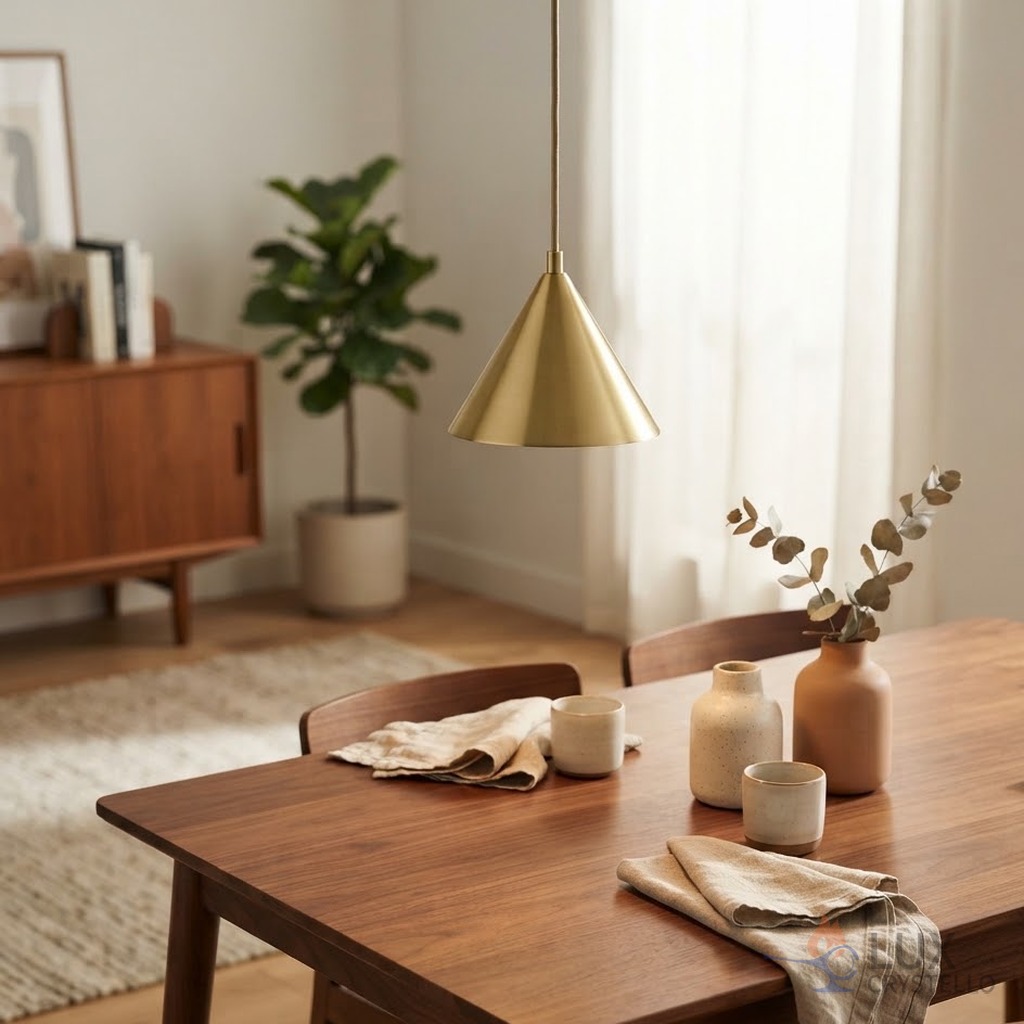
Finish, Scale, and Placement Fundamentals
Start with the finish — it decides how the piece looks in five years. Polished brass is mirror-bright and shows fingerprints; brushed brass hides smudges; antique brass arrives pre-aged. In practice, buyers underestimate a glossy finish’s upkeep, so match the metal to your tolerance for wiping it down.
| Feature | Polished Brass | Antique Brass |
| Appearance | Mirror-bright, warm gold | Dark, aged patina |
| Maintenance | Frequent wiping | Low upkeep |
| Best for | Formal dining, entryways | Rustic, industrial, relaxed |
| Pairing | Marble, glass, cream | Wood, black metal |
Polished brass throws light back into the room, flattering a formal dining space but asking for regular attention. Antique brass blends into relaxed interiors and pairs well with leather and dark wood; brushed or satin brass is the middle ground. That middle finish is where most brass lighting lands today because it tolerates daily life without constant polishing.
The Finish Detail Buyers Overlook
A practical consideration: lacquered brass holds its shine but never develops patina, while unlacquered brass mellows into a deeper tone over the years. That lacquer layer is invisible in photos, so check the product description before assuming how it will age.
Scale follows forgiving rules: hang a chandelier roughly 30 to 36 inches above a dining table, under two-thirds of the table’s width. A familiar scenario: a long drop-chain chandelier ordered for an eight-foot ceiling ends up at head height. For decorative brass fixtures seen up close, such as hallway sconces, err small and let spacing do the work.
Three Design Styles Where Brass Fits Naturally
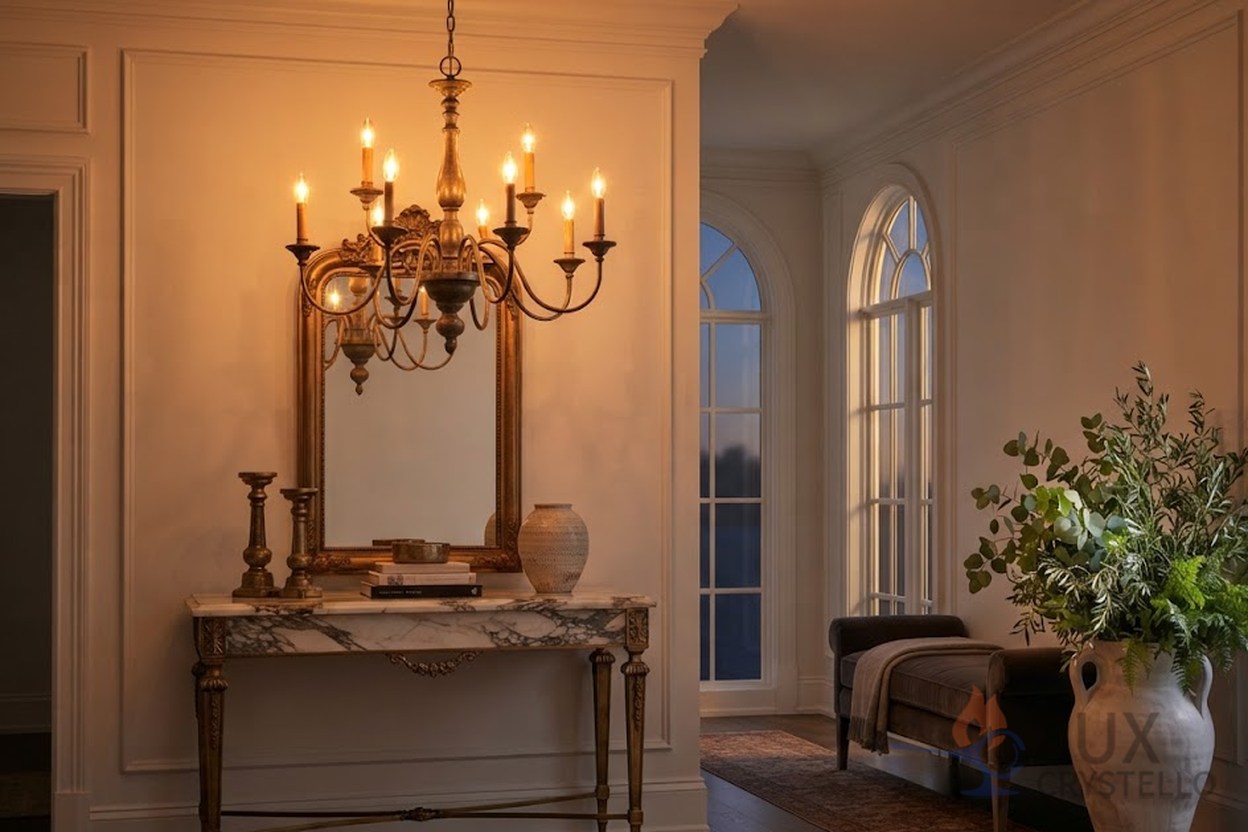
Brass is a chameleon, and that is its strength. Mid-century modern rooms take a simple spun-brass pendant; Art Deco spaces want geometric, stepped details; French ornate interiors call for carved, curving arms that read like jewelry on wallpaper. For every one of those styles, brass lighting works because the metal carries its own history.
Mixed Metals: Pairing Brass With Black and Chrome
The matching-everything rule has loosened. Designers mix brass with matte black, aged nickel, and chrome, but the pairing works when a finish repeats at least twice in a space — two brass lamps beside one black frame, rather than a single stray piece. This is where decorative brass fixtures prove their worth: they hold their own against black steel.
In an industrial loft heavy on black iron, a brass pendant or sconce supplies the warmth the palette needs. The trick is keeping one finish dominant — roughly 70 percent of the room’s hardware — so the scheme reads intentional rather than accidental.
Room by Room: Where Warm Overhead Glow Works Best
In a dining room, a pendant or chandelier becomes the centerpiece of every meal — hang it low and keep the bulbs dimmable. For a living room, layer the light: ambient brass lighting from a floor lamp, task light from a swing-arm sconce, accent light from a table lamp. That layering is the payoff of well-placed fixtures.
Entryways, Hallways, and the Foyer
The foyer sets the tone the moment guests walk in — the natural home for a statement chandelier, even a modest one. Hallways and entryways work better with decorative brass fixtures like wall sconces mounted around eye level, spaced so light travels the corridor. Two smaller sconces often anchor a small foyer better than one oversized piece.
Bedrooms favor smaller gestures. Sconces flanking the bed free the nightstand and give directional light without waking a partner. Small decorative brass fixtures like sconces or a mini pendant suit a guest room; in a minimalist bedroom, a single slim pendant delivers warm ambient brass lighting at day’s end.
Brightness, Dimmers, and Installation Reality
Light output depends on the bulb, and most brass fixtures accept standard medium-base bulbs. LEDs last but need a compatible dimmer — a mismatched switch can make them flicker or hum. If you want dimmable ambient brass lighting, confirm the bulb and switch are rated to match. Check for a UL listing, and weigh hardwire against plug-in: plug-in sconces save on electrician costs but leave visible cords.
Packaging matters too, especially for fixtures with glass shades or delicate arms. Ask whether the retailer uses double-boxing or foam inserts — a cracked shade on arrival means a return, not a room upgrade.
FAQ
Does unlacquered brass tarnish over time?
Unlacquered brass does — the surface deepens into a richer patina over the years. Lacquered brass is sealed at the factory and stays bright. If you dislike the aged look, choose lacquered or brushed.
Can brass fixtures work with LED bulbs?
Yes — most brass fixtures accept standard LED bulbs. The catch is dimming: verify the bulb and switch are rated for each other.
How high should a chandelier hang above a dining table?
A common starting point is 30 to 36 inches from the tabletop to the fixture bottom, keeping sightlines clear. For a vaulted foyer, hang it higher and let the chain do the drama.
Conclusion
Choosing brass lighting comes down to finish, scale, and an honest read of how you live. The finish that looks right in a photo may demand more maintenance than you expect. Done well, brass rewards the effort with a warmth no other metal quite matches.
Start With a Shortlist, Not a Splurge
Before you buy, measure the space, note the ceiling height, and list the finishes already in the room. Then compare brass lighting options side by side — chandeliers, pendants, sconces, lamps — and let the shortlist narrow itself. Retailers like Lux Brass Lamps group fixtures by style, so the final decision feels like a confirmation.